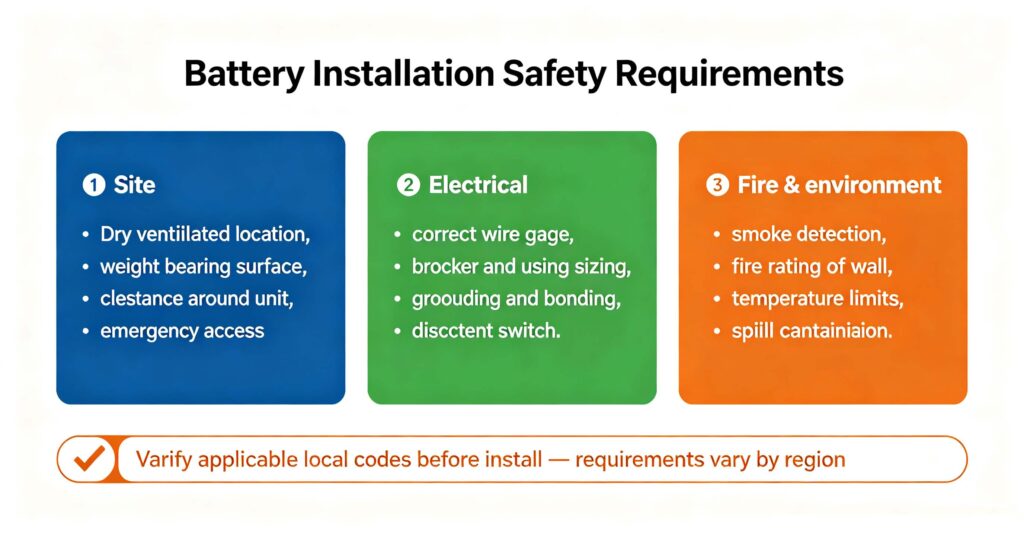
Battery installation safety starts before any equipment is mounted: it means confirming the site can support the weight and heat, the electrical system is sized and protected for the battery’s charge and discharge currents, and the location meets the applicable fire and ventilation requirements for lithium energy storage in your region. The installation itself must follow the manufacturer’s instructions and the local electrical code — wire gauge, overcurrent protection, grounding and bonding, and a means of disconnect — because a battery that is electrically compatible on paper can still be dangerous if the installation is wrong. Installers should verify the applicable requirements with the local authority before work begins, because codes differ by region and by system size. The common violations are undersized wiring, missing disconnects, improper grounding and installations that ignore the manufacturer’s clearance and temperature limits.
For anyone installing lithium storage — homeowner, installer or project owner — battery installation safety is not a set of suggestions. This guide organizes the site, electrical and fire elements into a practical checklist, and separates product certification from installation certification, which people often confuse. For the battery’s own fire behavior, see #87 battery thermal runaway and fire safety first.
Battery installation safety starts with the site checks
The site decides more safety outcomes than the equipment does. The checks below belong in the pre-install survey, not after the battery is on the wall.
- Weight and structure: the mounting surface must carry the battery’s weight with the manufacturer’s safety factor, especially for wall-mounted or stacked units.
- Environment: the location should be dry, ventilated, within the battery’s operating temperature range, and free of direct water exposure.
- Clearance: manufacturer-specified clearance around the unit for airflow, access and fire spread; blocking vents is a common cause of derating and early failure.
- Emergency access: the unit must be reachable for disconnection and service, and the disconnecting means must be identifiable and accessible.
The site assessment that feeds these checks is covered in #110 battery installation site assessment.
Electrical safety: the part that most violations involve
Most battery installation safety violations found in inspections are electrical, and they are almost always visible in advance.
Wire sizing: conductors must be rated for the continuous charge and discharge current at the operating temperature, not for the average load. Undersized wiring heats, and heat accelerates every other failure mode.
Overcurrent protection: fuses or breakers must be sized to the battery’s short-circuit capability and the conductor rating, and located where they protect the cable run.
Grounding and bonding: the battery enclosure and associated metalwork must be grounded and bonded according to the local code, especially where multiple cabinets are installed.
Disconnecting means: a means to disconnect the battery from the system — at the battery and at the inverter — should be accessible and labeled. For how the battery connects into the wider system safely, see #52 how battery, PCS, BMS and EMS work together.
Fire and environmental considerations
Lithium batteries store significant energy, and the fire considerations around them are part of battery installation safety, not an extra.
Detection: depending on the location and local requirements, smoke or heat detection near the installation provides early warning. Confirm what applies in your jurisdiction and system size.
Separation and fire rating: some codes require separation distances or fire-rated surfaces between the battery and living or exit areas. The manufacturer’s installation manual usually states the minimum clearances — those are requirements, not recommendations.
Ventilation: follow the manufacturer’s ventilation requirements for the chemistry and enclosure type. Thermal management and venting differ between products; the manual is the authority.
Operating limits: keep the battery within its specified temperature and charging limits; installations that ignore these limits void both safety and warranty. For the battery-level fire behavior and suppression, see #44 BESS fires: a practical safety guide.
Permits, certification and who checks what
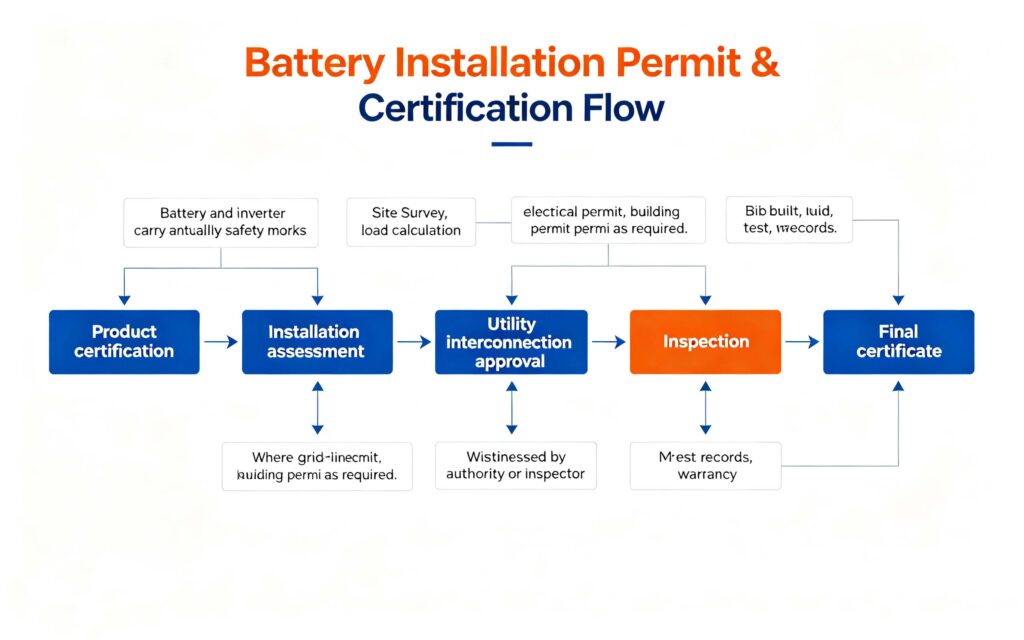
Product certification and installation certification are different things, and installers should be able to explain both.
| Item | Who provides it | What it proves |
|---|---|---|
| Product safety marks | Battery and inverter manufacturer | The product was tested to an applicable standard for its design |
| Electrical permit | Local authority / inspector | The installation is approved before connection to the grid or building supply |
| Installer credentials | Certifying body / employer | The installer is trained and certified for the work performed |
| Inspection certificate | Inspector after site visit | The completed installation meets the approved design and applicable code |
Buyers should ask the installer which permits apply to their project and who files them; the answer is a quick test of experience. For the product certification side, see #107 battery export certification explained.
Common violations and how to avoid them
The violations found in real inspections repeat across projects. Knowing them in advance is most of the fix.
Undersized wiring and missing overcurrent protection: the classic pair. Sizing must be done from the datasheet currents, not from habit.
Improper grounding and bonding: skipped in tight installs, and flagged by every inspector who checks.
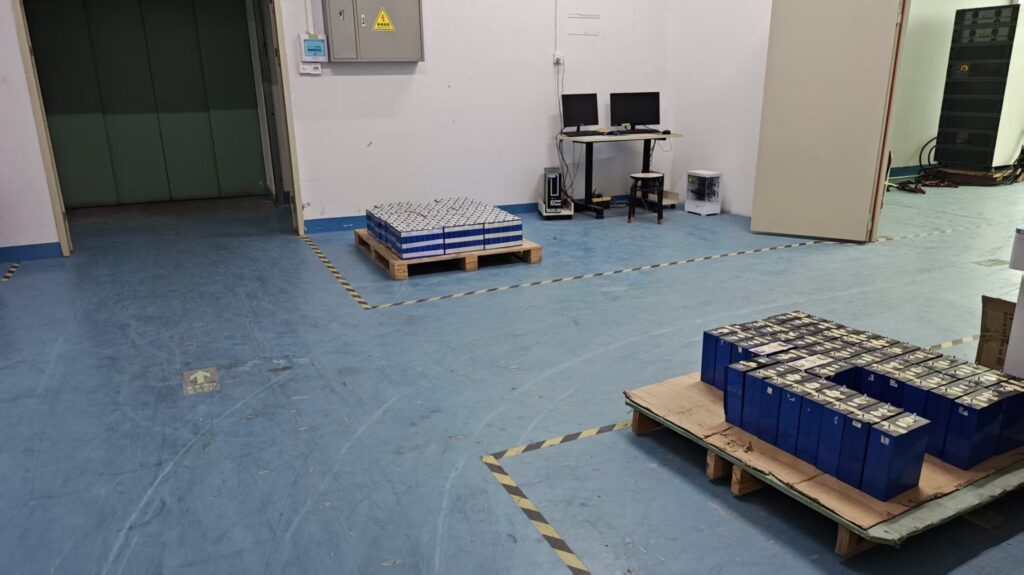
Blocked ventilation and clearance: units mounted flush against walls or packed into unventilated spaces fail faster and may exceed temperature limits.
DIY work outside licensed scope: work without the required permit or credentials creates liability that survives the installation. For the personal-DIY side of the same topic, see #113 DIY battery safety: common assembly mistakes.
Q. What are the basic battery installation safety requirements?
The basics are a site that supports the weight and heat, electrical work sized and protected for the battery’s currents (wire gauge, overcurrent protection, grounding, disconnects), and compliance with the manufacturer’s clearance, ventilation and temperature limits. Fire detection and separation requirements apply depending on the location and local code. Installers should verify the applicable requirements with the local authority before work begins.
Q. Do I need a permit to install a battery storage system?
Most regions require an electrical permit for battery storage installation, and some require building permits or utility interconnection approval depending on system size and location. The installer should confirm which permits apply and who files them, because unpermitted work can create liability and insurance problems later. Requirements vary by jurisdiction, so verify locally rather than assuming.
Q. What is the difference between product certification and installation certification?
Product certification means the battery or inverter was tested to an applicable standard by its manufacturer, covering the product’s design. Installation certification means the completed installation was approved by an inspector or authority after review and site checks. A certified product installed badly is still unsafe, which is why both matter and why they are verified by different parties.
Q. What are the most common battery installation code violations?
The most common violations are undersized wiring, missing or incorrectly sized overcurrent protection, improper grounding and bonding, blocked ventilation or clearance, and work performed without the required permit. These are all visible in advance and are the first things an inspector checks. Sizing from datasheet currents and following the manual’s clearance limits avoids most of them.
Q. Who is responsible for battery installation safety?
Responsibility is shared: the manufacturer must provide accurate installation instructions and product certification, the installer must follow those instructions and the applicable code and obtain the required permits, and the owner must keep the system within its operating conditions after handover. In practice, the installer carries the primary liability for the installation work, so verify credentials and inspection before accepting the job.
Next step: install to the requirement, not to the guess
Battery installation safety is a checklist you verify, not a brochure you read. Confirm site, electrical and fire elements before work, file the permits that apply, and get the inspection certificate before handover. Installers who document each step are the ones whose work holds up.
- Run the site assessment in #110
- Review the fire side in #87
- Avoid DIY mistakes in #113
- Ask leekooenergy for a battery installation safety package: the installation manual, clearance and ventilation data, and the documentation checklist that supports your permit and inspection