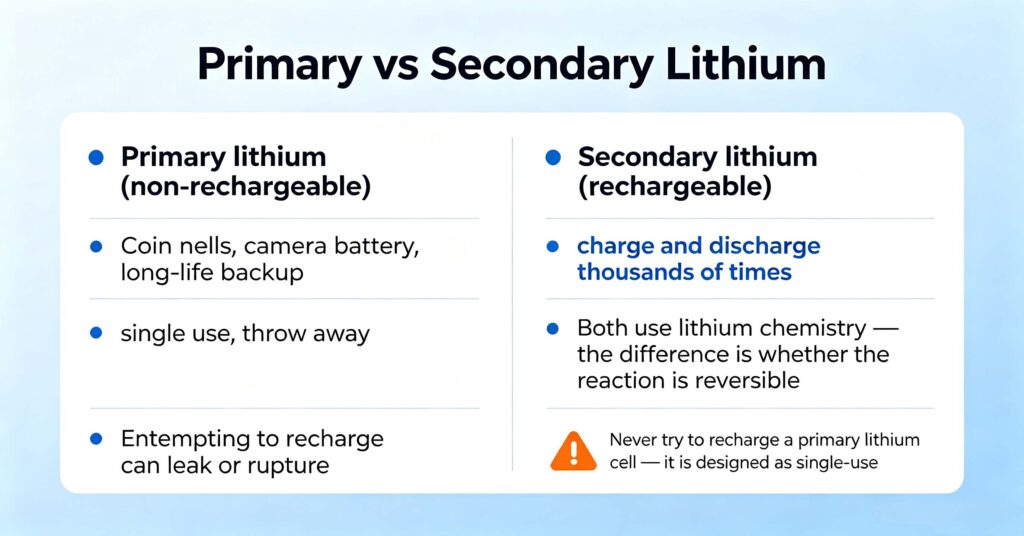
Are all lithium batteries rechargeable? No. There are two broad categories of lithium batteries: primary (non-rechargeable) cells, such as lithium coin cells, lithium thionyl chloride and lithium iron disulfide batteries used in cameras, remote controls and long-life backups; and secondary (rechargeable) batteries, such as lithium-ion (NMC) and LiFePO4, used in phones, electric vehicles and energy storage systems. Both use lithium chemistry, but the internal reaction in a primary cell is not designed to be reversed — trying to recharge it can cause leakage, rupture or fire. For energy storage and B2B applications, “lithium battery” almost always means a rechargeable secondary cell, but the distinction matters when you see coin cells or industrial primary cells in a product list.
The question are all lithium batteries rechargeable comes up because the word “lithium” covers both single-use and rechargeable chemistries. This guide clears up the distinction and explains how to tell them apart. For the chemistry classifications, see #67 types of lithium-ion batteries.
Are all lithium batteries rechargeable: primary vs secondary difference
The answer to are all lithium batteries rechargeable depends on whether the cell is primary or secondary. The difference is whether the chemical reaction is designed to be reversible.
| Type | Examples | Rechargeable? | Typical use |
|---|---|---|---|
| Primary lithium | Li-MnO2 coin, Li-SOCl2, Li-FeS2 | No | Cameras, remotes, long-life backup |
| Secondary lithium-ion | NMC, NCA, LiFePO4 | Yes | Phones, EVs, energy storage |
| Secondary lithium-polymer | Li-Po pouch | Yes | Drones, portable devices |
For the lithium vs lithium-ion naming distinction that often confuses buyers, see #38 lithium vs lithium-ion.
Common misconceptions about rechargeable lithium
The question are all lithium batteries rechargeable often comes from mixing up familiar formats. A few clarifications resolve the confusion.
“Lithium” vs “lithium-ion”: “Lithium” can mean primary lithium (coin cells) or the broad lithium family; “lithium-ion” specifically means the rechargeable secondary chemistry. A product labeled just “lithium” is ambiguous until you check the chemistry.
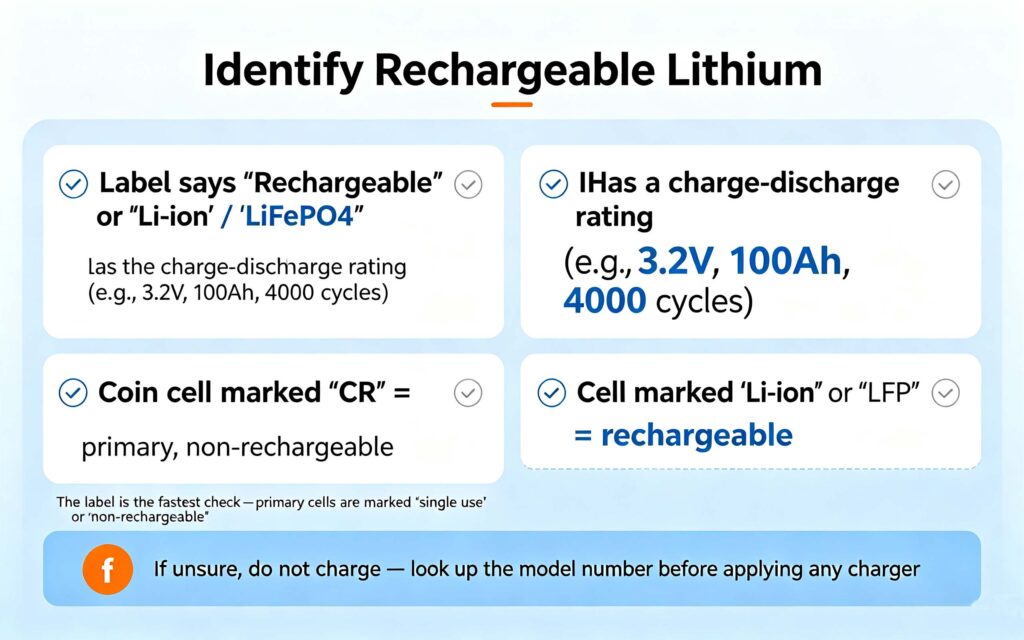
Coin cells (CR2032 etc.): these are primary lithium cells, not rechargeable. The “CR” designation indicates a lithium manganese dioxide coin cell designed for single use.
Why primary cells exist: primary lithium has very high energy density and very long shelf life (10–20 years), which is why it dominates watches, CMOS backups and industrial sensors. Rechargeable cells cannot match that shelf life.
What happens if you try: primary cells are not designed for the gas evolution and pressure changes that charging causes. Attempting to recharge can leak electrolyte, rupture the case or cause a fire. This is not a theoretical risk; it is why chargers and cells are explicitly marked for compatibility.
How to identify a rechargeable lithium battery
The practical answer to are all lithium batteries rechargeable is to check the label before charging. The identification is usually straightforward.
- Look for “Rechargeable” or “Li-ion” / “LFP”: rechargeable cells are explicitly labeled.
- Check the model prefix: “CR” coins are primary; “Li-ion” or “LiFePO4” cells are secondary.
- Read the spec sheet: rechargeable cells list cycle life, charge voltage and discharge current; primary cells list shelf life and single-use energy.
- When in doubt, look it up: search the exact model number before applying any charger.
For the LiFePO4 family that powers most storage systems, see #01 lithium iron phosphate batteries guide. For the rechargeable chemistry details, see #67 types of lithium-ion batteries.
Q. Are all lithium batteries rechargeable?
No. Primary lithium cells (such as CR coin cells and lithium thionyl chloride) are single-use and cannot be recharged. Secondary lithium batteries — lithium-ion and LiFePO4 — are rechargeable and designed for thousands of charge-discharge cycles. Both use lithium chemistry, but only the secondary reaction is designed to be reversible. For energy storage systems, “lithium battery” means the rechargeable secondary type.
Q. Can you recharge a lithium coin cell like a CR2032?
No. CR2032 and other lithium coin cells are primary (non-rechargeable) cells designed for single use. Attempting to recharge them can cause electrolyte leakage, case rupture or fire because the internal reaction is not built to reverse. If you need a rechargeable coin-shaped cell, look for a rechargeable Li-ion or LiPo pouch cell designed for that purpose, not a CR coin.
Q. What is the difference between lithium and lithium-ion?
“Lithium” is the broad family that includes both primary (single-use) and secondary (rechargeable) chemistries. “Lithium-ion” specifically refers to the rechargeable secondary chemistry that moves lithium ions between electrodes during charge and discharge. A product labeled just “lithium” is ambiguous; “lithium-ion” or “LiFePO4” tells you it is the rechargeable type. The naming overlap is a common source of confusion.
Q. Why do primary lithium batteries exist if rechargeable ones work?
Primary lithium cells offer very high energy density and extremely long shelf life — often 10–20 years — which is why they dominate watches, CMOS memory backups, remote sensors and industrial devices that sit unused for years. Rechargeable cells self-discharge and age even when idle, so they cannot match that shelf life. The two types serve different use cases: convenience and longevity for primary, repeated use for rechargeable.
Q. How do I know if a lithium battery in my product is rechargeable?
Check the label: rechargeable cells are marked “Rechargeable”, “Li-ion” or “LiFePO4”, and they list cycle life, charge voltage and discharge current on the spec sheet. Primary cells are marked “single use” or “non-rechargeable” and have model prefixes like “CR” for coin cells. If the label is unclear, look up the exact model number before applying any charger. Never charge a cell you have not confirmed as rechargeable.
Next step: specify the rechargeable chemistry for storage
For energy storage and B2B applications, you always want the rechargeable secondary type — LiFePO4 or NMC — with a BMS that protects it over thousands of cycles. The distinction between primary and secondary matters most when you see unfamiliar cells in a product list or design.
- Compare rechargeable chemistries in #67
- Clear up naming in #38
- Explore LiFePO4 in #01
- Ask leekooenergy for a rechargeable LiFePO4 storage system with the chemistry, cycle life and BMS configuration documented — so there is never ambiguity about whether the battery in your design is rechargeable