Solar panel removal is the controlled take-down, relocation or decommissioning of a photovoltaic system at end of life, and it covers three distinct jobs: removing the array, moving it intact, and recycling or disposing of modules and balance-of-system under waste rules. This guide explains the removal sequence, the recycling value you can recover, the safety steps that protect a crew, and the compliance duties that apply before removal begins.
A facility manager may be told to clear a roof of 12-year-old modules by quarter-end. The panels still produce, but the lease ended. The instinct is to treat removal as the reverse of install. It is not. A live array comes down in a different order, with different hazards, and the paperwork often matters more than the wrench work.
What solar panel removal actually involves
Solar panel removal is not one task. The word covers three different jobs that get confused in the same sentence, and mixing them up is how budgets and permits go wrong. Take-down is the physical act of detaching modules, racking and wiring. Relocation moves a working system intact to another site. Decommissioning and recycling retire the system and recover its materials under waste rules.
Each job carries a different liability. Take-down without a plan risks a live arc. Relocation assumes the array is worth moving, true only for young, undamaged systems. Recycling assumes the opposite: the value is in the materials, not the watts. Knowing which of the three you are doing decides everything that follows, from crew training to the skip you book.
The hardware you are handling is the same hardware a new build uses, just older. The module chemistry and frame are described in the solar module components guide, and the racking you unbolt is the same family covered in the solar panel racking system guide. Removal is the same parts in reverse, with the added problem that nothing is freshly tested.
The removal sequence, step by step
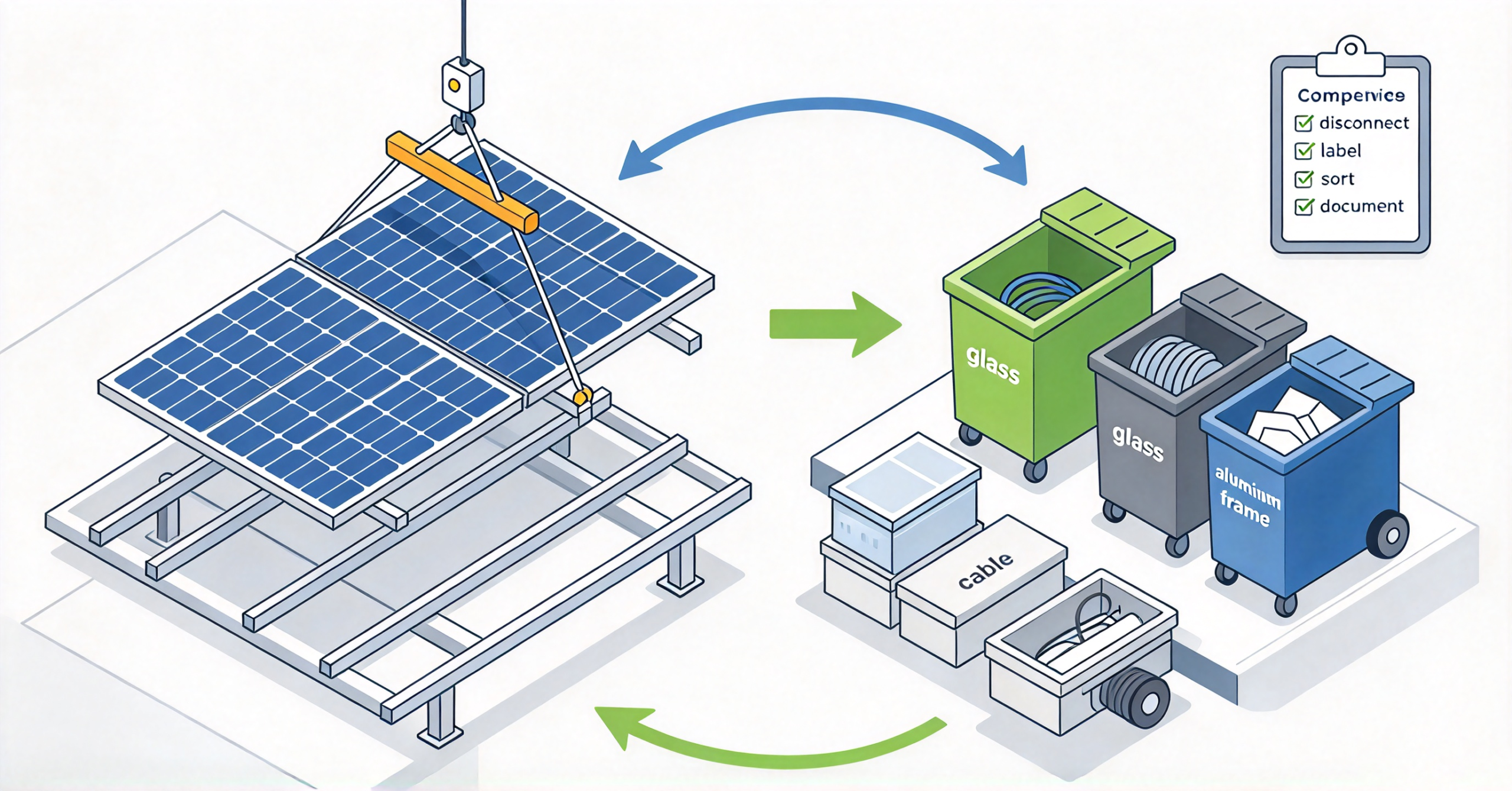
A clean take-down runs in a fixed order, and the order exists to keep the array dead before anyone stands under it. Deviating to save an afternoon is how crews get hurt. Follow this sequence:
- Notify the utility and isolate the system at the inverter and the service disconnect; confirm zero voltage at the strings before touching anything.
- Disconnect and label every DC connector and conductor, working from the inverter back toward the array, not the other way.
- Remove modules from the racking top-down, keeping them oriented and undamaged if any reuse or resale is planned.
- Unbolt the racking and mounting, separating aluminum and steel for separate handling.
- Recover cabling, the inverter and the balance-of-system, then document what left the site and where it went.
- Hand the materials to a licensed handler; a recorded chain of custody is what proves compliance later.
The DC connectors deserve respect here. The same MC4 fittings detailed in the solar panel mc4 connectors guide that joined the strings are now live until proven otherwise, and a careless unplug on a sunny roof is a real arc source. The micro-inverters covered in the solar panel micro inverters guide change the shutdown path but not the caution.

Relocation: moving a system intact
Relocation only makes sense for young, undamaged systems worth the crane. A five-year-old array moving to a sister site is a candidate; a fifteen-year-old array with hazy output is not, because transport and re-commissioning rarely beat the recovered value. The decision is financial before logistical.
When relocation is the call, the sequence above becomes a careful teardown followed by a careful rebuild, and the module count must be re-validated against the new roof. The how many solar panels do i need question that sized the original array still applies to the destination, and a different roof area may change the answer. Reuse the racking where it fits, but never reuse a damaged module.
Recycling value: what you can recover
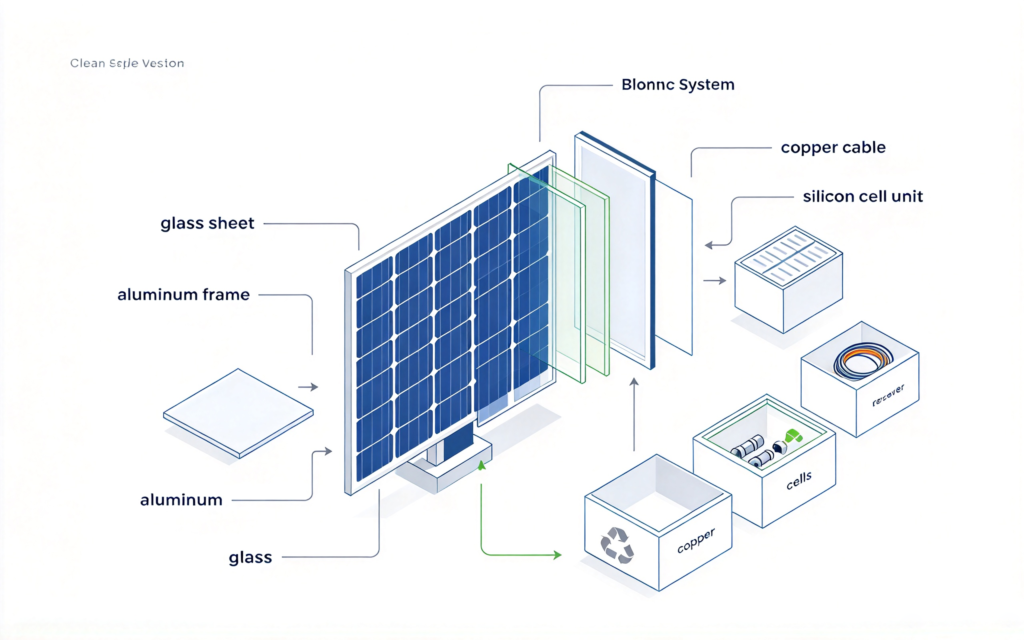
A retired panel is not waste in the scrap sense. Most of its mass is glass and aluminum, both straightforward to recover, and the frame and junction carry the bulk of the immediate value. The cell layer is the harder part, and silicon recovery economics vary by region and processor, so treat recoverable figures as market-dependent, not fixed.
| Recovered material | Typical recoverability | What drives its value |
|---|---|---|
| Aluminum frame | Budget-to-Standard recovery | Clean separation, local scrap price |
| Glass | Standard recovery | Purity and local processor capacity |
| Copper and cabling | Standard-to-Premium recovery | Stripped, sorted, weighed |
| Silicon cells | Premium, region-dependent | Processor technology and volume |
The balance-of-system often beats the panels for quick value. Inverters, cabling and steel racking are liquid commodities once separated, whereas the modules need a specialist stream. For chisidal storage-coupled systems the battery must leave on a different, stricter path entirely, because lithium hardware follows battery-specific take-back rules rather than general e-waste rules.
Safety during removal
The hazard profile flips between install and removal. On install the array is dead until commissioning; on removal it may be live until you prove it is not. Lockout and tagout at the inverter and the service disconnect are not paperwork, they are the step that lets the rest happen. Verify zero voltage at the strings with a meter, not with a guess.
Fall protection is unchanged from install and still the leading risk on a roof, so the harness and anchor plan travel with the crew. The difference is the distraction: workers handling awkward, sometimes cracked modules are more likely to miss a footing. In practice the safe removal is the slow one, and the slow one is the cheap one once you price a hospital visit.
Compliance and the rules that apply
Removal triggers a different rule set from the one that governed the original install. The new-build permit path described in the solar panel installation permits guide is about getting power on; end-of-life handling answers to waste and electrical-safety rules instead. In many regions photovoltaic modules count as electronic waste and must go to a licensed stream rather than a landfill.
The exact duties depend on where the system sits, and the names that matter are the local e-waste and waste-electrical regulations, with bodies such as IEC and UL referenced for equipment safety rather than for disposal. Confirm the applicable rules for the target jurisdiction before you book the skip, because an improper drop-off can undo a clean job and land the owner with the fine. Treat the compliance checklist as part of the scope, not an afterthought.
Owner checklist before any panel comes off
For an owner or facility manager the work starts long before the rooftop. Confirm the utility isolation procedure in writing, identify whether the system will be reused, relocated or recycled, and pick a handler licensed for the waste stream you actually have. The list below is the minimum a competent contractor should be able to answer.
| Owner check | Why it matters | What to require |
|---|---|---|
| Utility isolation confirmed | Live array is the top hazard | Written shutdown and zero-voltage proof |
| Destiny decided: reuse, move or recycle | Changes crew, kit and cost | Documented decision before quote |
| Licensed waste handler | Wrong drop-off is a fine | License number and chain of custody |
| Battery path separated | Lithium follows stricter rules | Separate take-back for storage |
For chisidal projects that paired the array with storage, insist the battery leaves on its own certified path before the panels do, because mixing the two streams is the easiest compliance mistake to make and the hardest to undo.
Q. What is solar panel removal?
Solar panel removal is the controlled take-down, relocation or decommissioning of a photovoltaic system at end of life. It covers physically removing the array, moving a working system intact to a new site, and recycling or disposing of modules and balance-of-system under waste and electrical rules. The three jobs carry different liability and different crews.
Q. Can solar panels be recycled?
Yes. Most of a panel’s mass is glass and aluminum, both readily recovered, and copper cabling and steel racking are liquid commodities once separated. The silicon cell layer is the harder, region-dependent part, so treat recoverable values as market-dependent rather than fixed, and use a licensed stream rather than a landfill.
Q. Is it cheaper to relocate or recycle a system?
Relocation only pays for young, undamaged arrays moving to a suitable site, because transport and re-commissioning cost real money. Older or output-degraded systems are usually better recycled for their materials. The financial case, not the sentimental one, should decide which path you take.
Q. What safety steps matter during removal?
The array may be live until proven dead, so lockout and tagout at the inverter and service disconnect come first, followed by a meter-confirmed zero voltage at the strings. Fall protection stays mandatory on the roof, and the work should be slow, because rushed removal with cracked modules is where injuries happen.
Q. Do I need a permit to remove solar panels?
Removal follows waste and electrical-safety rules rather than the new-build permit that got the system installed, and in many regions modules count as electronic waste that must reach a licensed stream. The exact duties depend on the jurisdiction, so confirm the local e-waste and waste-electrical rules before booking disposal.
Q. How do I choose a solar panel removal contractor?
Require written utility isolation and a zero-voltage proof, a documented decision on reuse, relocate or recycle, and a licensed waste handler with chain of custody. For storage-coupled systems, insist the battery leaves on its own certified path. A contractor who cannot answer these is not ready for the job.
Next step: decide the destiny before you book the crane
Removal is three jobs wearing one name. Decide reuse, relocation or recycling first, confirm the isolation and the licensed handler, then the rooftop work is just execution.
- Match the recovered bill of materials to the pv panel kits logic so aluminum, glass and cabling are separated and weighed, not dumped
- For chisidal, send your usage and site details, and we will come back with product prices, lead time and warranty information.