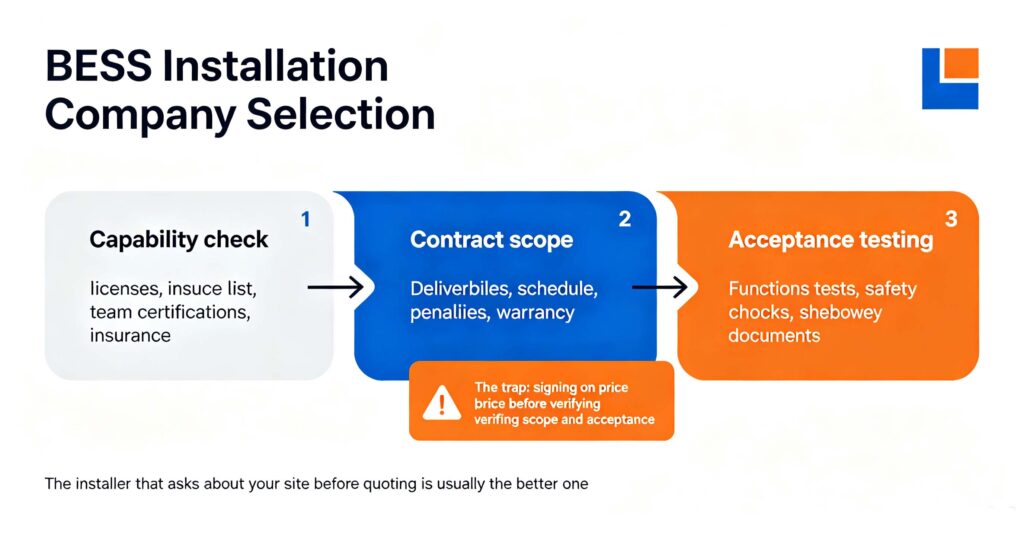
A BESS installation company should be evaluated on three things before any contract: demonstrated capability (licenses, completed projects of similar size, certified installers, insurance), a written scope that defines deliverables, schedule, penalties and warranty, and a defined acceptance test you can actually witness before handover. The install itself is only the visible part of the work; the parts that protect the owner — correct electrical design, proper integration with the existing system, commissioning evidence and as-built documents — are what separate a professional installer from a crew that hangs equipment. In practice, the installer that asks detailed questions about your site, load profile and existing electrical setup before quoting is usually the better choice, because the price is then based on real scope rather than a template.
Choosing a BESS installation company by price alone is one of the most expensive mistakes a project owner can make: rework, missed code requirements and poor handover documentation surface long after payment. This guide gives the capability checks, contract clauses and acceptance criteria that protect the owner. For the installation process itself, see #13 home battery installation first.
BESS installation company capability checks before you shortlist
Shortlist a BESS installation company on documented capability, and verify each item instead of trusting the website.
Licenses and certifications: ask for the licenses that apply in your region and the certifications of the installers who will actually be on site. Crew credentials matter more than the company brochure.
Project references: request completed projects of similar scale and configuration — residential, C&I, or grid-connected — and ask for contactable owners. The best reference is a project older than a year, because commissioning issues show up early.
Insurance and safety record: confirm liability coverage and ask about the installer’s safety procedures for working with live systems. For what can go wrong if safety is skipped, see #87 battery thermal runaway and fire safety.
Manufacturer relationships: an installer with direct relationships with battery and inverter manufacturers usually gets faster technical support for commissioning and troubleshooting. Ask which manufacturers they install and train on.
Contract clauses that protect the project owner
The contract is where the BESS installation company’s understanding of scope becomes binding. These clauses are the ones owners most often miss.
| Clause | Why it matters | What to confirm |
|---|---|---|
| Scope of work | Defines what is included and what is extra | Electrical, mechanical, communication wiring, testing, permits, cleanup |
| Schedule with milestones | Prevents open-ended timelines | Start date, equipment delivery, installation, commissioning, handover |
| Acceptance criteria | Defines when the job is done | Test list, performance thresholds, documentation package |
| Warranty and defects | Covers workmanship after handover | Warranty period, defect definition, response time, who pays |
| Change order process | Controls cost surprises | Written approval before extra work, pricing method |
A written change-order process is the clause that prevents the classic dispute: site conditions differ from the quote, the installer adds work, and the owner pays an unplanned bill. For the site assessment that should happen before the quote, see #110 battery installation site assessment.
Acceptance testing before handover
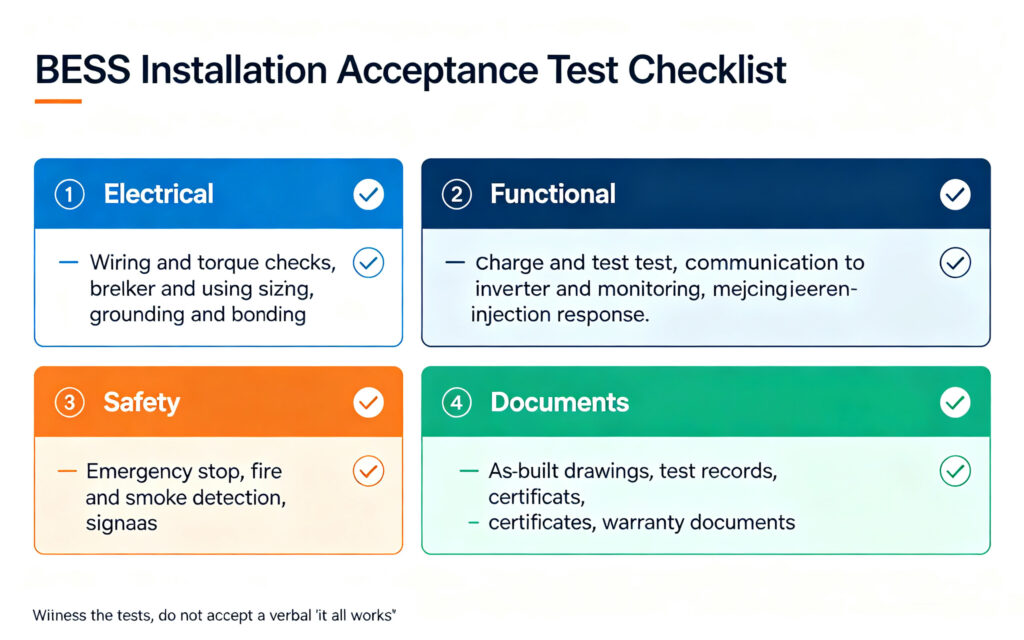
Acceptance testing is the owner’s chance to verify the BESS installation company delivered what the contract promised. Witness the tests; do not accept a verbal “it all works”.
- Electrical verification: torque checks on connections, breaker and fuse sizing against the design, grounding and bonding continuity.
- Functional testing: a controlled charge and discharge cycle, communication to the inverter and monitoring platform, and behavior during a simulated fault or shutdown.
- Safety checks: emergency stop operation, fire and smoke detection if fitted, signage and access clearances.
- Documentation package: as-built drawings, test records, certificates, warranty documents and operating instructions.
The commissioning step that follows acceptance is covered in #111 BESS commissioning and grid connection — plan it into the same contract so the installer stays responsible through grid connection, not just through the physical install.
Common traps when hiring an installer
Most owner-side problems trace to a small set of decisions made before signing.
Price-only selection: the cheapest quote usually has the thinnest scope. Compare scope, not price.
No witness of testing: owners who accept handover without attending tests discover issues after the warranty clock starts.
Unclear responsibility split: when battery, inverter and installer are three different parties, define who owns integration and troubleshooting in writing.
Ignoring site conditions: an installer who quotes without visiting or measuring the site is pricing a guess. For the safety dimension of installation, see #128 battery installation safety and certification requirements.
Q. What should I check before hiring a BESS installation company?
Verify licenses and installer certifications, completed projects of similar scale with contactable references, insurance and safety procedures, and manufacturer relationships. Confirm the scope in writing, including electrical, mechanical, communication, testing and permits. The installer that asks detailed questions about your site before quoting is usually the better choice, because the price reflects real scope.
Q. How do I compare quotes from BESS installers?
Compare quotes only when the scope is identical: equipment list, electrical and mechanical work, testing, permits, and handover documents. If one quote includes acceptance testing and another does not, the price difference is not real. Send the same detailed specification to every installer and require itemized quotes so the comparison is apples to apples.
Q. What should be in a BESS installation contract?
A solid contract defines scope of work, schedule with milestones, acceptance criteria, warranty and defects, and a written change-order process. The acceptance criteria should list the tests you will witness and the documentation you will receive at handover. A change-order process prevents unplanned cost surprises when site conditions differ from the quote.
Q. How long does a BESS installation take?
Installation time depends on system size, site conditions and whether permits and utility approvals are included. A residential system may take days, while a commercial project can take weeks or longer including permitting and grid connection. Confirm the schedule in milestones — equipment delivery, installation, commissioning, handover — rather than accepting a single promised date.
Q. What is included in BESS installation acceptance testing?
Acceptance testing covers electrical verification (torque, breaker sizing, grounding), functional testing (charge and discharge cycle, communication, fault response), safety checks (emergency stop, detection, signage) and the documentation package (as-built drawings, test records, certificates, warranty). Witness the tests and receive the documents before signing off on handover.
Next step: verify before you sign
A BESS installation company earns its place with capability you can verify, a scope you can enforce, and acceptance tests you can witness. Shortlist on evidence, contract the scope, and do not hand over payment before the test record and documents are in your hands.
- Assess the site first with #110
- Plan commissioning with #111
- Review fire safety in #87
- Ask leekooenergy for a reference BESS installation package: scope of work, milestone schedule, acceptance test list and handover documentation — so your contract protects you from day one