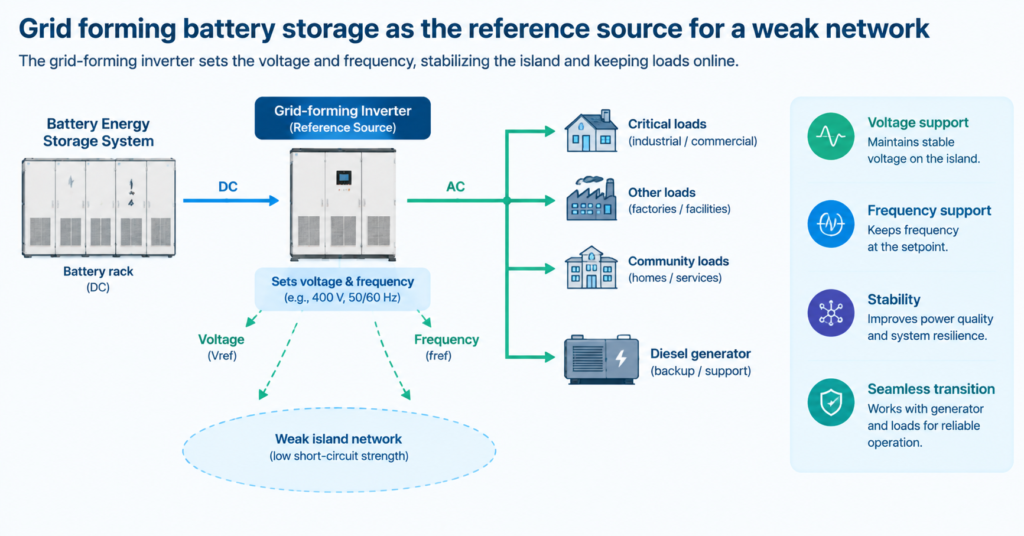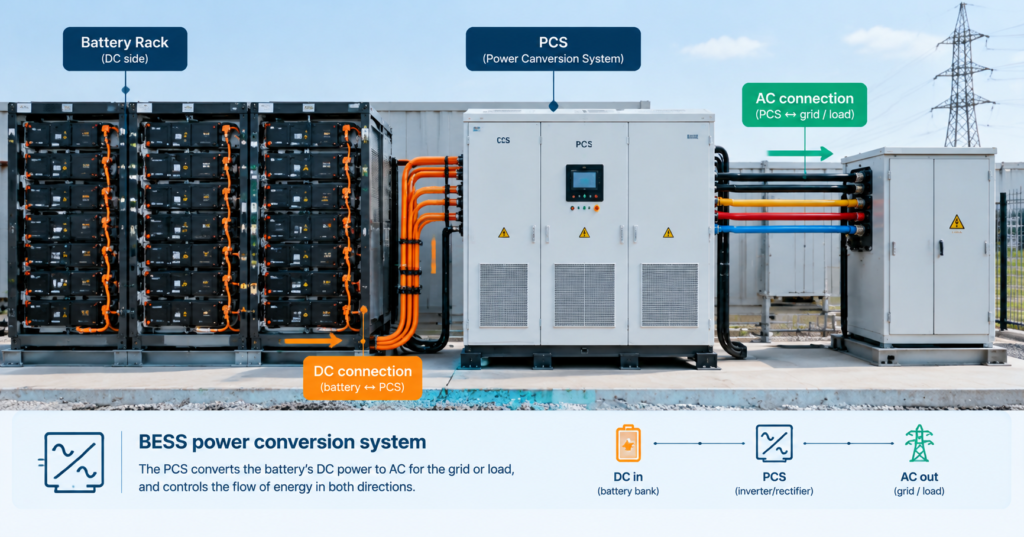
A deep cycle battery for sump pump is a different sizing problem from household storage: the load is surge-heavy but intermittent, and the bank sits idle for weeks between storms. That combination punishes the wrong chemistry and rewards the right one. This guide explains what a sump pump actually draws, how to size a bank for duty-cycle reality, why the chemistry choice matters more here than anywhere else in the house, and what the inverter has to survive at startup.
Sump pump backup fails for predictable reasons: undersized surge capacity, a chemistry that hates standing idle, and a bank nobody has tested since it was installed.
Why the sump pump is the load that matters
The failure scenario writes itself: a storm brings heavy rain, the power goes out, and the water that the sump pump was removing keeps arriving. Basements flood in hours, and the damage is measured in drywall, flooring, furnaces and insurance claims rather than in kilowatt-hours. A deep cycle battery for sump pump is bought against that specific scenario, and the design constraints follow directly from it.
Two properties of the scenario drive everything else. The load is surge-heavy — a pump motor draws several times its running current for the moment it starts — and it is intermittent: the pump runs for minutes at a time, not continuously, so the energy requirement is smaller than the power rating suggests. A bank sized for the surge but ignorant of the duty cycle wastes money; a bank sized for the energy but ignorant of the surge fails at the worst moment. The how to size a home battery method is the general version of this arithmetic.
What a sump pump actually draws
Pump ratings span a wide range, but a typical residential sump pump draws on the order of several hundred to a little over a thousand watts while running, with startup currents two to three times the running figure. The running number sets the inverter’s continuous requirement; the startup number sets its surge requirement, and the second is where cheap inverters fail — they trip on the inrush and the pump never starts.
The duty cycle is what makes the system affordable. In a heavy rain a pump might run for ten to twenty minutes out of every hour; in a normal week it runs for a few minutes a day. Multiply the running watts by the actual run hours and the energy requirement for a long storm is a small fraction of what the power rating implies — which is why a modest bank can cover a weekend outage that its nameplate seems too small for. The 100 amp hour deep cycle battery guide covers how the amp-hour rating translates into that energy.
Sizing a deep cycle battery for sump pump duty
Size from the storm, not the average. Take the pump’s running watts, multiply by the run hours expected in the worst realistic event — a day of continuous rain with the grid down — and double it for a margin, because the storm that floods a basement is always bigger than the one that was planned for. Convert that energy into bank size using the chemistry’s usable fraction, not the nameplate.
| Bank | Usable energy (lithium) | Usable energy (lead-acid at routine depth) | Covers |
|---|---|---|---|
| 50 Ah at 12 V | Around half a kWh | Around a quarter kWh | A short storm; marginal overnight |
| 100 Ah at 12 V | Around one kWh | Around half a kWh | A long storm with a moderate pump |
| 100 Ah at 24 V (or 200 Ah at 12 V) | Around two kWh | Around one kWh | A weekend event with headroom |
Two upgrades stretch the same bank further. A dedicated DC backup pump — a 12 V unit on its own small circuit — sidesteps the inverter entirely and runs directly from the bank, which is why it is the standard recommendation in flood-prone basements. And a float or trickle charger that keeps the bank topped up between events turns a reserve into a standing guarantee, because a bank that has sat half-discharged for a month is not a backup at all.
Chemistry choice: float versus cycle
This is where a deep cycle battery for sump pump diverges most sharply from solar storage duty. A sump backup bank spends almost all its life standing still at or near full charge, punctuated by rare deep events — the exact duty profile of a standby battery, not a cycling one. Lead-acid chemistries tolerate that profile well: they float happily at full charge, they forgive slow self-discharge between storms, and their cost per amp-hour at this size is hard to beat.
Lithium changes the trade. It delivers far more usable energy per nameplate amp-hour and tolerates deep events without complaint, but it costs more upfront and its charging regime has to respect the BMS — a lead-acid float charger connected to a lithium bank is a fault, not a charging strategy. For most residential basements the honest answer is AGM: it floats well, needs no maintenance, tolerates the standby duty, and costs a fraction of lithium. Where the space is tight or the events are frequent, lithium earns its premium. The deep cycle lead acid battery guide covers the lead-acid side in full.
Inverter selection for pump loads
The inverter is the component that decides whether the system works on the day it is needed, and it is the one most often under-specified. Three requirements are non-negotiable for pump duty. Continuous output has to exceed the pump’s running watts with margin. Surge capability has to cover the startup inrush for the second or two it lasts. And the waveform has to be a true sine wave — a modified-square inverter can overheat a pump motor over a long run and is a false economy in a system that exists to be reliable.
One more detail matters in this application more than in household storage: the inverter’s own idle draw. A standby system that energises its inverter continuously wastes energy keeping the inverter awake between rare events, and a bank that trickles away between storms arrives at the storm half empty. Systems that sense the pump’s demand and wake the inverter on demand avoid that drain entirely. The battery powered inverter guide covers the battery-to-inverter side of the same question.
Installation, charging and upkeep
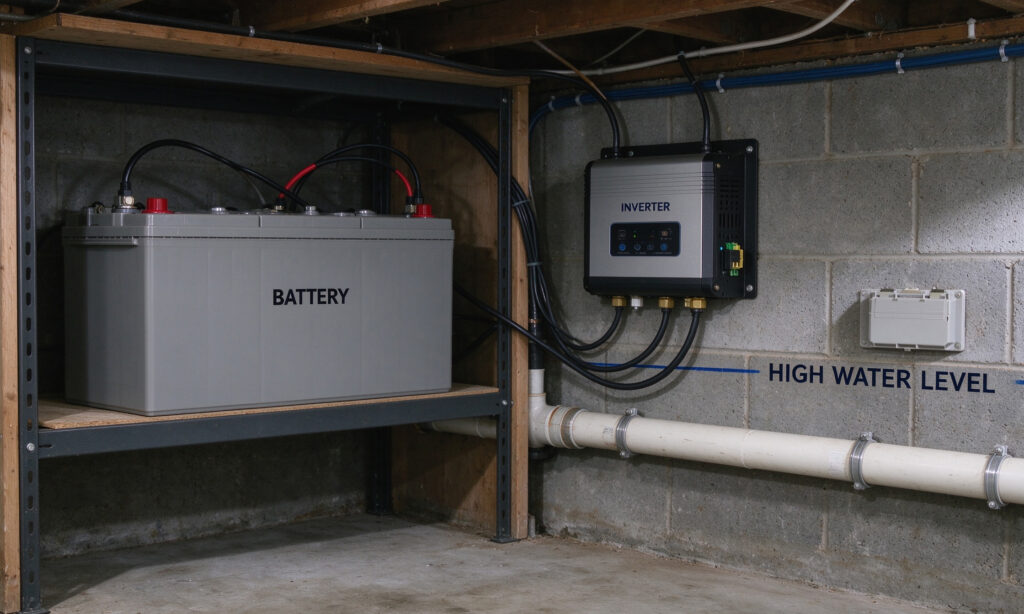
Three installation habits separate a working backup from a flooded basement. Mount the bank and inverter above the highest plausible water line — a battery bank at floor level in a basement that floods is a battery bank that dies in the flood. Ventilate the enclosure, because lead-acid banks release hydrogen during charging and a sealed closet is not an enclosure. And put the system on a circuit that is obviously labelled, because the one time someone needs to reset it is the time nobody can find it.
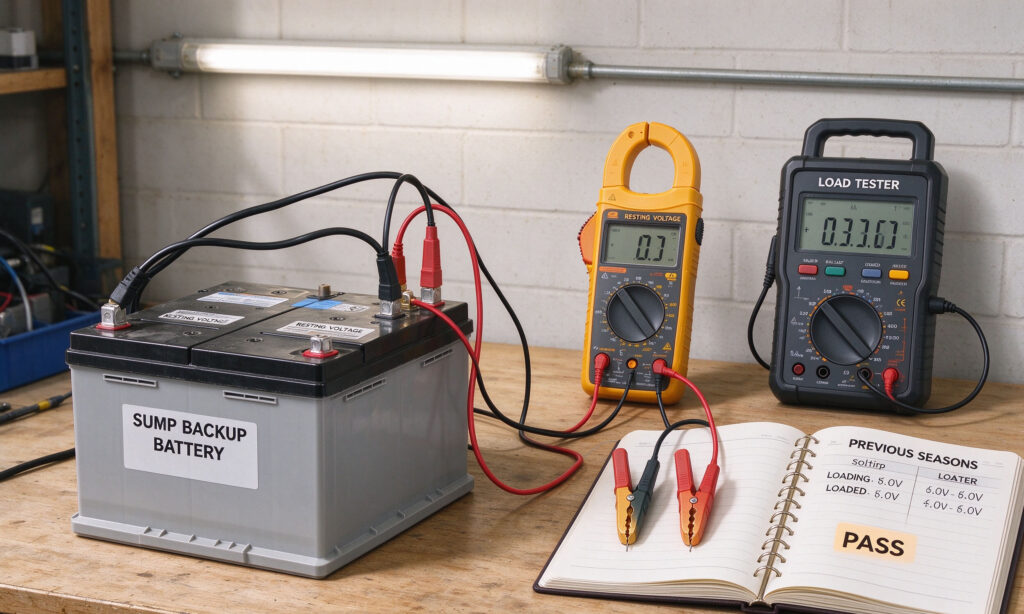
Upkeep is a calendar item, not a feeling. Check the bank’s state of charge monthly and after every storm event, verify the charger is actually floating, and load-test the bank before each storm season — a deep cycle battery load tester is the instrument that answers whether the bank can still deliver under load, which is the only question that matters in an outage. Log the readings; a bank whose resting voltage drifts down season after season is telling you when to replace it, and a bank tested only when the basement is already wet is not a backup system at all.
Q. deep cycle battery for sump pump?
A deep cycle battery for sump pump duty is a standby bank sized for a surge-heavy, intermittent load: enough continuous power to run the pump, enough surge to start it, and enough energy to outlast a long storm.
Q. What size battery do I need to run a sump pump?
Size from the storm, not the average: running watts times the run hours expected in the worst realistic event, doubled for margin, then converted using the chemistry’s usable fraction rather than the nameplate.
Q. Can a deep cycle battery run a sump pump during an outage?
Yes, with the right inverter. The bank has to cover the pump’s running watts continuously and its startup surge, and the inverter must be true sine wave with adequate surge capability.
Q. Is a battery backup better than a generator for a sump pump?
For this specific load, usually yes: a battery starts instantly, needs no fuel, and sits ready for weeks, while a generator has to be fuelled, started and sheltered. The pump’s modest energy demand suits a bank well.
Q. Should I use a dedicated 12V backup sump pump instead?
It is often the better answer. A DC pump runs directly from a small deep cycle bank with no inverter losses and no surge mismatch, which removes the most common failure point in the whole system.
Q. How long will a battery backup run a sump pump?
With a moderate pump cycling as it does in heavy rain, a 100 Ah class bank covers a long storm on lithium and a shorter one on lead-acid at routine depth. Duty cycle, not the power rating, sets the answer.
Q. Do I need a special charger for a sump pump battery backup?
A float or trickle charger that keeps the bank topped up between events is essential. Match it to the chemistry — a lead-acid float charger on a lithium bank is a fault, not a charging strategy.
Next step: size from the storm, not the average
Sump backup is a standby duty with one job. Send the pump model, the worst realistic storm and the basement layout.
- Match the wider backup plan with the whole house battery backup guide
- Size the bank case against the group 24 deep cycle battery guide
- For chisidal, send your usage and site details, and we will come back with product prices, lead time and warranty information.