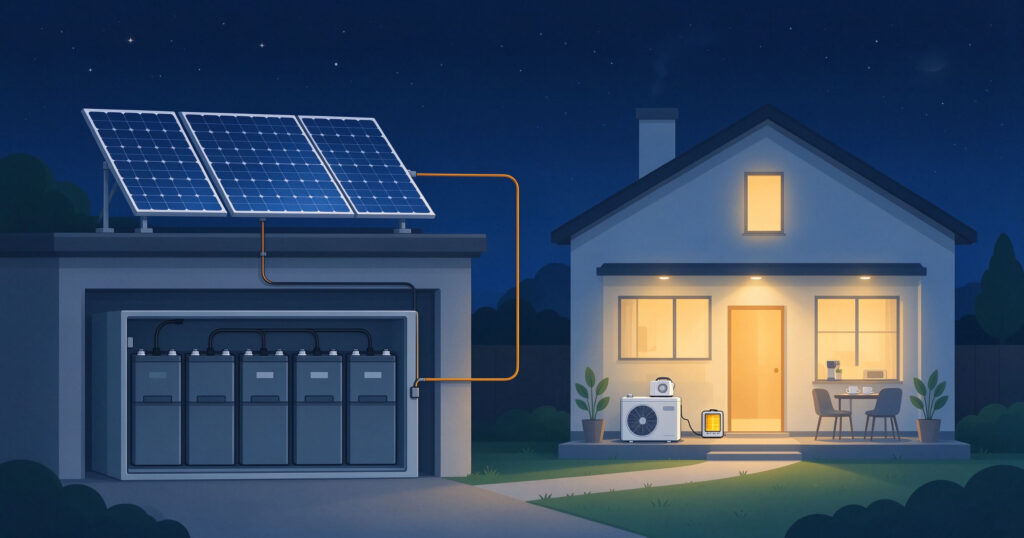
No — do solar panels work at night? They produce effectively nothing after sunset. A module needs photons to separate charge across the junction, and at night the irradiance is orders of magnitude below what the cells respond to. The honest version is that the system still works at night; it just stops generating. Storage covers the gap where a bank exists, and the grid covers it where one does not. This guide explains why output falls to zero, what the inverter does overnight, and how to size the window.
The question sounds naive until you have to specify a system. What happens between sunset and sunrise decides the battery size, the inverter mode and the backup budget.
Why output falls to zero, not to a trickle
A solar cell generates power when light creates electron-hole pairs at the p-n junction and the cell’s internal field separates them. That process needs photons with enough energy, arriving at enough intensity, to produce a usable voltage and current. Daylight scatters from the moon, stars, street lighting and skyglow, but the irradiance at night is so far below the threshold — orders of magnitude below full sun — that the voltage the module can sustain collapses below the point where the inverter will run. The result is not a small output; it is effectively none.
That is a clean boundary rather than a gradual decline, and it matters for system design. Unlike a cloudy day, where output falls but continues, night is a known window: it starts at sunset, ends at sunrise, and its length is a function of latitude and season. A system that has to carry a load overnight can be sized against that window with confidence. The whether solar panels work on cloudy days guide covers the opposite case, where output continues but shrinks.
What the inverter does overnight
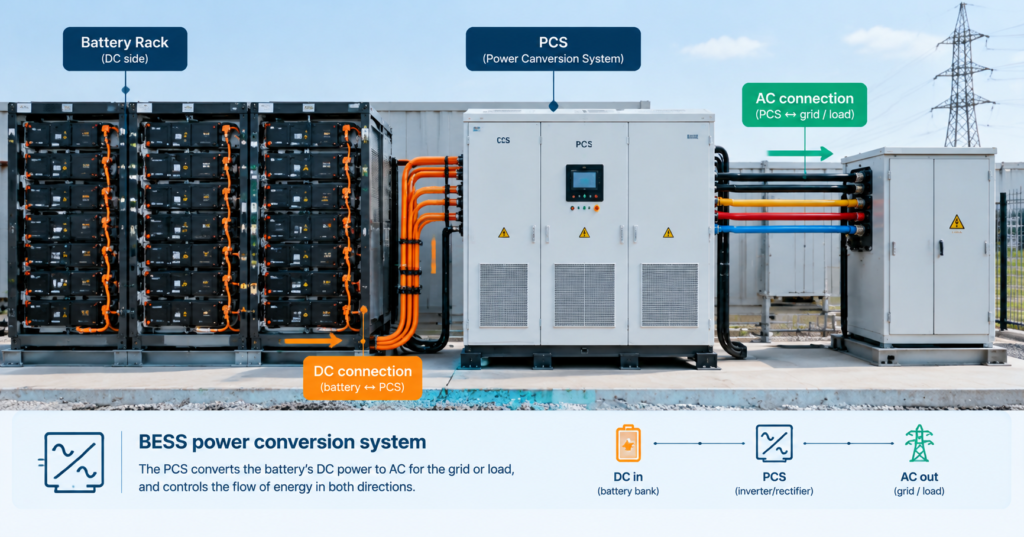
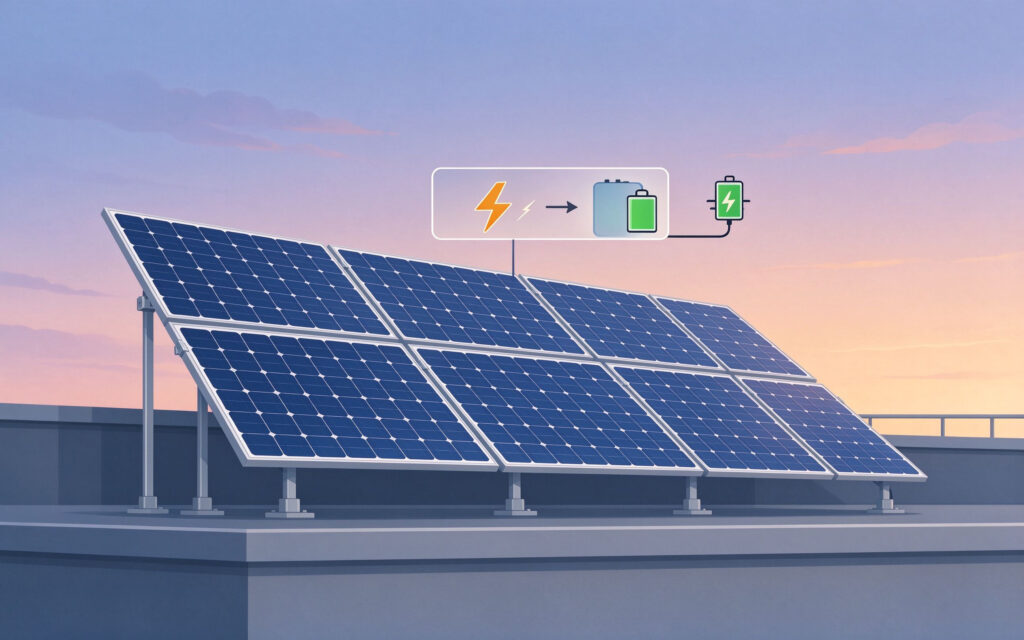
Buyers who ask do solar panels work at night are usually really asking what happens to the rest of the system after sunset — and the inverter is where the answer starts. A grid-tied inverter does not sleep: it keeps its control electronics alive, sampling the grid to stay synchronised, ready to close its relays the moment the array produces enough voltage in the morning. That standby draw is small but not zero — on the order of a few watts — and it is drawn from the grid, not from the panels.
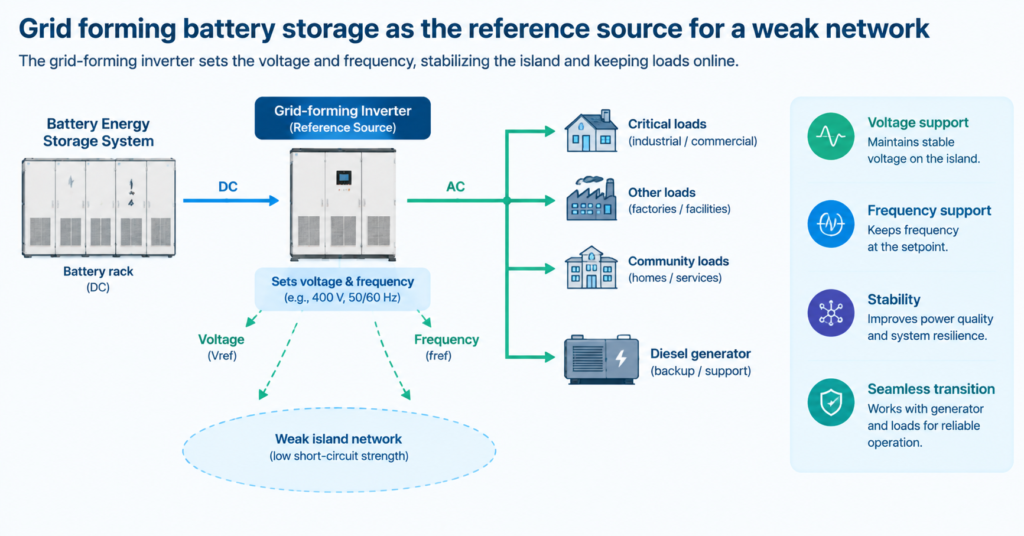
A hybrid or off-grid inverter behaves differently. It holds the battery bank as the source, inverting from DC at night and charging from solar by day. The transition is usually automatic and invisible: the inverter reads which source is available and switches its input accordingly. Some systems add a deliberate grid-charging window overnight to guarantee a morning state of charge, which is a tariff question as much as an engineering one. The how an inverter works guide covers the conversion stage in more detail, and the how home battery charging works guide walks through the source-selection logic.
The handover: storage, grid, or nothing
Every solar installation resolves the night one of three ways. A grid-tied system without storage simply buys grid power overnight — the meter runs backwards by day and forwards by night, and the annual balance is what the payback calculation is about. A system with storage discharges the bank through the evening and overnight, recharging from solar the next morning. An off-grid system does the same with no grid behind it, which makes the overnight window the hard constraint the whole system is sized against. When buyers ask do solar panels work at night, this table is usually the answer they need.
| Configuration | Night source | Sizing consequence |
|---|---|---|
| Grid-tied, no battery | Grid | Array sized to annual consumption; no night constraint |
| Grid-tied with battery | Battery, grid as backstop | Bank sized to the must-run overnight loads |
| Hybrid with backup panel | Battery for backed-up circuits | Bank sized to the backed-up load list only |
| Off-grid | Battery, generator as backstop | Bank sized to the longest expected low-sun stretch |
The whole house battery backup guide covers the whole-house backup configuration, where the overnight window is the specification that drives everything else.
Sizing the overnight window
The arithmetic is the same bottom-up load list used for battery sizing anywhere. Take the loads that run between sunset and sunrise — refrigeration, standby electronics, lighting, any medical or security equipment, a well pump if it cycles — estimate realistic watt figures and hours, and total the energy. Add a margin for the morning restart, when well pumps, water heaters and cooking loads cluster before the array has ramped up.
The overnight total for a modest household commonly lands in the low single-digit kilowatt-hours, which is why banks in the ten-kilowatt-hour class cover it comfortably. Add a heat pump, an electric oven at breakfast or a workshop that runs late, and the same bank is pressed. The how to size a home battery method is the tool for this calculation, and the 10 kilowatt hour battery guide shows what that capacity class covers in practice.
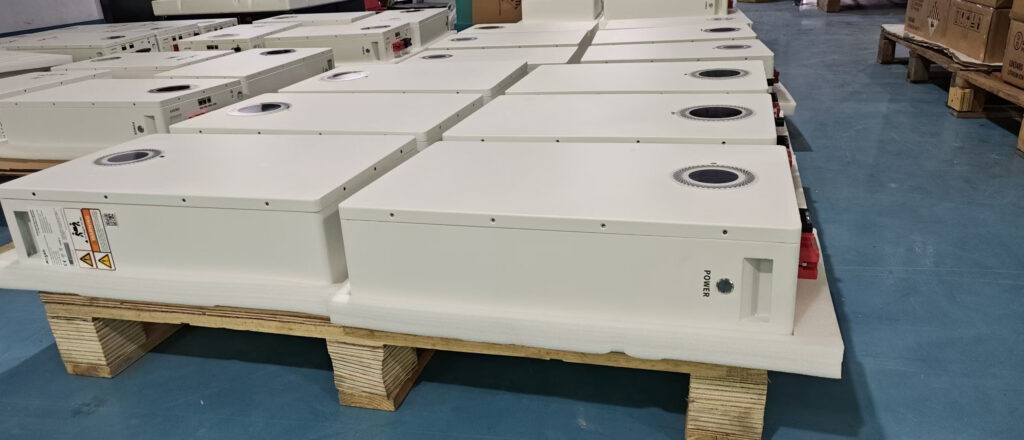
What changes with a hybrid system
Hybrid systems blur the night in a useful way. Where the tariff is cheap overnight, a hybrid can charge from the grid in the small hours and hold the battery for the evening peak instead — the panels become a daytime source and the battery becomes a tariff instrument rather than a backup. Where the tariff is flat, the same hardware is pure resilience. The solar panels for commercial buildings guide covers the commercial variant of this logic, where demand charges make the evening peak disproportionately expensive.
None of this changes the underlying fact. Generation stops at sunset; everything that happens after is storage, grid or load management. The 400 watt solar panel guide covers the daytime side of the same system, and the solar panel maintenance guide covers keeping the daytime output where it should be.
Practical notes
Two habits make the night window cheaper to carry. The first is moving flexible loads into daylight — dishwashers, washing machines, pool pumps and water heating all run perfectly well at noon and not at all at midnight. The second is separating must-run loads from discretionary ones at the panel, so a backup circuit carries the fridge and the network gear rather than the whole house. Neither requires new hardware; both change the battery size the system needs.
A third habit costs nothing either: read the meter before and after the first full night on a new system. The overnight consumption figure — including the inverter’s standby draw — turns the abstract night window into a number you can size against, and it is the first thing to check when someone asks do solar panels work at night and the answer needs to be specific rather than general. The 10 kilowatt hour battery guide shows how that number maps onto the capacity class most households land on.
do solar panels work at night?
No. Solar panels produce effectively no power at night because there is no sunlight to drive the photovoltaic effect. The system still runs overnight on stored battery energy or grid power.
Q. Do solar panels produce anything from moonlight?
Technically a negligible amount — far too little for an inverter to use. Moonlight is roughly a hundred-thousandth of daylight intensity, which is not enough to sustain usable output.
Q. What happens to a grid-tied solar system at night?
The inverter stays in standby, drawing a small amount of grid power to remain synchronised. The house runs on grid electricity; the array contributes nothing until sunrise.
Q. Can solar panels charge a battery at night?
Not from the panels. A hybrid system can charge the battery from the grid overnight if that suits the tariff, then discharge it during the evening peak.
Q. How do I keep the power on at night without the grid?
With a battery bank sized to the overnight load list, and optionally solar charging the next day. An off-grid system adds a generator for long low-sun stretches.
Q. How many night hours does a solar system have to cover?
It depends on latitude and season — commonly in the range of ten to fourteen hours at mid-latitudes across the year, longer in winter and shorter in summer.
Q. Does a solar battery discharge fully every night?
It can, within its depth-of-discharge limits. Many systems deliberately hold a reserve so the bank is not empty if the next day is cloudy.
Next step: size the night, not the day
The overnight load list decides the battery size. Send the must-run overnight loads and the morning peak, and we can size the bank.
- See the daytime counterpart in the ground mounted solar panels guide
- Check the cloudy-day case in the solar panel tilt angle guide
- For chisidal, send your usage and site details, and we will come back with product prices, lead time and warranty information.