Yes — do solar panels work on cloudy days still generate power, typically at roughly 10 to 60 percent of clear-sky output depending on how thick the cloud is and what cell technology you use, because panels respond to diffuse light as well as direct sun. This guide explains why output drops but does not stop, the yield range you can plan around, and the steps — orientation, micro-inverters and array oversizing — that recover some of the loss.
The instinct that a cloudy sky means zero solar is wrong, but the instinct that output falls is right. Panels do not need direct beam sun to make electricity; they respond to the diffuse light that filters through cloud. The real question is not “do they work” but “how much,” and that number is predictable enough to design around.
Why panels still make power under cloud
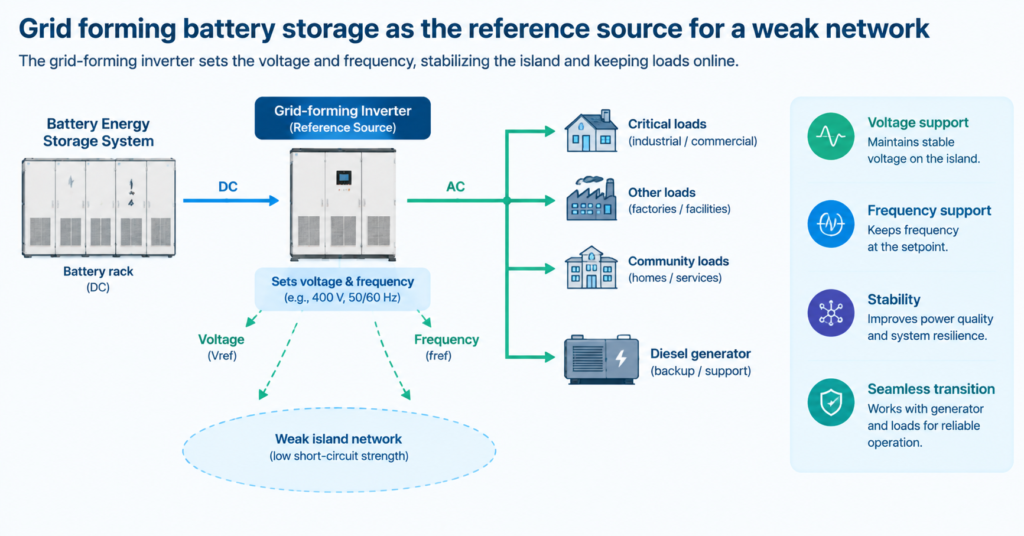
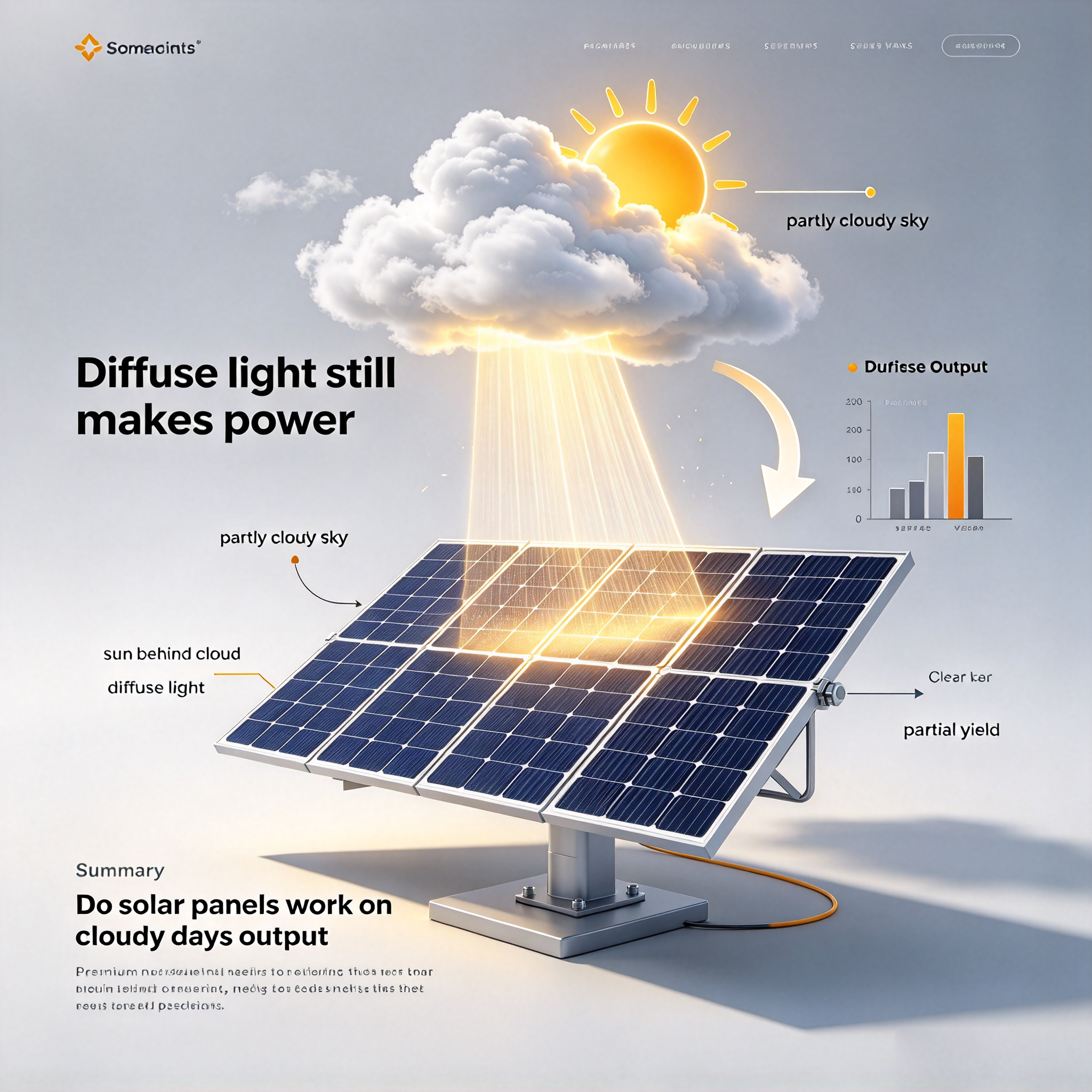
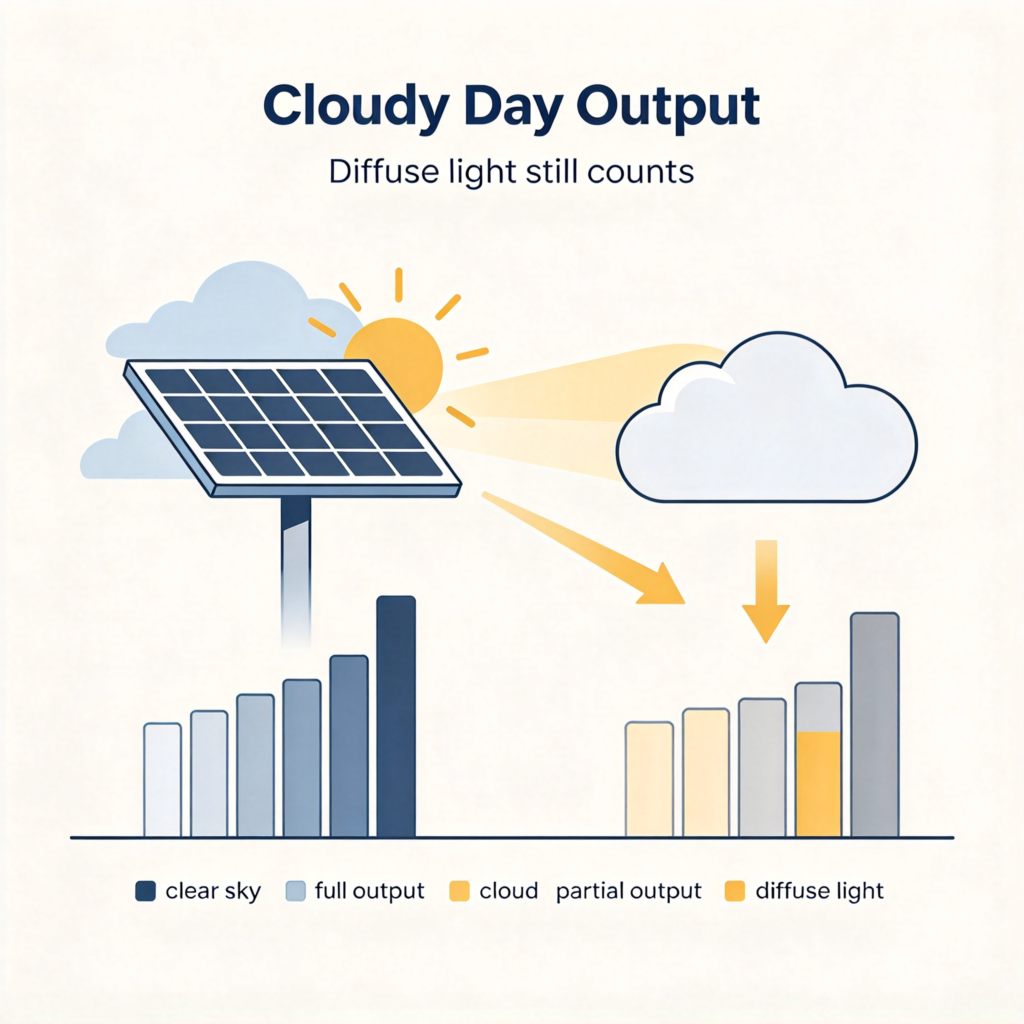
When you ask do solar panels work on cloudy days, the physics answer is that silicon responds to total irradiance, which under cloud is mostly diffuse light scattered through the atmosphere rather than direct beam. A do solar panels work on cloudy days array therefore keeps producing, just at a lower wattage. Thick, water-laden cloud cuts output more than thin high cloud, and the drop is gradual, not a cliff. The best pv module guide module guide and the solar panel dimensions guide dimensions guide set the panels doing the work.
The output range you can plan around
A useful planning band is roughly 10 to 60 percent of clear-sky output: heavy overcast sits near the low end, broken or thin cloud near the high end, and the exact point moves with the cloud and the cell type. Higher-quality cells and certain technologies hold up better in low light, but none escape the drop. The diy solar panel kits complete guide DIY kit guide helps size a system with this band in view.
| Condition | Typical output | Note |
|---|---|---|
| Clear sky | ~100% | Reference, direct + diffuse |
| Thin / high cloud | ~40–60% | Mostly diffuse light |
| Thick overcast | ~10–30% | Heavy scattering |
What recovers some of the loss
Three moves soften the cloudy-day drop. First, aim and tilt the array for your latitude and the low winter sun, since diffuse light still favors good orientation. Second, use module-level electronics — micro-inverters or power optimizers — so a shaded or cloud-affected panel does not drag its neighbors, a point echoed in the solar panel pump fountain pump guide for small systems. Third, oversize the array modestly so even a cloudy-day fraction meets the load. The solar panel cleaning brush cleaning guide adds that soiling compounds the loss, so keep panels clear. For chisidal projects, send your cloud profile and load, then ask for the array and the sol ark inverter installation guide inverter path sized with the diffuse-light band built in.
When clouds matter most
Clouds bite hardest for systems with no storage and no grid backup, because a cloudy week is a real outage. Adding a battery — the solar powered 12v 12V solar guide covers small setups — smooths the gap, and a grid connection covers the rest. Design for the annual cloud band, not the sunny afternoon, and the occasional grey week stops being a surprise.
How much output to expect, and the buffer that matters
Do solar panels work on cloudy days? Yes, but at a fraction of rated power. On a heavy overcast day expect roughly 10–25% of nameplate, on thin high cloud perhaps 40–60%, because diffuse light still carries energy even when direct beam is blocked. The exact drop depends on cell type, with some thin-film and bifacial designs holding up better in flat light.
The practical fix is storage, not weather control. A battery buffer charged on sunny days carries the load when the sky closes in, so the question “do solar panels work on cloudy days” matters less than “how big is the buffer.” Size the bank for two to three cloudy days of typical load, not for the worst storm on record, or the cost runs away. Tilt and cleanliness recover output, too: a steeper winter tilt catches more of the low sun behind clouds, and a film of dust scatters the little light that remains. For chisidal-supplied systems, the array and battery are sized together so cloudy stretches stay a nuisance, not an outage.
Do not trust a bare “all-weather” claim. Ask for the low-irradiance performance curve, not just the STC rating, because that curve is what your cloudy Tuesday actually looks like.
Tilt, cleaning, monitoring and hybrid top-up
Tilt and cleaning recover more on cloudy weeks than most people expect. A winter-steep angle catches the low sun that hides behind cloud decks, and a clean surface stops dust from scattering the thin light that remains. A five-minute rinse after a dry spell can lift a weak array back toward its diffuse-light potential.
Pair the array with a small generator or grid top-up if the buffer runs low for several grey days; the goal is to never fully empty the bank, because deep discharge in cold is where lead-acid dies early. A modest automatic top-up keeps the battery healthy and the load on. For chisidal-supplied systems, the array, battery, and optional top-up are sized as one so cloudy stretches stay a planning note, not an emergency — and remember, “do solar panels work on cloudy days” is the wrong question if the battery beside them is too small to bridge the gap.
Cell technology in diffuse light, and realistic buffers
Not all panels handle clouds equally. Bifacial and some thin-film designs keep more of their output under diffuse, overcast light because they are less dependent on direct beam, while standard monocrystalline drops more steeply. If your site is often grey, the cell technology matters as much as the wattage on the label.
Sizing the buffer realistically is the other half. A battery that covers one cloudy day is a convenience; one that covers three is resilience. Use your typical, not worst-case, grey-day yield to size the bank, then add a generator or grid top-up for the rare long storm so you never deep-discharge in the cold. For chisidal-supplied systems, the array and battery are sized against your actual climate data, so the answer to “do solar panels work on cloudy days” is built into the design rather than left to hope.
A practical takeaway
When planning, treat the cloudy-day question as a sizing input, not a yes-or-no. Pull your site’s typical winter irradiance, size the array to it, and let the battery carry the gap; the panels keep working, and the system keeps running. The cheapest resilience is usually a slightly larger battery, not a larger array.
Plan for the average grey week, not the worst storm, and the system stays boring — which is exactly what you want from backup power.
Q. do solar panels work on cloudy days?
Yes. Do solar panels work on cloudy days still generate power, typically at roughly 10 to 60 percent of clear-sky output, because panels respond to diffuse light filtered through cloud as well as direct sun. Output drops but does not stop.
Q. How much power do solar panels produce on a cloudy day?
A planning band is roughly 10 to 60 percent of clear-sky output: thick overcast near the low end, thin or broken cloud near the high end. The exact point depends on cloud thickness and cell technology; design with the band, not a single number.
Q. Do some panels work better in clouds?
Higher-quality cells and certain technologies hold up better in low light, so they lose less under cloud, but none escape the drop. Orientation and module-level electronics recover more of the loss than cell choice alone.
Q. How can I improve solar output on cloudy days?
Aim and tilt the array for latitude and low winter sun, use micro-inverters or power optimizers so one shaded panel does not drag the rest, and oversize the array modestly. Keeping panels clean stops soiling compounding the loss.
Q. Do cloudy days drain my battery faster?
Indirectly, yes — less harvest means more draws from storage or grid. Adding a battery smooths the gap for off-grid systems, and a grid connection covers the rest. Plan for the annual cloud band, not the sunny afternoon.
Q. Is solar worth it in a cloudy climate?
Often yes, because the annual yield still offsets a large share of load and storage or grid backup covers the grey weeks. The economics follow your local irradiance and tariff, so size the system to the real band.
Next step: design for the cloud band, not the clear sky
Clouds cut output but do not stop it. Confirm your cloud profile and load, then size the array and storage with the diffuse-light band built in.
- Read the best pv module guide best PV module guide before choosing panels
- For chisidal, send your usage and site details, and we will come back with product prices, lead time and warranty information.