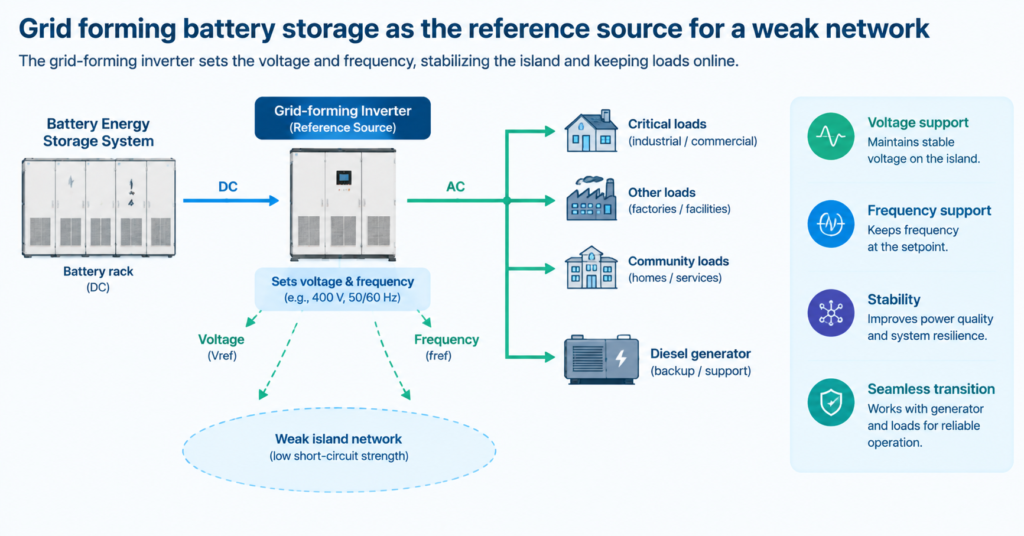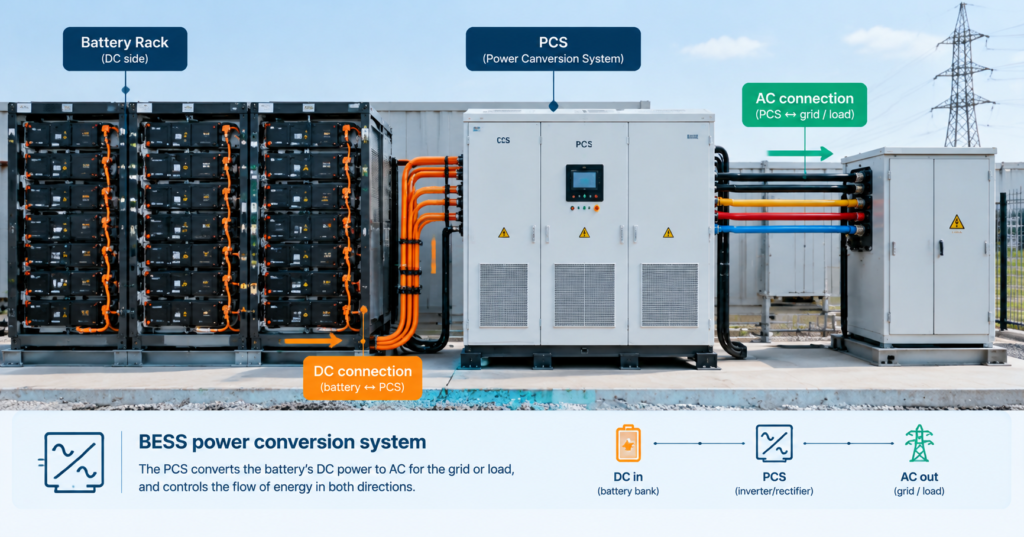
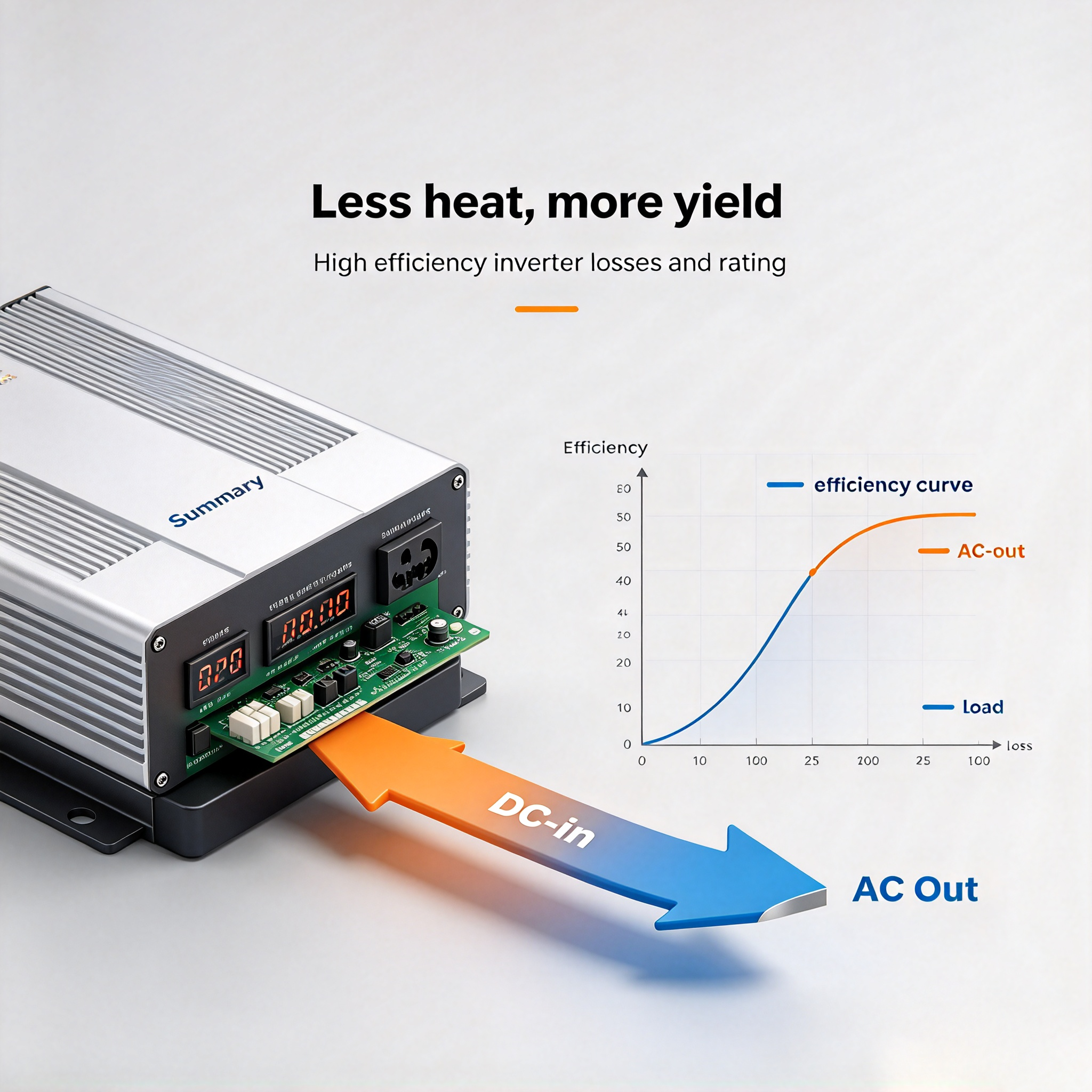
A high efficiency inverter is an inverter that loses a smaller share of the DC energy passing through it to heat, so more of your solar and battery power reaches the load. This guide explains what the efficiency rating really measures, where the losses come from, and how to read the spec sheet — the weighted efficiency and not just the peak number — before you specify one.
Efficiency sounds like a trivial specification until you multiply a few lost percent across every kilowatt-hour for a decade. A high efficiency inverter is not a marketing badge; it is a direct, compounding saving on yield and on the cooling you do not have to provide. The skill is reading the number that actually predicts that saving.
Peak versus weighted efficiency
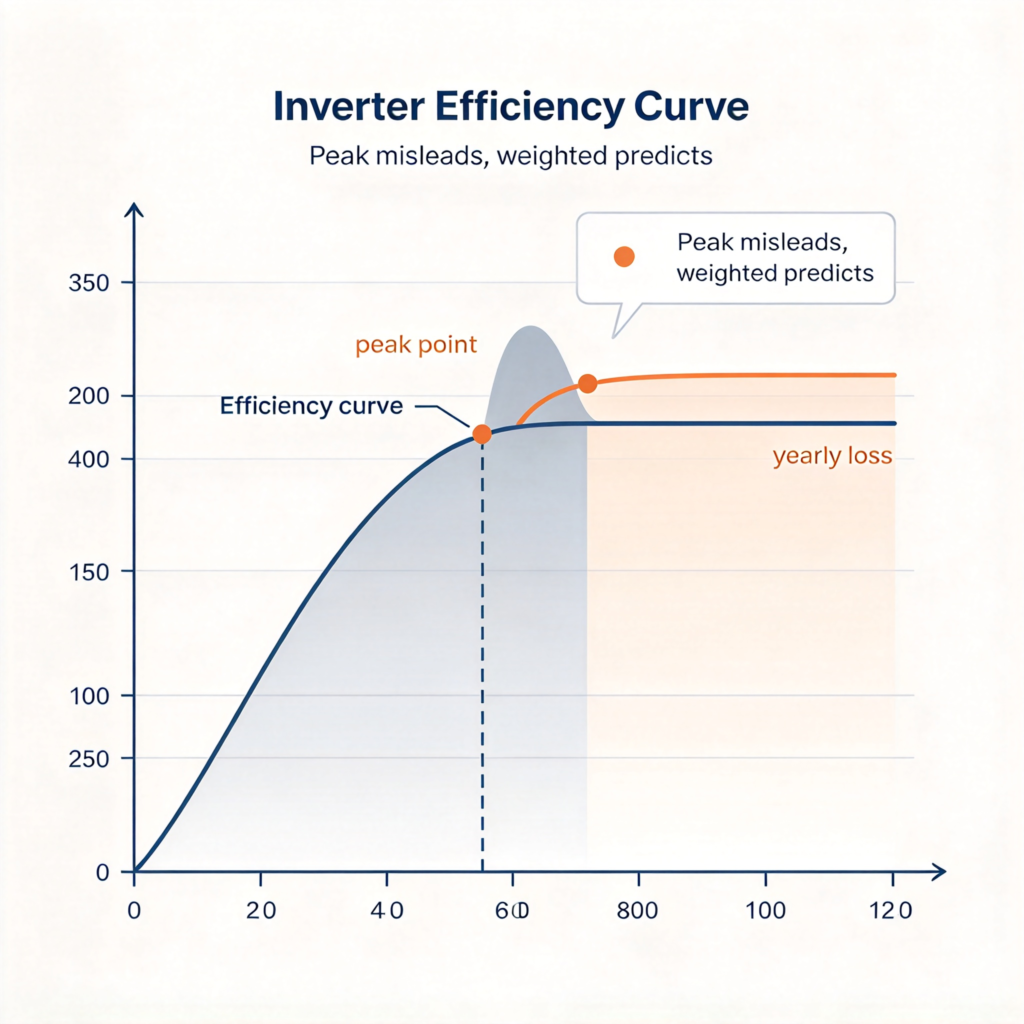
When you evaluate a high efficiency inverter, the headline peak number is the least useful. Real inverters run across a range of loads, and a weighted figure — European or CEC weighted efficiency — averages performance at several load points to approximate daily use. That weighted number is the one to compare, because an inverter that peaks at 98% but sags to the low 90s at light load loses more over a year than a steadier unit. The how an inverter works how-an-inverter-works piece explains the stage that creates the loss.
Where the losses actually come from
A high efficiency inverter loses energy in three places. The DC-to-AC conversion stage itself has a switching loss that the inverter dc to ac solar panel DC-to-AC guide describes. The MPPT or charge stage loses a little tracking the panel. And standby loss — the energy drawn just to keep the unit alive — quietly adds up on a system that sits idle much of the day. A unit that is merely efficient at full load but hungry at idle can undo its own rating.
| Loss source | When it applies | What to check |
|---|---|---|
| Conversion | Whenever inverting | Weighted efficiency |
| MPPT / charge | While charging | MPPT efficiency rating |
| Standby | Idle most of day | Night-time draw |
How to read the spec before you buy
Reading a high efficiency inverter spec means comparing weighted efficiency across candidates, confirming the MPPT efficiency separately, and asking for the standby draw rather than assuming it is small. Then translate the gap into yield: a one-percent weighted-efficiency lead on a system that moves many kilowatt-hours a year is a real, compounding return, not rounding. The all in one solar inverter all-in-one guide and the string solar inverters string-inverter guide show where efficiency sits inside larger choices, and the 48v inverter guide 48V guide frames the voltage class.
Why efficiency pays over the life
A high efficiency inverter pays back through two doors. First, more of every solar and battery kilowatt-hour reaches the load, so a smaller array or battery can do the same job. Second, less heat means less cooling burden and often longer component life. For chisidal projects, send the yearly energy throughput and the load profile, then ask for the inverter with the weighted-efficiency and standby numbers that actually predict the saving — paired with the 48v split phase inverter guide split-phase or how to choose a storage hybrid inverter hybrid-selection path as the application needs.
What the efficiency number really covers
A high efficiency inverter is measured by how little DC power it wastes turning to AC, but the headline number hides the curve. Peak efficiency near full load is easy to quote; what matters more is efficiency at the 10–30% load where homes actually sit most of the day. A high efficiency inverter that falls off a cliff at light load costs more than one with a flatter curve.
Losses hide in standby, in the cooling fan, and in the conversion itself. Look for a low no-load draw, a fan that ramps rather than roars, and a pure-sine output that protects sensitive loads. The efficiency you feel is the area under the curve across a real day, not the single best point on the spec sheet. Match the inverter to the load shape: oversizing means it spends its life in its worst efficiency band, while undersizing clips peaks. Heat is the enemy of both efficiency and life — mount the unit where air moves, keep it out of direct sun and sealed boxes, and respect the derating curve. For chisidal-supplied systems, the unit is sized to typical and peak load together so the high efficiency inverter earns its rating.
Sizing example, monitoring and placement
Size by the real load, not the nameplate. List the watts each device draws, sum the hours they run, and add the surge for motors and compressors; a high efficiency inverter sized to that profile runs in its good band instead of clipping peaks or loafing inefficiently. Oversize the continuous rating by a modest margin for inrush, not by doubling for fear.
Monitor input and output so you can see the efficiency you paid for. A display or external meter that shows DC watts in and AC watts out tells you, at a glance, what the unit is actually costing in conversion. Keep firmware current if the maker ships updates, and keep the cooling path clear of dust. Place the inverter close to the battery bank: every metre of DC cable between battery and inverter is a loss and a heat source, so shorter, thicker cable keeps more of the stored energy and the terminals cool. For chisidal-supplied systems, the high efficiency inverter ships with the load worksheet that justifies its size.
Warranty and room to grow
Buy the high efficiency inverter with headroom for load you will add, not just what you run today, because a system that is exactly sized leaves no room for a new tool or appliance. Check the warranty length and the efficiency guarantee, since a unit that drifts from its rating over a year costs more than it saved. For chisidal-supplied systems, the unit is specced with a margin and backed by documentation so growth does not mean a swap.
Bottom line
A high efficiency inverter earns its rating only when sized, placed, and monitored with intent, so treat the efficiency curve and the cooling path as part of the spec, not as a number on the box.
Waveform and surge rating
A high efficiency inverter is only as useful as its waveform. Pure sine output mimics grid power and runs sensitive electronics, motors, and chargers cleanly; modified sine is cheaper but stresses some loads and hums in others. For anything with a motor or a switched-mode supply, pure sine is the safe default.
Surge rating decides whether the inverter starts your hardest load. Motors and compressors draw several times their running watts for a moment, and a unit that clips that surge either trips or damages the load. Size the high efficiency inverter to the starting surge of the largest motor you will run, not just its running watts, and confirm the transfer handles it. For chisidal-supplied systems, the surge is specced against your actual load list so the inverter starts what it claims to.
Q. high efficiency inverter?
A high efficiency inverter is an inverter that loses a smaller share of the DC energy passing through it to heat, so more solar and battery power reaches the load. Efficiency is the measure of that loss, read as a weighted figure rather than a peak.
Q. What is the difference between peak and weighted efficiency?
Peak efficiency is the best point on the curve; weighted efficiency averages several load points to approximate real daily use. The weighted number predicts yearly loss and is the one to compare across inverters.
Q. Where does an inverter lose energy?
Losses come from the DC-to-AC conversion stage, the MPPT or charge stage while charging, and standby draw while the unit sits idle. A high idle draw can undo a strong full-load rating.
Q. How do I read an inverter efficiency spec?
Compare weighted efficiency across candidates, confirm the MPPT efficiency separately, and ask for the standby draw. Then translate the weighted gap into yearly yield, because a one-percent lead compounds across every kilowatt-hour.
Q. Does a high efficiency inverter really save money?
Yes, through two doors: more of every kilowatt-hour reaches the load so a smaller array or battery can suffice, and less heat eases cooling and can extend life. The saving compounds over the system’s life.
Q. Which certification covers inverter efficiency?
Efficiency is expressed against test methods such as CEC and European weighted schemes; safety and interconnection sit under UL 1741 and IEC 62109. Confirm the exact edition and local amendments for your market.
Next step: compare the weighted number, not the peak
Efficiency only pays if you read the figure that predicts yearly loss. Confirm the throughput and load profile, then compare weighted efficiency and standby draw on purpose.
- Read the how to choose a storage hybrid inverter hybrid inverter selection guide before specifying
- For chisidal, send your usage and site details, and we will come back with product prices, lead time and warranty information.