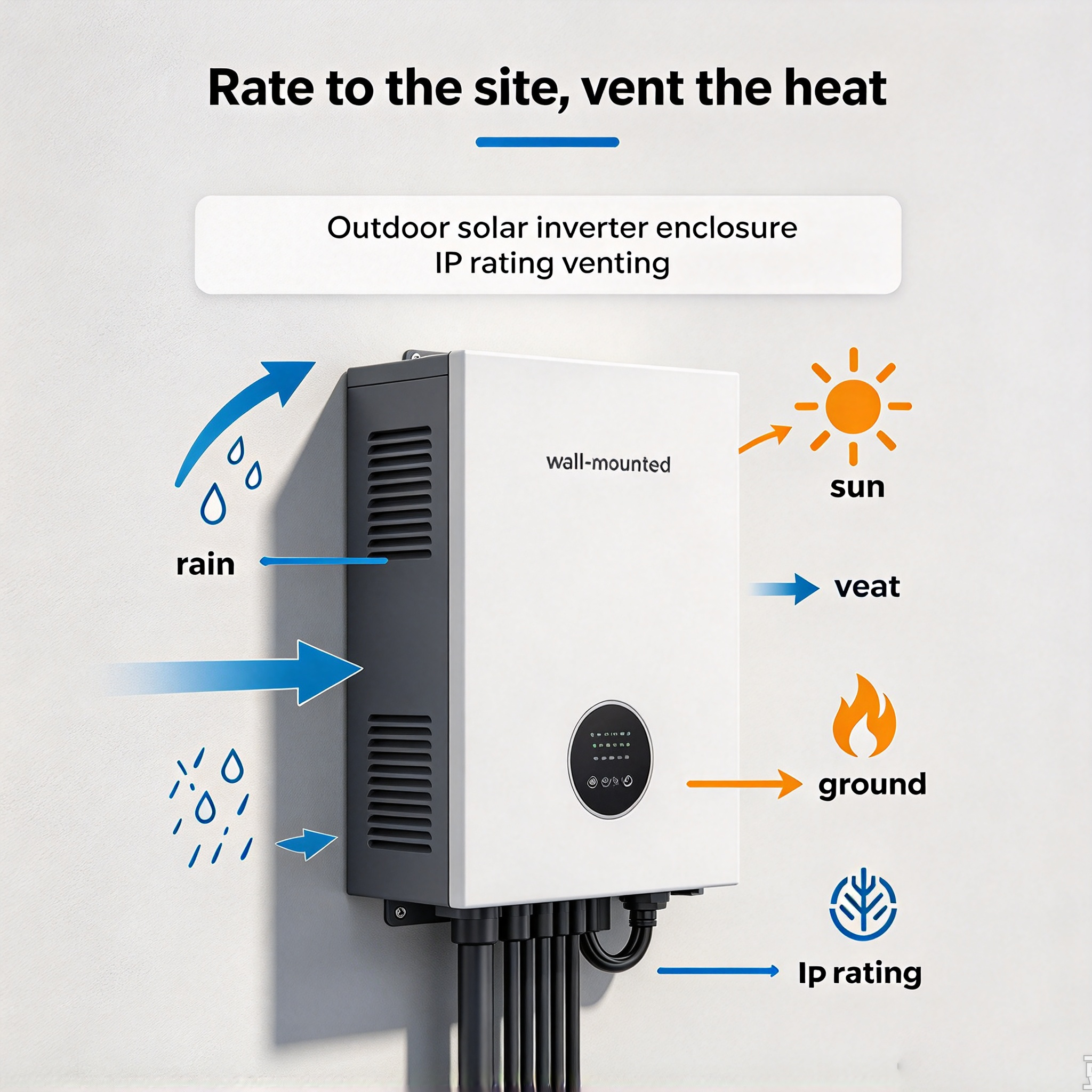
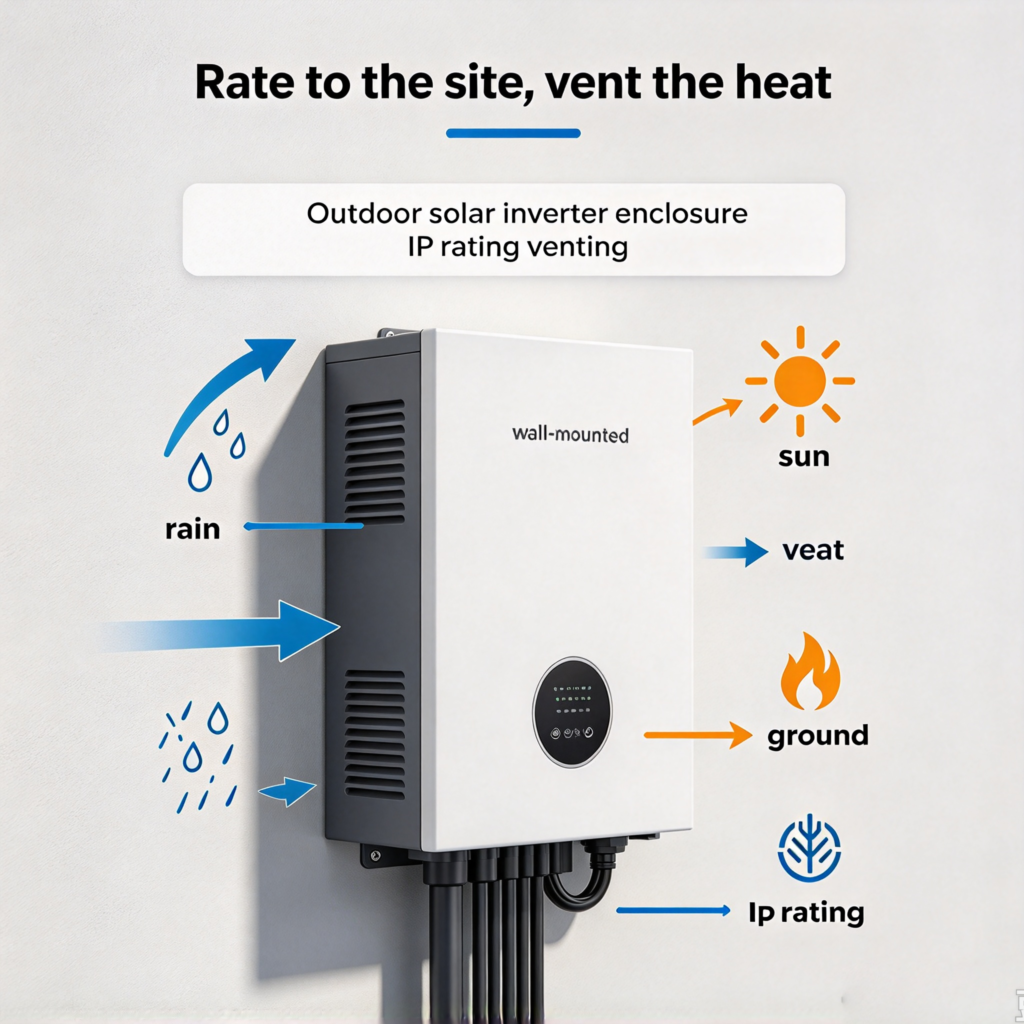
An outdoor solar inverter enclosure is the housing — a cabinet, box or weatherproof shell — that protects a solar inverter from rain, dust and heat while still letting it vent and stay serviceable outside. This guide covers the IP and NEMA ratings that define the protection, the ventilation and cooling the inverter must keep, and the installation and grounding safety checks that decide whether the enclosure actually does its job.
Putting an inverter outside saves indoor space and shortens cable runs, but it exposes the unit to everything the weather throws at it. The enclosure is the line between a long-lived install and a corroded, overheating failure — and the line is drawn by rating, ventilation and grounding, not by a sealed box alone.
IP and NEMA ratings, and what they mean
For an outdoor solar inverter enclosure, the protection level is written as an IP code (ingress protection against solids and water) or, in North America, a NEMA type. A higher IP or NEMA number means better defense against dust and water jets, but no rating makes a box immune to being submerged or blasted by a pressure washer, and a high rating that traps heat can cause a worse problem than the weather it keeps out. Match the rating to the site — a damp, shaded wall needs less than a salt-air coast — and confirm the exact edition against your market.
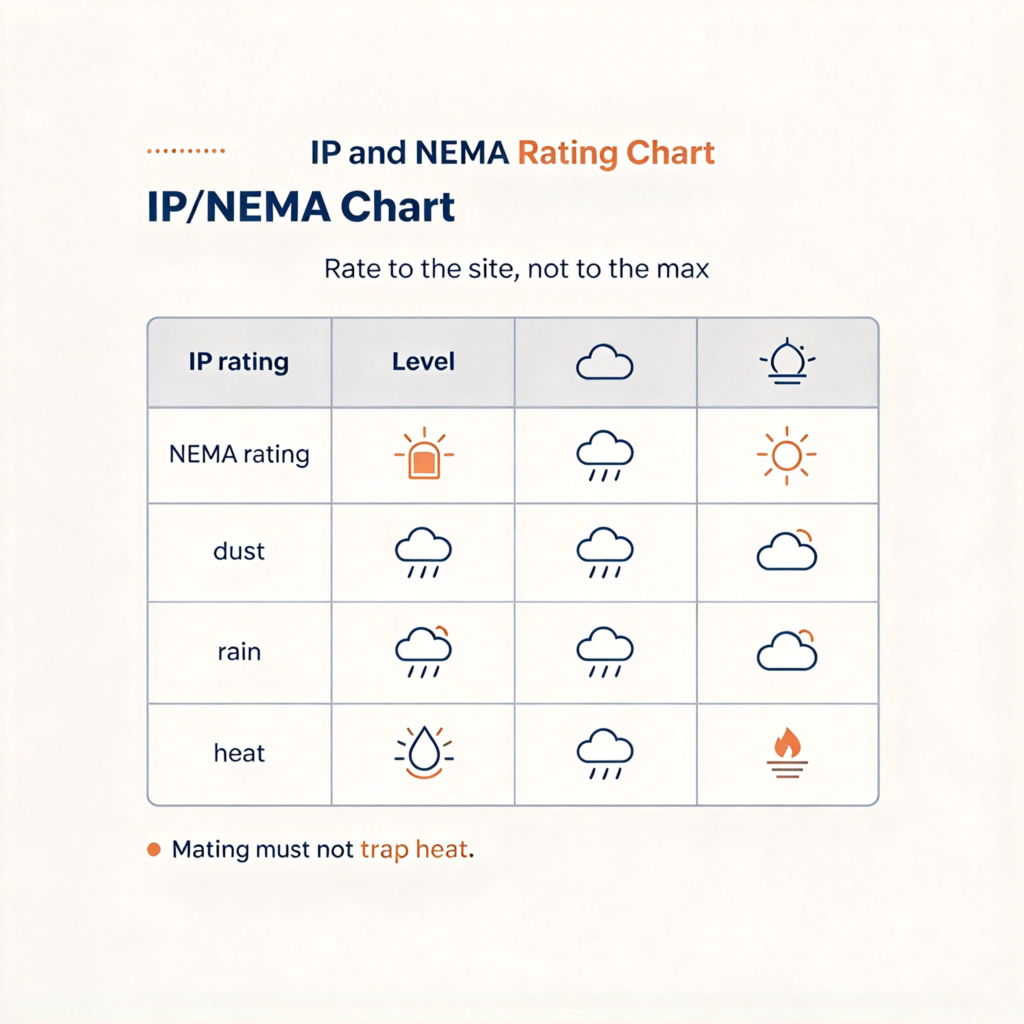
Ventilation and cooling of the enclosure must be maintained
An outdoor solar inverter enclosure has to breathe. The inverter inside makes heat, and a sealed box that blocks rain also blocks that heat unless it is actively or passively vented. Passive vents with moisture traps, filtered fans, or a vented-and-shielded design keep airflow while shedding water; the wrong seal cooks the inverter and shortens its life. The how an inverter works how an inverter works piece describes the heat the conversion makes, and the all in one solar inverter all-in-one guide shows a shared enclosure doing the same job. Size the venting to the unit’s waste heat and the local ambient, not to a generic guess.
| Need | Wrong box | Right box |
|---|---|---|
| Weather | Open to rain | Rated IP/NEMA, sealed |
| Heat | Sealed and cooking | Vented or fan-assisted |
| Service | Hard to reach | Accessible, lockable |
Installation and grounding safety checks
A proper outdoor solar inverter enclosure is mounted clear of standing water, with a drip loop on every conduit so water does not track inside, and bonded to the system ground so a fault has a safe path. Keep it out of direct, unshaded sun where you can, because ambient heat stacks on top of the inverter’s own. The sol ark inverter installation guide installation guide covers the wiring end, the solar pv inverter repair repair guide brackets the lifecycle, and the 48v split phase inverter guide split-phase and how to choose a storage hybrid inverter hybrid-selection guides frame the voltage and phase. For chisidal projects, send the site, the inverter model and the ambient range, then ask for the enclosure rated and vented for that unit as one documented install with the string solar inverters string or 48v inverter guide 48V path planned.
Venting, rating and mounting
An outdoor solar inverter enclosure must solve a contradiction: keep weather out while letting heat escape. A sealed box cooks the inverter; a vented one breathes but invites insects, rain, and condensation. The right outdoor solar inverter enclosure uses screened, drip-proof vents placed so air rises through the unit and moisture cannot follow a straight path in.
Material and rating decide lifespan. Powder-coated steel or UV-stable plastic, an IP rating matched to the exposure (IP65 for driving rain, less for a sheltered wall), and corrosion-resistant hardware keep the box intact through seasons. Skip the cheap enclosure; the inverter inside costs more than the housing, and a failed box kills the system it protects. Mount the outdoor solar inverter enclosure on a wall that stays shaded and aired, clear of sprinklers and pooling water, with enough clearance for the fan and for service. Don’t forget the conduit and disconnect: cable entries should be glanded with drip-loops, and a reachable disconnect keeps service safe. For chisidal-supplied installs, the enclosure and the unit are specified as a pair so ventilation, rating, and access line up.
Condensation, service access and surroundings
Condensation is the enemy of the vented box. Warm day, cold night, and trapped humidity can bead on the inverter’s internals; a vent placed low for air in and high for air out, with a breather that blocks direct rain, keeps the inside dry without sealing it. Avoid stuffing the enclosure with foam that traps moisture against the case.
Plan service access before you close the door. The disconnect, the cable glands, and the inverter’s own display should be reachable without unbolting the unit, and a label inside the lid should name the circuit and the rating. Keep vegetation and storage away from the enclosure so bushes do not grow into vents and a clear metre protects both the rating and the warranty. For chisidal-supplied installs, the outdoor solar inverter enclosure ships with the access and labeling planned so maintenance is a panel, not a project.
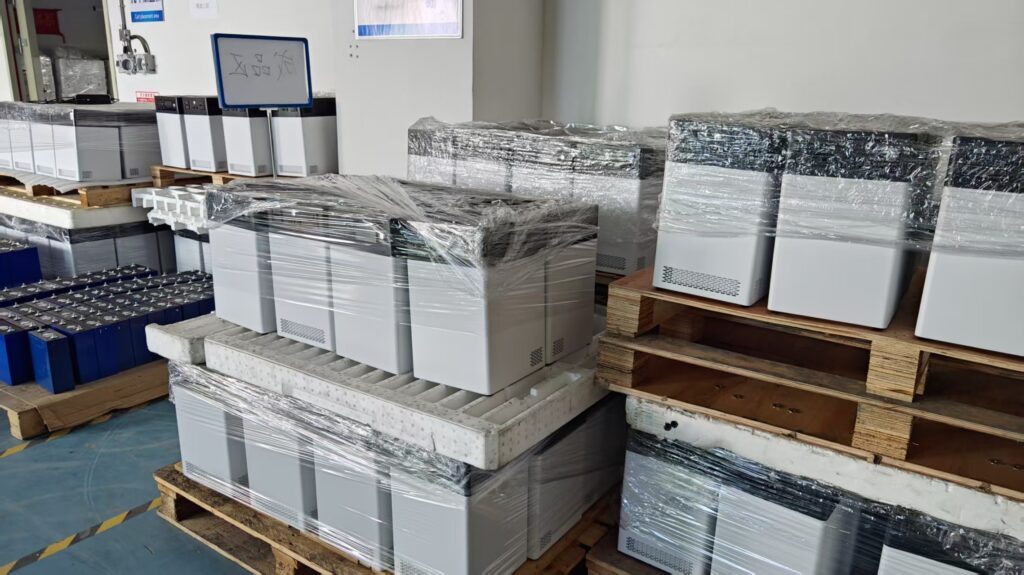
Seasonal inspection of the box
Inspect the outdoor solar inverter enclosure each season: confirm the glands are tight, the vents are clear, and the door seal still keeps weather out after a hard year. A cracked seal or a blocked vent is cheap to fix early and expensive once the inverter inside has suffered. For chisidal-supplied installs, the enclosure ships with the inspection points listed so the routine is a checklist, not a guess.
Bottom line
The outdoor solar inverter enclosure is the difference between a system that survives weather and one that fights it, so spend the effort on venting, rating, and access rather than on the cheapest box you can find.
IP ratings and thermal management
IP ratings are specific, not marketing. The first digit is solids protection, the second is water; IP65 keeps driving rain out but is not submersion-proof, and IP54 tolerates splashes. Match the outdoor solar inverter enclosure rating to where it actually sits — a wall under an eave needs less than a post in an open field — and do not pay for a rating you cannot also deliver with sealed cable entries.
Thermal management is the quiet half of weatherproofing. An enclosure that blocks rain but traps heat forces the inverter to derate, so pair the IP rating with enough vent area and a path for rising air. Passive vents sized to the inverter’s waste heat beat a sealed box with a fan fighting itself. For chisidal-supplied installs, the outdoor solar inverter enclosure rating and the vent area are matched to the unit’s heat, so weatherproofing and cooling are solved together, not in conflict.
Q. outdoor solar inverter enclosure?
An outdoor solar inverter enclosure is the housing — a cabinet, box or weatherproof shell — that protects a solar inverter from rain, dust and heat while still letting it vent and stay serviceable outside. The rating, ventilation and grounding decide whether it works.
Q. What IP or NEMA rating do I need?
Match the rating to the site: a damp, shaded wall needs less than a salt-air coast or a panel-washing location. A higher IP or NEMA number defends better against dust and water jets, but no rating makes a box immune to submersion, and a rating that traps heat can cause a worse problem.
Q. Does an outdoor inverter enclosure need ventilation?
Yes. The inverter makes heat, and a sealed box blocks that heat unless passively vented, fan-assisted or shield-vented. Wrongly sealing the box cooks the inverter and shortens its life, so size venting to the unit’s waste heat and local ambient.
Q. How do I install an outdoor inverter enclosure safely?
Mount it clear of standing water, add a drip loop on every conduit so water does not track in, and bond it to the system ground so a fault has a safe path. Keep it out of direct, unshaded sun where possible because ambient heat stacks on the inverter’s own.
Q. Can I just put the inverter in any box?
No. An ordinary sealed box blocks the heat the inverter must shed and may not keep water out at the conduit entries. Use an enclosure rated and vented for the specific unit and site, with proper bonding.
Q. Which certification applies to an outdoor enclosure?
Ingress and environmental ratings follow IP (IEC 60529) or NEMA 250; electrical safety sits under UL 1741 and IEC 62109 for the inverter inside. Confirm the exact edition and local amendments for your market.
Next step: rate and vent the box on purpose
An enclosure that blocks weather but traps heat fails slower and worse than rain. Confirm the site, the inverter model and the ambient, then match the rating and venting.
- Read the sol ark inverter installation guide inverter installation guide before mounting
- For chisidal, send your usage and site details, and we will come back with product prices, lead time and warranty information.