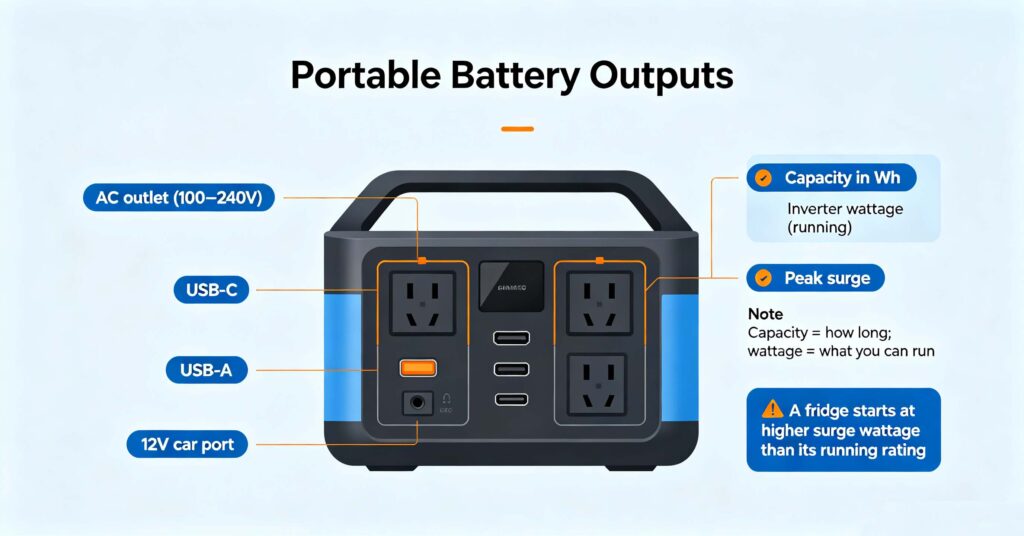
A portable battery with plug socket is a self-contained power unit that stores DC energy in an internal LiFePO4 or NMC battery and uses a built-in inverter to output AC power (a wall-plug socket) alongside USB and 12V ports. It lets you run laptops, small appliances, cameras or lights off-grid, in a power outage or while camping. The two numbers that decide whether it works for you are capacity (watt-hours, which determines runtime) and inverter wattage (which determines what you can plug in — a 500W unit runs a laptop but not a coffee maker). The choice between a portable battery and a fuel generator depends on runtime, noise and indoor safety.
The phrase portable battery with plug socket is how buyers describe
Buyers should also distinguish two specs that are often conflated: the AC output wattage and the AC input (charging) wattage. A 500W unit that powers a laptop and a phone is fine, but if its AC charging input is only 100W, recharging from a wall outlet takes 10 hours — useless if you need it ready by morning. Solar charging input (MPPT) is a separate number again, and a unit that accepts 200W of solar can recharge fully in a sunny day. Before buying, list how you will recharge it: wall, car, or solar, and confirm the input wattage matches your routine. A battery you cannot recharge between uses is an expensive paperweight.
The phrase portable battery with plug socket is how buyers describe what they want: a battery that actually powers normal AC devices, not just USB gadgets. This guide explains the specs that matter and how to match the unit to your devices. For the battery capacity concepts behind these units, see #143 high capacity batteries guide.
One detail buyers miss is the inverter efficiency. A cheap inverter loses 15–20% of the battery energy as heat, so a 500Wh unit with an 80% efficient inverter delivers only 400Wh to your devices. A pure sine wave inverter with 90% efficiency delivers 450Wh. Over a week of camping, that difference is a full recharge. Check the inverter efficiency rating, not just the capacity number, when comparing two units at the same price.
Portable battery with plug socket: the two numbers that matter
When you compare a portable battery with plug socket, two specs decide whether it fits your use. Everything else is secondary.
| Spec | What it controls | How to read it |
|---|---|---|
| Capacity (Wh) | Runtime | Higher = longer; divide by device watts |
| Inverter wattage | What you can plug in | Running watts + surge start |
| Ports | Device compatibility | AC, USB-C, 12V as needed |
| Weight | Portability | Bigger capacity = heavier |
For the 12V capacity comparison that underlies these units, see #141 12V battery sizes.
For indoor emergency use, the realistic load list is shorter than people think. A modem and router use 15–30W, a phone charges at 20–30W, a small LED light uses 5–10W, and a CPAP machine on DC uses 30–60W. A 500Wh unit handles all of these overnight. What it does not handle is a microwave (800–1,200W running, higher startup), an electric kettle (1,500W), or a space heater (750–1,500W). Buyers who plan for those loads need a 1,000W+ inverter rating and a 1,000Wh+ battery, or they should plan to run one appliance at a time. Be honest about which loads you actually need indoors during an outage; most people overestimate.
What can a portable battery with plug socket actually run?
A portable battery with plug socket is not a wall outlet in a box — it has limits. Match devices to the inverter wattage.
Likely to run (500W–1000W class): laptops, phones, LED lights, routers, small fans, phone chargers, cameras, CPAP machines on DC/12V.
Need larger wattage (1000W+): mini fridges, small TVs, electric pumps, power tools, small coffee makers.
Usually too much: air conditioners, heaters, electric kettles, microwave ovens — these draw 1,000–1,500W or more and often need a larger unit or generator.
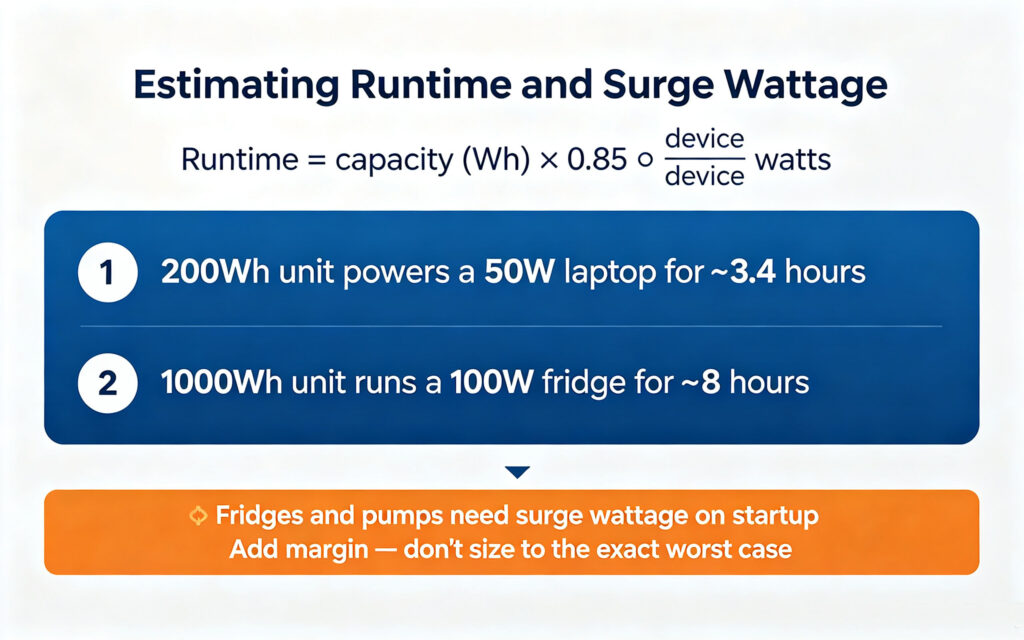
Remember the surge: a fridge may run at 100W but start at 600–1,000W. The unit must handle the startup surge.
Portable battery vs fuel generator
Buyers choosing a portable battery with plug socket often compare it to a generator. The trade-offs are clear.
Portable battery wins: silent, zero fumes (safe indoors), instant startup, low maintenance, clean power for electronics.
Generator wins: much longer runtime with fuel refill, higher wattage for heavy loads, lower cost per hour for long outages.
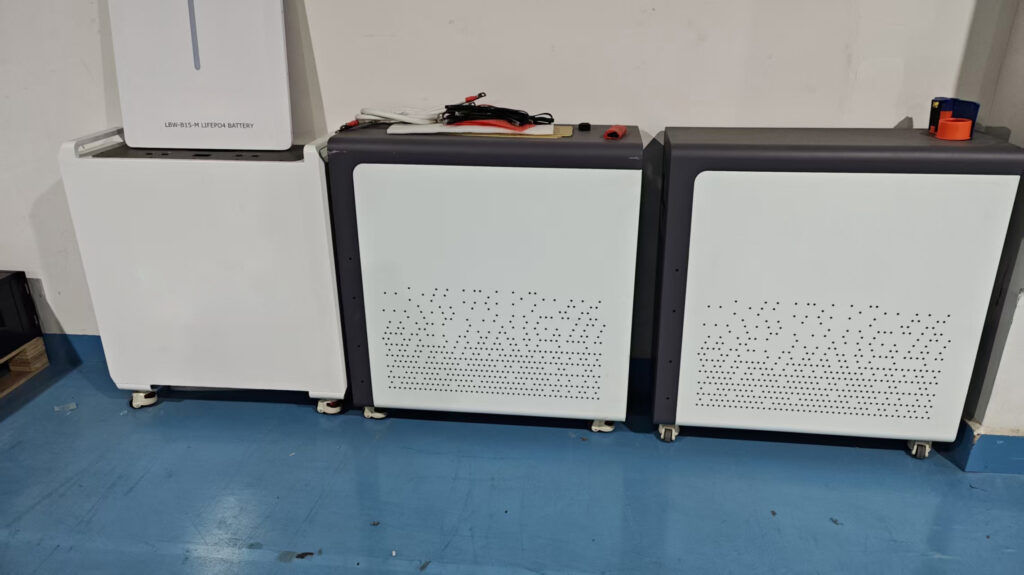
For short outages, camping and sensitive electronics, the portable battery is the better fit; for multi-day outages and heavy appliances, a generator or a larger battery system is needed.
Q. What size portable battery with plug socket do I need?
Start with your devices. Add up their running watts and daily use in hours. A 500Wh unit suits laptops, lights and phones for a day. To run a CPAP overnight, look for 500Wh or more. For a small fridge, you need 1,000Wh or larger. Calculate your watt-hours and add 20% margin before choosing.
Q. How long does a portable battery with plug socket last?
Runtime equals capacity in watt-hours times 0.85 (inverter efficiency) divided by your load in watts. A 500Wh unit powers a 50W laptop for about 8.5 hours. A 100W fridge runs for about 4 hours. Heavy loads like a kettle drain it in minutes. Check both the capacity (Wh) and the output wattage before buying.
Q. Can I use a portable battery indoors?
Yes, and that is a key advantage over a fuel generator. A portable battery with plug socket produces no fumes, has no carbon monoxide risk and runs silently. It is safe in apartments, bedrooms and offices. It does not replace a whole-home generator for long outages, but for indoor overnight use it is the safest option.
Q. Is a portable battery better than a generator for camping?
For camping, usually yes. A portable battery is silent, does not disturb the campground, and powers electronics without refueling. A generator runs longer and handles heavy loads, but is loud and requires fuel storage. Many campers use both: the battery for nights and morning, the generator for longer trips or high-power needs.
Q. Can I add solar panels to a portable battery with plug socket?
Many portable batteries support solar charging via a built-in MPPT controller. Use foldable solar panels rated at the unit input wattage (often 100–200W). A sunny day recharges a 500Wh unit from two 100W panels. Check the solar input wattage before buying panels — a 50W input charges even 200W panels slowly.
Next step: size the battery to your actual devices
For a portable battery with plug socket, match capacity to runtime and inverter wattage to your highest-draw device. Write down your device list before buying, and remember the startup surge on fridges and pumps.
- Understand capacity in #143
- See 12V capacity in #141
- Compare portable power stations in #82
- Ask leekooenergy about larger lithium battery systems for backup or off-grid use when a portable unit is no longer enough