A 6 volt auto battery is a six-volt lead-acid battery used where older vehicles, small tractors, golf carts and lanterns were designed around a 6V electrical system, or where several are stacked in series to make 12V, 24V or more. This guide explains why the 6V size still exists, the typical capacity you get, and the series-wiring rules that let two or more become a higher-voltage bank without changing the amp-hour rating.
Six volts looks outdated next to the 12V system in every modern car, but 6V batteries are not a relic. They survive because legacy equipment expects them, and because wiring identical 6V units in series is a clean way to build a 12V or 24V bank from rugged, flood-proof cells. The trick is knowing when 6V is correct and how the series math actually works.
Why a 6 volt auto battery is still specified
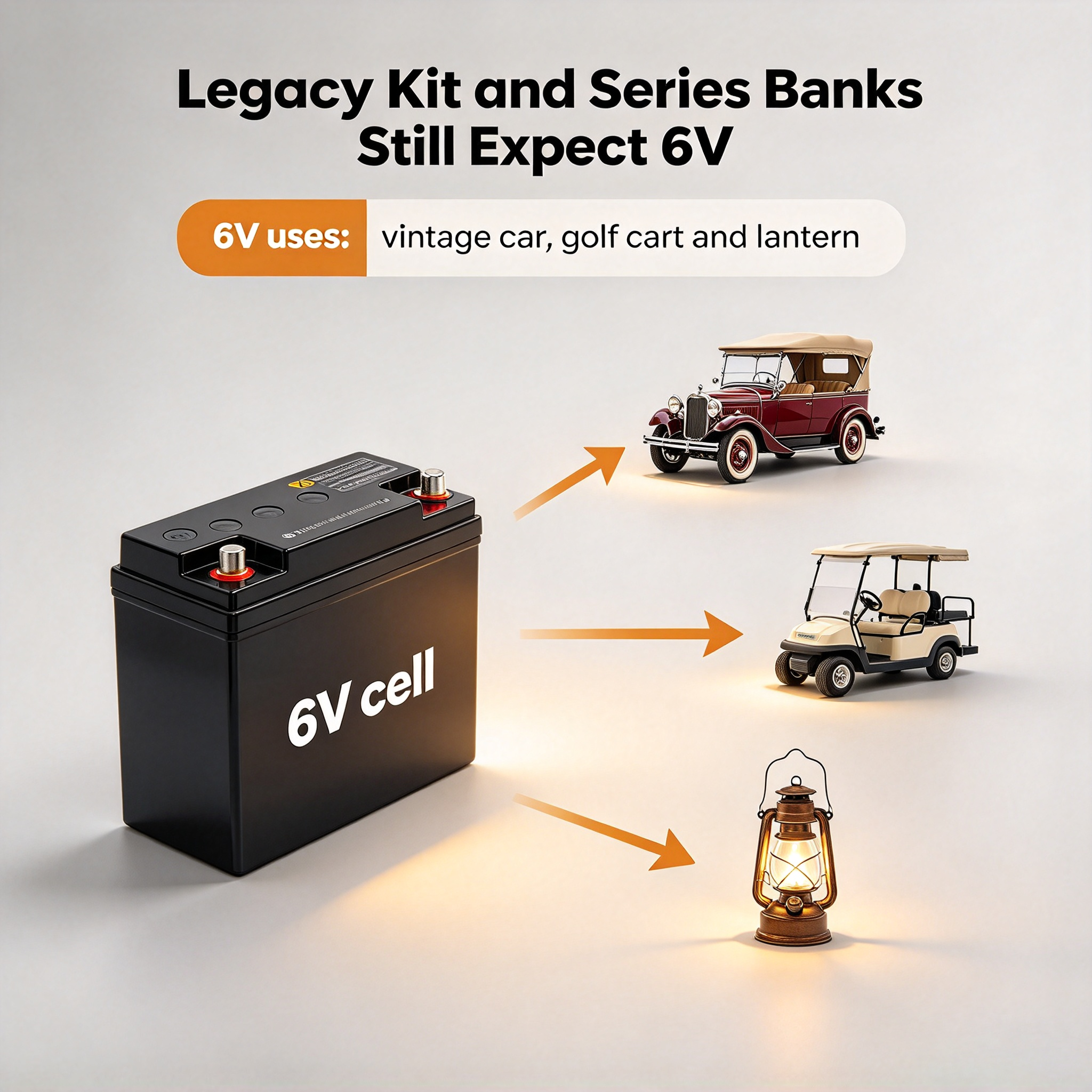
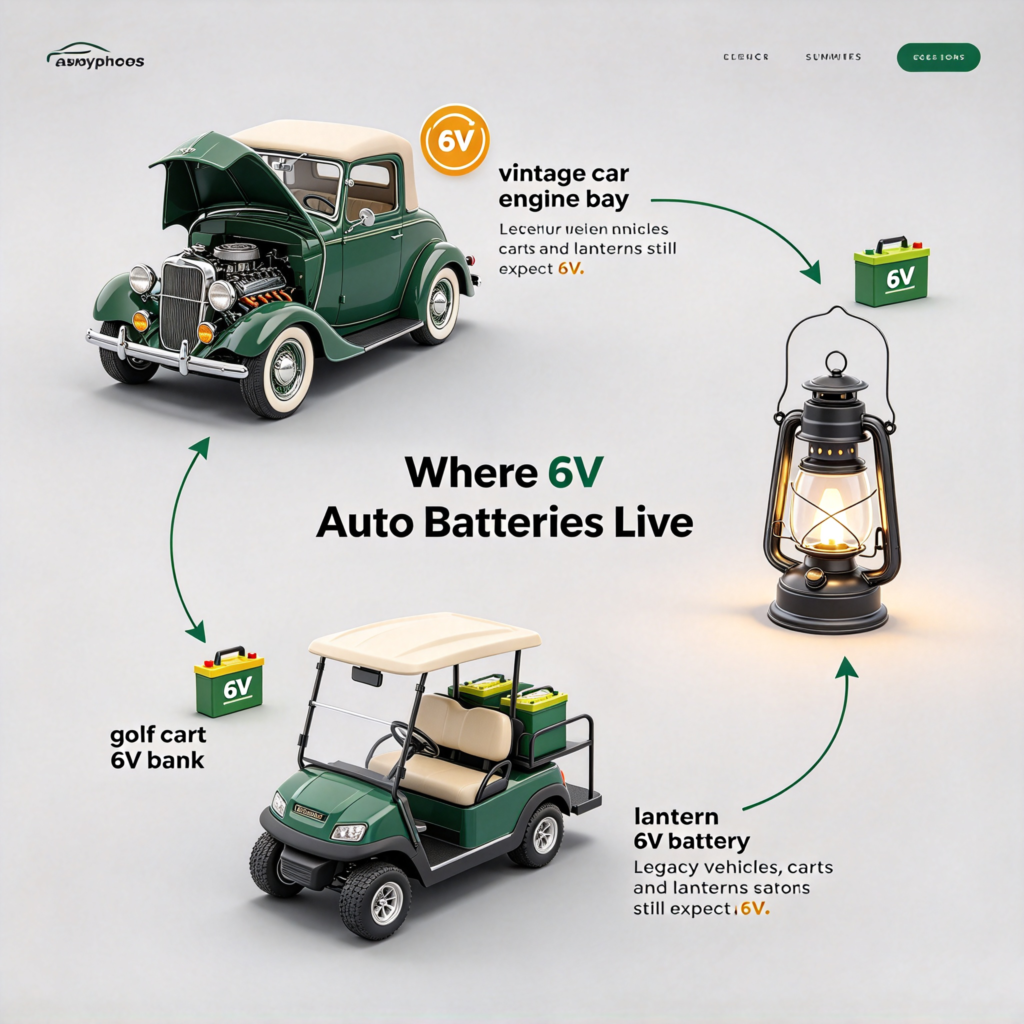
The 6 volt auto battery remains the right part for three jobs. First, any pre-1960s vehicle or vintage tractor left the factory with a 6V positive-ground or negative-ground system, and forcing 12V into it means rewiring lights, gauges and the generator. Second, golf carts and some industrial trucks run on banks of 6V cells in series because the individual 6V case is a proven, thick-plate design. Third, lanterns and old radios take a single 6V unit directly. For chisidal buyers, the lithium 6 volt battery guide lithium 6V guide covers the modern drop-in alternative, but the classic lead-acid 6V job is its own duty.
Typical capacity and what drains it
A 6 volt auto battery in the common flooded form usually rates in a band around 180 to 230 amp hours at the 20-hour rate for the large golf-cart-style 6V cell, while smaller automotive 6V units rate far lower because they are built for cranking, not deep cycle. Because these are lead-acid, only about half the rated capacity is safely usable in deep-discharge service. The lithium auto battery fleet starter fleet-starter piece covers the lithium auto side if you are upgrading a vehicle rather than restoring it.
Match the rating to duty: a cranking 6V unit is wrong for a daily deep-cycle cart bank, and a deep-cycle 6V is over-built for a lantern. Read the 20-hour amp-hour line and the reserve capacity, not just the group size.
Wiring two 6V batteries in series to make 12V
To get 12V from a 6 volt auto battery, connect the positive terminal of the first battery to the negative terminal of the second; the free negative of the first and free positive of the second become your 12V output. Voltage adds (6V + 6V = 12V) while amp-hour capacity stays the same — two 200 Ah 6V units in series give 12V at 200 Ah, not 400 Ah. This is the rule that lets a golf cart run on six 6V cells in series for 36V while keeping one sane capacity number.
| Configuration | Voltage | Amp hours | Use |
|---|---|---|---|
| Two 6V in series | 12V | same as one | 12V legacy or house bank |
| Four 6V in series | 24V | same as one | 24V systems, telecom |
| Six 6V in series | 36V | same as one | Golf cart traction bank |
Charging and safety notes
A 6 volt auto battery bank must be charged at the series total voltage (a 12V pair needs a 12V charger, not two 6V chargers), and flooded units need watering and upright mounting. Keep lead-acid enclosed cells vented, and if you move to lithium, confirm the charger is lithium-aware. The 12v lifepo4 deep cycle battery hub 12V deep-cycle hub and the 12v lifepo4 battery 12V lithium guide explain the modern alternatives once you leave pure 6V behind.
When to choose 6V over 12V
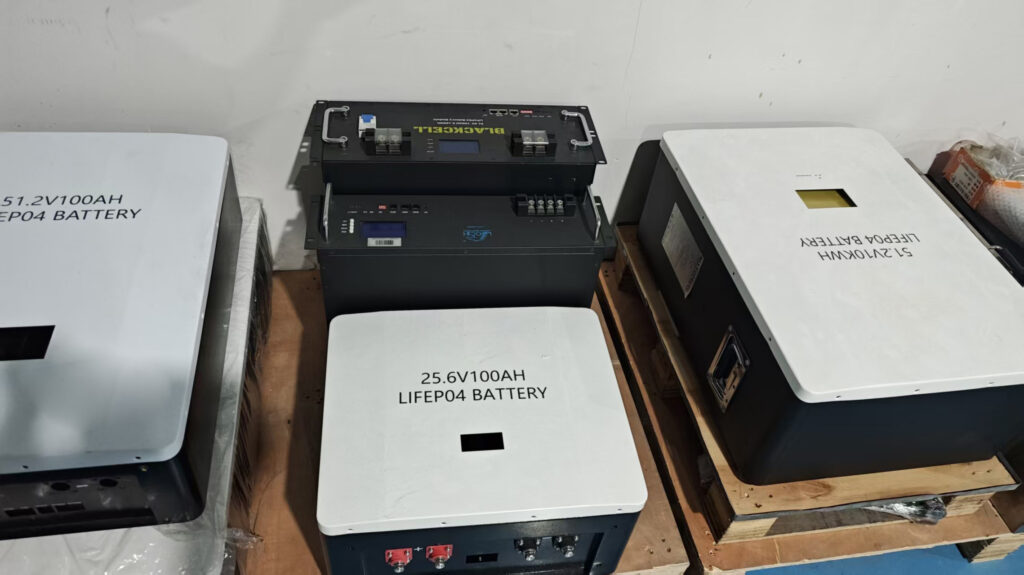
Keep a 6 volt auto battery when the equipment was built for it, when you want the rugged thick-plate cell that golf carts prove, or when a series string is the simplest path to 24V or 36V. Move to 12V when the vehicle or appliance is modern and the rewire cost is low. The 48v 300ah rack mount lithium battery 48V rack unit and the 12v deep discharge battery 12V deep-discharge guide show where higher-voltage and lithium paths lead.
For chisidal projects, send the legacy voltage, the target bank voltage and the charge source, then ask for the 6V-class units — flooded or lithium — matched as one documented set.
Why 6V still appears in cars
A 6 volt auto battery is not a relic; it survives in classic cars, some tractors, and banked golf-cart configurations where two units are wired in series to make 12V with thicker plates. The appeal is durability under deep discharge: a 6V cell is physically taller and carries more active material per amp-hour than a comparable 12V unit, which is why fleet and RV builders still specify them.
Before you fit one, check the tray and the terminal orientation, because 6V units are often narrower and taller than the 12V part they replace. If you run two in series, balance them by age and capacity so one weak cell does not drag the pair. For a chisidal-supplied build, send the application and the series layout; the right 6 volt auto battery is matched to the bank, not bought one at a time.
Cranking versus endurance, testing and storage
Do not confuse a 6 volt auto battery deep-cycle role with cranking. If the same 6V unit must start an engine and buffer a house load, read both the marine-cranking amps and the reserve capacity, because one number describes a burst and the other describes endurance. Most 6V units sold for banks are built for endurance first, so adding a starting job shortens life.
Test by rested voltage and by a load test, not by a quick poke with a meter after charging. Store on a maintenance charger through the off-season, and keep terminals coated so corrosion does not steal the first cold morning’s crank. For chisidal-supplied 6V banks, the build includes the matching charger profile so the pair ages together instead of one outlasting the other.
Series wiring done right
Wiring two 6V units in series to make 12V is simple in principle and easy to get wrong in practice. Connect the positive of one to the negative of the other, then take 12V from the two free ends, and fuse the main run close to the bank. A reversed jumper just makes a 0V pair that confuses every meter, so label the ends before you connect.
The usual killers are corrosion at the terminals, chronic undercharging from a weak alternator, and mixing old and new units in the same bank. A 6 volt auto battery that sits at low state of charge sulfates and never recovers, so keep it topped and keep the pair matched. For chisidal-supplied banks, the two units ship as a matched, dated pair with the wiring diagram so the series connection is obvious.
Q. 6 volt auto battery?
A 6 volt auto battery is a six-volt lead-acid battery used in legacy 6V vehicles, small tractors, golf carts and lanterns, or wired in series with others to build 12V, 24V or 36V banks. The size itself does not define the chemistry or the duty.
Q. What is a 6 volt battery used for?
Common uses are pre-1960s cars and vintage tractors built around 6V systems, golf carts and industrial trucks running series 6V banks, and lanterns or old radios that take a single 6V unit. It survives wherever equipment was designed for 6V.
Q. How do I wire two 6 volt batteries to make 12V?
Connect the positive of the first battery to the negative of the second; the remaining free negative and positive are your 12V output. Voltage adds to 12V but the amp-hour rating stays the same as a single battery.
Q. Are 6 volt batteries better than 12 volt?
Neither is universally better. A 6V thick-plate cell is rugged and cheap for series banks, while 12V is the modern default for vehicles and appliances. Choose by what the equipment expects and how you build the bank.
Q. How many amp hours is a 6 volt auto battery?
Large golf-cart-style 6V cells typically rate about 180 to 230 Ah at 20 hours; smaller cranking 6V units rate much lower because they are built for starting, not deep cycling. Read the label for the exact figure.
Q. Can I replace a 6V battery with a 12V battery?
Not directly in a 6V vehicle — the lights, gauges and generator expect 6V. Either rewire the whole system to 12V or keep 6V; a lithium 6V drop-in is the simpler restoration path when available.
Next step: keep 6V on purpose, or plan the upgrade
Legacy equipment and series banks are exactly where a 6V unit is correct. Confirm the system voltage and the charge source before you buy or convert.
- Read the how to choose a solar battery bank solar battery bank guide before sizing a series bank
- For chisidal, send your usage and site details, and we will come back with product prices, lead time and warranty information.