A li ion rechargeable cell is a single lithium-ion battery unit — one cylindrical 18650 or 21700, or one prismatic or pouch cell — rather than the assembled pack you bolt into a device. This guide covers the main cell formats, how capacity and voltage are rated on the cell itself, and the sourcing and safety checks that matter when you buy cells to build or repair a pack.
The word “battery” is often used for the whole pack, but the cell is the actual energy brick. A power tool, an e-bike and a home storage module are all packs made of many li ion rechargeable cells in series and parallel. Knowing the cell level matters the moment you specify, source or safety-check a build, because the pack is only as good as the cells inside it.
The cell formats you will actually buy
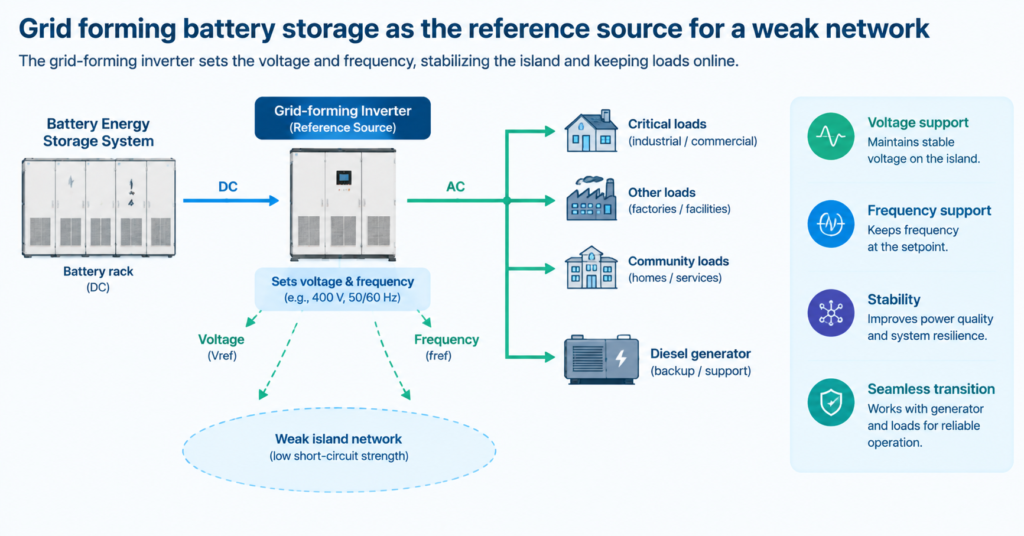
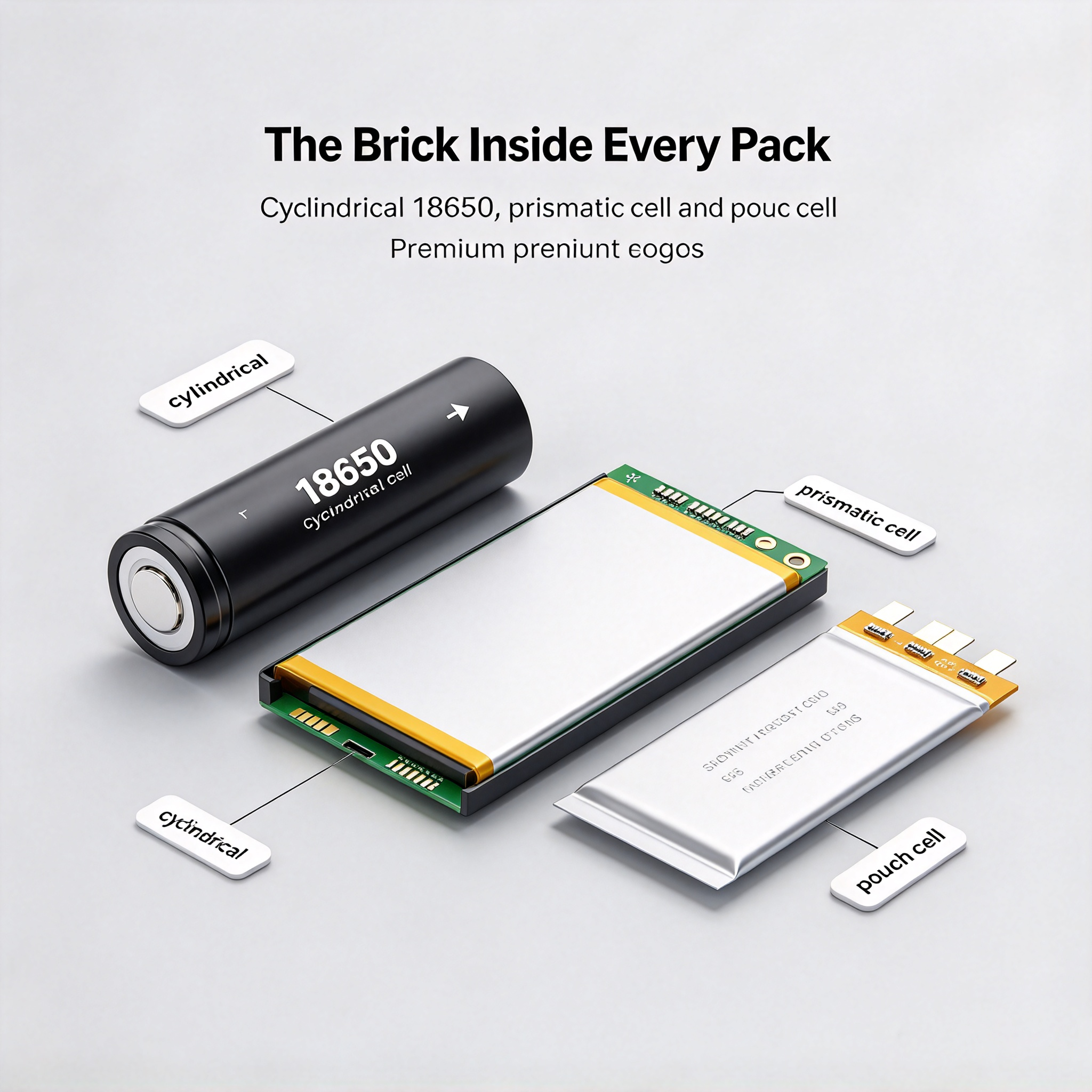
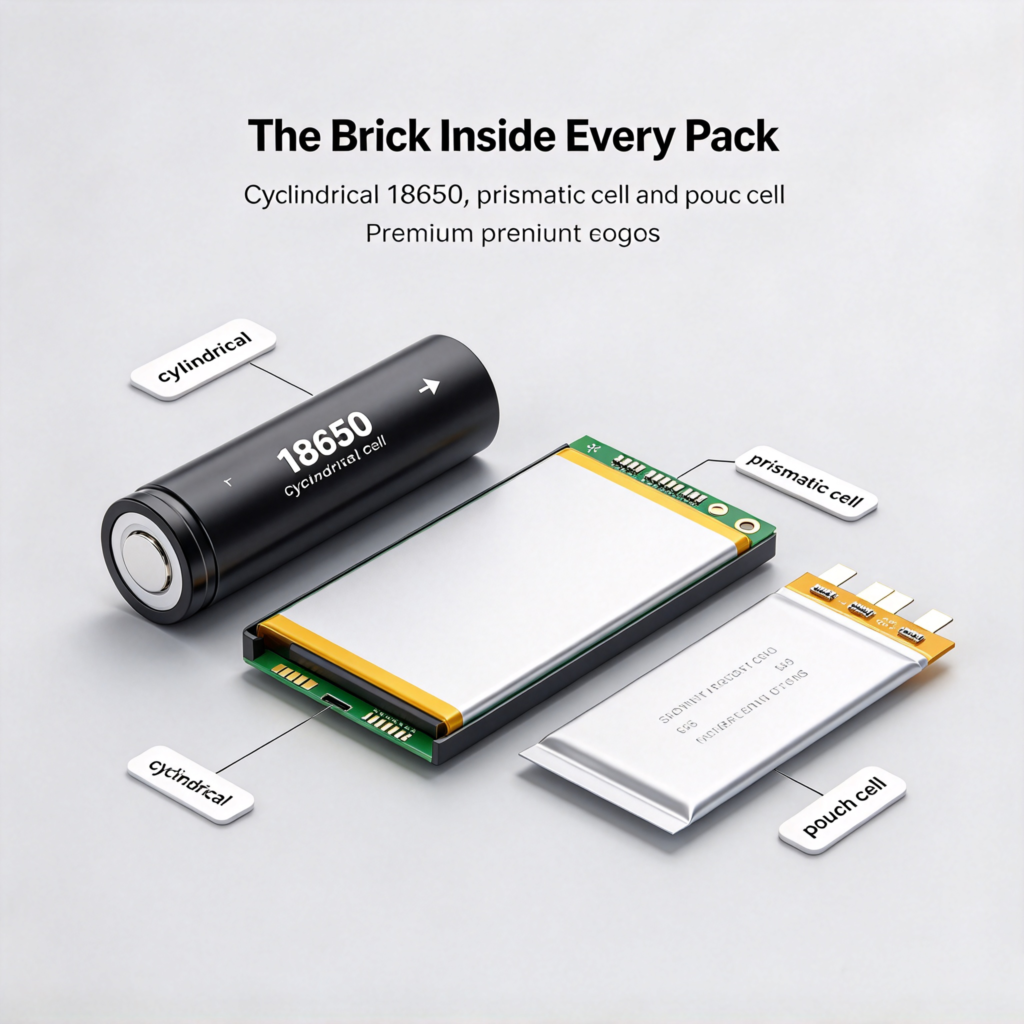
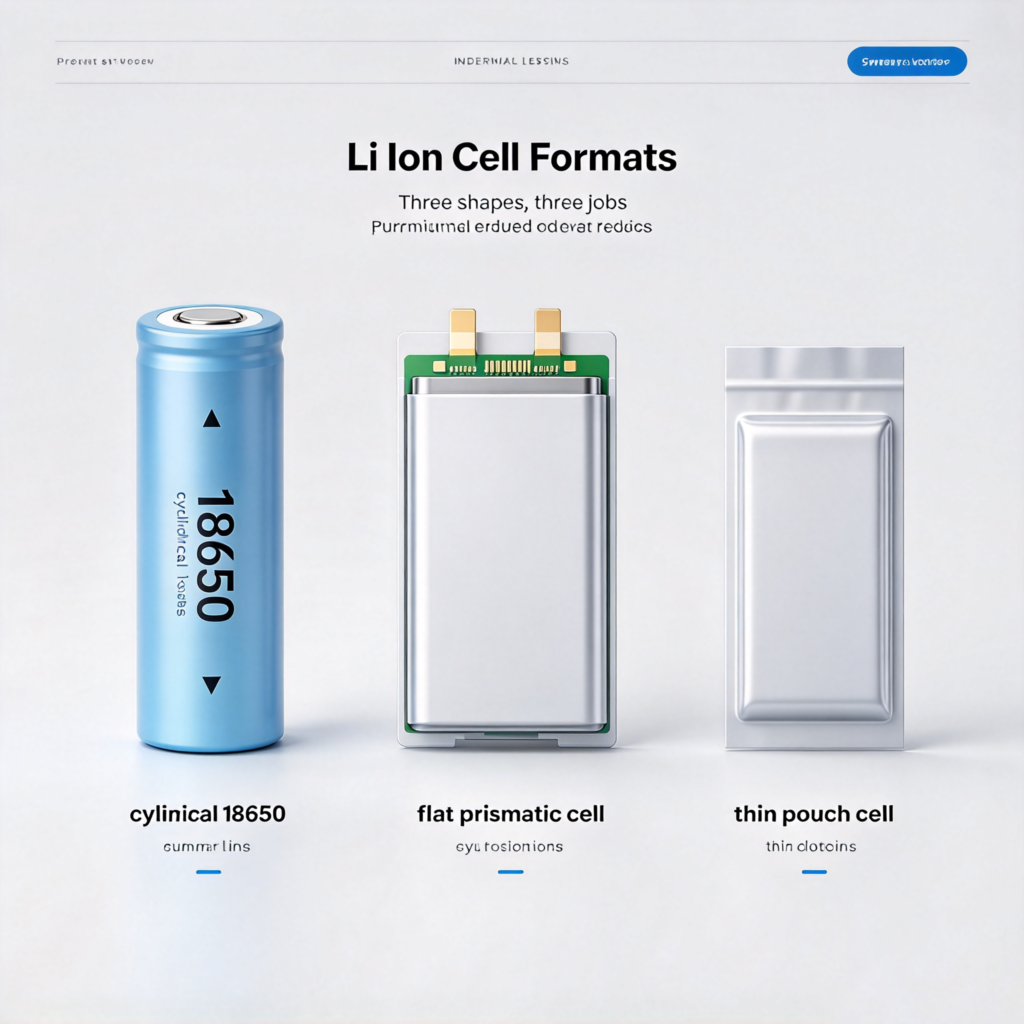
The li ion rechargeable cell market splits by shape. Cylindrical cells — most famously 18650 and the larger 21700 — are the rugged, standardized workhorses used in power tools and EVs, with a steel can that contains failure well. Prismatic cells are flat, rectangular and space-efficient, common in larger modules and stationary storage. Pouch cells are light and thin but need external support. The what a lithium battery looks like guide shows what a finished lithium battery looks like once cells are packed, and the lithium iron phosphate batteries guide lithium iron phosphate overview explains the chemistry families behind the cells.
How capacity and voltage are rated
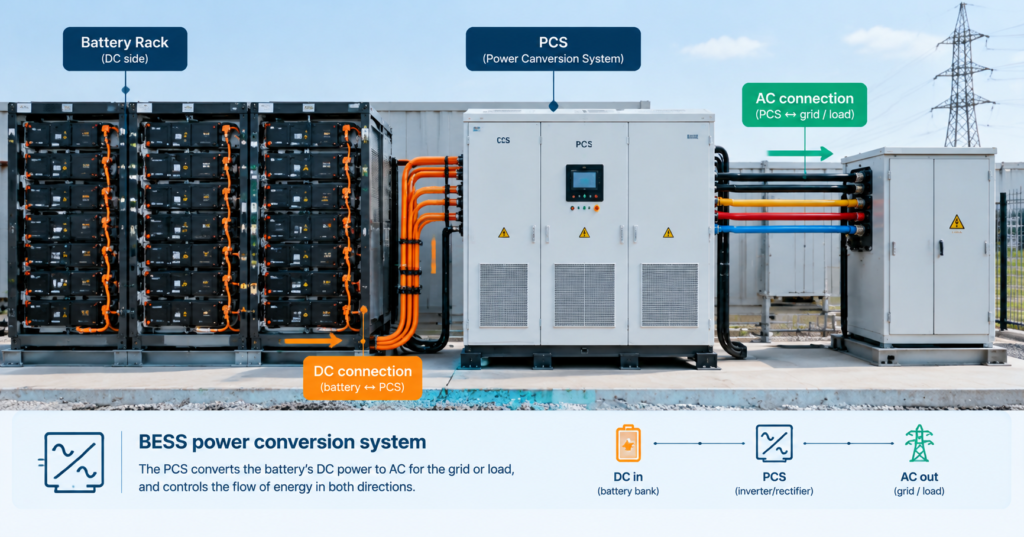
Every li ion rechargeable cell carries a nominal voltage — about 3.2V for LiFePO4 and about 3.6V to 3.7V for common Li-ion — and a capacity in milliamp-hours or amp-hours marked on the wrap. A 18650 might rate 2,500 to 3,500 mAh, while a prismatic cell rates in tens of amp-hours. The capacity is the charge at the rated rate; real usable energy depends on how deep you discharge, which a battery management system governs. The li ion cell voltage guide cell-voltage guide maps the voltage you see to state of charge.
| Format | Nominal V | Typical capacity | Strength |
|---|---|---|---|
| Cylindrical 18650 | ~3.6–3.7V | ~2.5–3.5 Ah | Rugged, standardized |
| Cylindrical 21700 | ~3.6–3.7V | ~4.0–5.0 Ah | Higher energy per can |
| Prismatic | ~3.2 or ~3.6V | ~20–100 Ah | Space-efficient |
Sourcing cells for OEM or DIY builds
When you buy a li ion rechargeable cell in volume, grade and traceability beat price. Specify the chemistry, the continuous and pulse discharge rating, the internal resistance window, and the supplier’s cell-matching and cycle-life data. For a DIY pack, buy cells from one batch and one grade so they age together; mismatched cells are the usual cause of early pack failure. The battery management system 101 battery management system guide explains why the pack needs a BMS to balance those cells.
Cell-level safety you cannot skip
A single li ion rechargeable cell is safe handled well and dangerous handled poorly. Never over-charge past the upper voltage, never puncture or short the can, and store at a partial state of charge in a cool, dry place. In transport, cells must meet UN 38.3; a built pack needs the right certification for its market. The 12v lifepo4 deep cycle battery hub 12V deep-cycle hub and the compact lifepo4 battery 25.6v 15ah compact LiFePO4 unit show cells once they are assembled and documented as a product.
When to buy cells versus a finished pack
Buy a li ion rechargeable cell when you are an OEM integrating at the pack level, a repair shop replacing failed cells, or a maker building a custom bank. Buy a finished, documented pack when you want warranty and compliance handled for you. The 48v 300ah rack mount lithium battery 48V rack unit is the assembled, certified end of that path. For chisidal projects, send the chemistry, the cell count and the target pack voltage and certification, then ask for matched, traceable cells or the finished module as one documented order.
Cell versus pack, and how to read the sheet
A li ion rechargeable cell is the single building block; a battery pack is many cells plus a protection circuit. When you compare cells, look at the chemistry family (NMC, LCO, LFP), the rated capacity in milliamp- or amp-hours, the continuous discharge rate, and the cycle-life figure at a stated depth of discharge. A li ion rechargeable cell rated for 500 cycles at 100% depth is not the same proposition as one rated for 2000 cycles at 80%.
Handle cells by their datasheet, not by the marketplace label. Store and charge within the voltage window the maker specifies, use a charger that terminates correctly, and keep cells from puncturing or shorting. For system builders, chisidal supplies matched li ion rechargeable cell sets with the protection and balancing already engineered in, so the pack behaves as one unit rather than as loose components.
Form factor, connectors, and cells versus packs
A li ion rechargeable cell ships in several form factors — cylindrical 18650 or 21700, prismatic, and pouch — and the shape decides how you cool and mount it. Cylindrical cells shed heat through the can; prismatic cells stack densely but need compression; pouch cells are light but need rigid support. Match the form to the enclosure, not the other way around.
Buy cells when you are building a custom pack and can own the protection and balancing; buy a finished pack when you want a warranted, documented unit. A loose li ion rechargeable cell with no BMS is a hazard, not a battery. For chisidal-supplied systems, the cells arrive already assembled, balanced, and protected, so the pack is one component with one spec sheet.
Storage and transport rules
When you store or ship a li ion rechargeable cell, keep it at a partial state of charge, around 30–50%, not full and not empty, because that band ages slowest and is safest for long idle. Keep cells in non-conductive packaging so terminals cannot short against metal, and never mix damaged cells with good ones in the same box. For chisidal-supplied sets, the pack arrives at the right storage charge with terminals isolated, ready to install and safe to shelve until you do.
Voltage window and the protection circuit
Every li ion rechargeable cell has a narrow safe voltage window, typically about 3.0V to 4.2V per cell depending on chemistry, and the protection circuit exists to keep it there. Charging past the top or discharging past the bottom damages capacity permanently, which is why a BMS that cuts both ways is not optional. Learn the window for your exact cell before you build.
The most common misuse is treating cells as interchangeable. A li ion rechargeable cell from one batch may differ in internal resistance from another, and paralleling mismatched cells invites imbalance and heat. Build with matched, same-batch cells and a balancer, or buy the assembled pack. For chisidal-supplied systems, the cells are matched and the BMS is set to the cell’s window, so the safe operating range is enforced, not hoped for.
Q. li ion rechargeable cell?
A li ion rechargeable cell is a single lithium-ion unit — one cylindrical 18650 or 21700, or one prismatic or pouch cell — rather than the pack made of many cells. It is the building block inside every lithium battery pack.
Q. What are the types of li ion rechargeable cells?
The main formats are cylindrical (18650, 21700), prismatic (flat rectangular) and pouch (thin, light). Cylindrical cells are rugged and standardized; prismatic pack space efficiently; pouch cells are light but need external support.
Q. What is the voltage and capacity of a li ion cell?
Nominal voltage is about 3.2V for LiFePO4 and about 3.6–3.7V for common Li-ion; capacity is marked in mAh or Ah on the wrap — roughly 2.5–3.5 Ah for a 18650 and tens of Ah for a prismatic cell. Read the label for the exact number.
Q. How do I choose li ion cells for a DIY pack?
Buy one batch and one grade so cells age together, match the chemistry and discharge rating to the load, and add a BMS to balance them. Mismatched cells are the usual cause of early pack failure.
Q. Are li ion rechargeable cells safe?
Handled well they are safe: avoid over-charge, puncture and short circuits, store partially charged and cool, and meet UN 38.3 for transport. A finished pack needs the right market certification.
Q. Should I buy cells or a finished battery pack?
Buy cells if you are an OEM, a repair shop or a maker building custom; buy a finished pack if you want warranty and compliance handled. The assembled, certified module is the end of that path.
Next step: specify the cell, or take the finished module
Cell-level sourcing saves cost for integrators but moves the compliance and balancing work to you. Confirm chemistry, count and certification before you order.
- Read the battery management system 101 battery management system guide before building a pack
- For chisidal, send your usage and site details, and we will come back with product prices, lead time and warranty information.