To answer what does ah mean on a battery in one line: Ah means amp-hour, a unit of electric charge — 100 Ah can supply 100 amps for one hour, or 10 amps for ten hours, before the pack is empty. It is not a power rating and it carries no voltage by itself. This guide defines Ah, separates it from kWh, gives the conversion formula, works it through 12 V, 24 V and 48 V examples, and shows how to read a load against an Ah figure.
The label is easy to misread because an amp-hour figure looks like a capacity in the everyday sense but is only a charge count. Once the units are separated, the arithmetic behind every battery datasheet becomes predictable.
What Ah measures on a battery
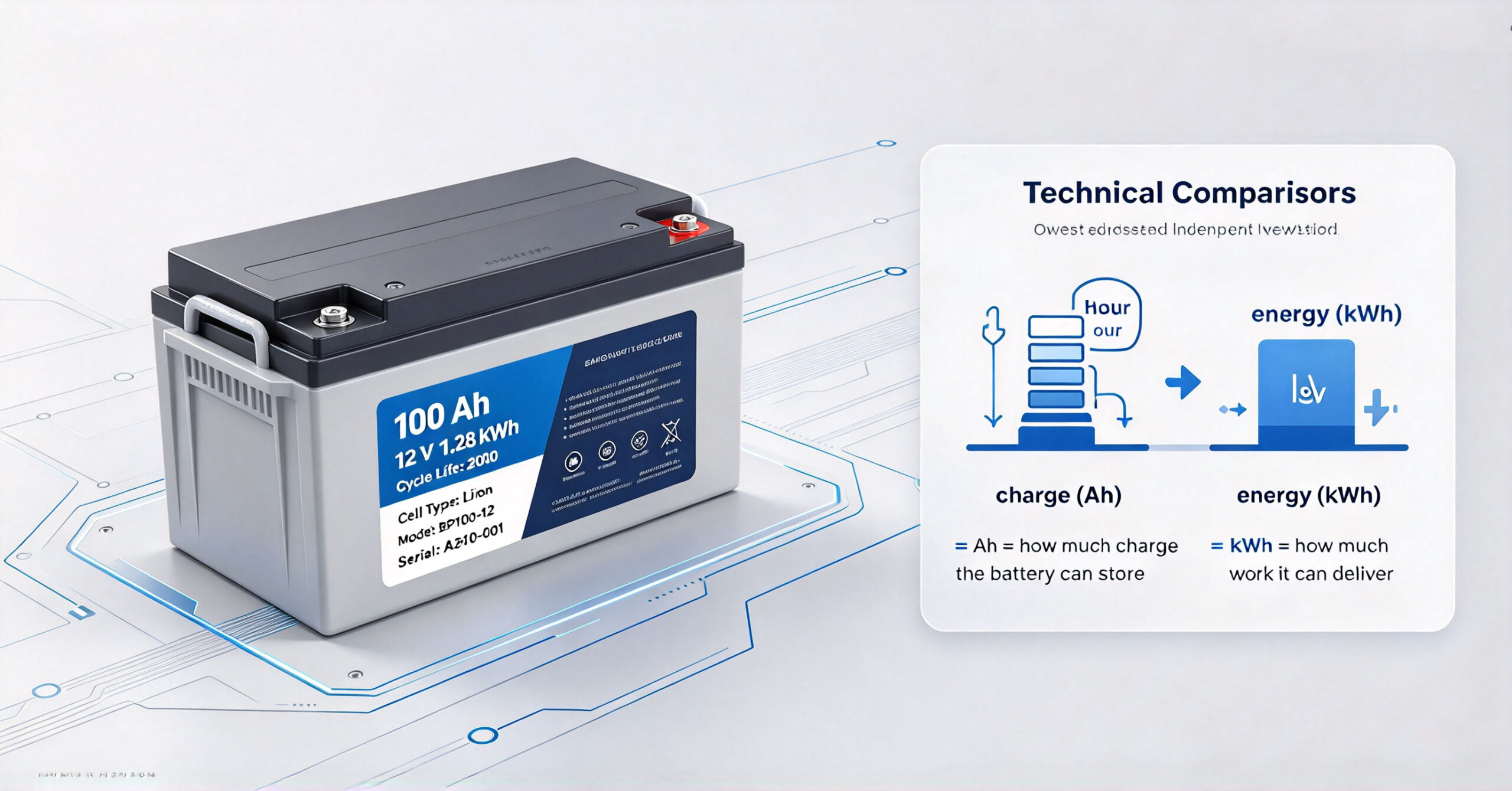
Ah is short for amp-hour. One amp-hour is the charge moved by a current of one amp flowing for one hour. A 100 amp hour lifepo4 battery therefore stores a fixed charge, and the label says nothing about how fast you take it out. Charge is counted; power is the rate at which the charge is delivered. Confusing the two is what makes what does ah mean on a battery worth asking in the first place.
Every published Ah figure is measured under conditions: a discharge rate, usually written as a C-rate, a starting temperature, and a cut-off voltage at which the test stops. Change any one and the same pack returns a different number, so a rating without its test condition is only half an answer.
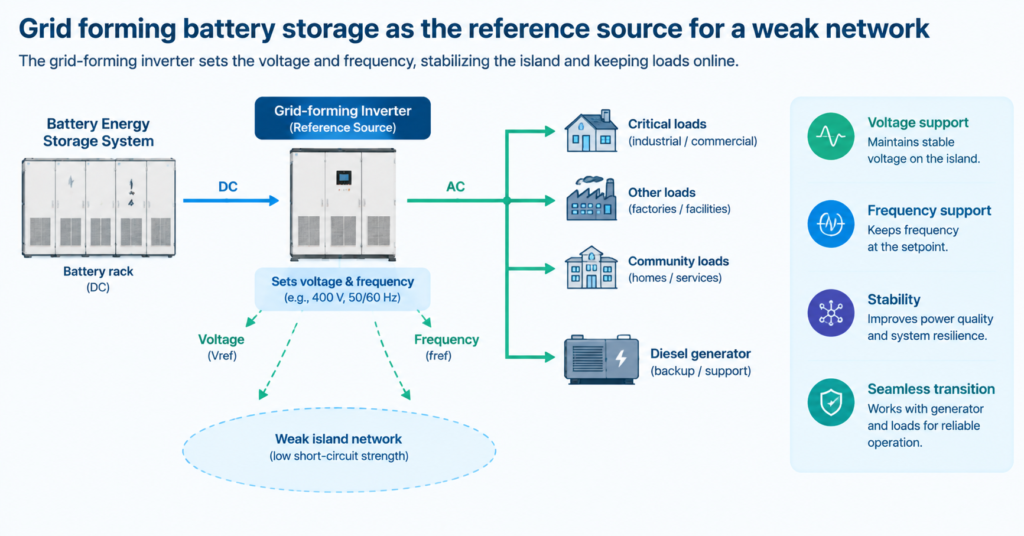
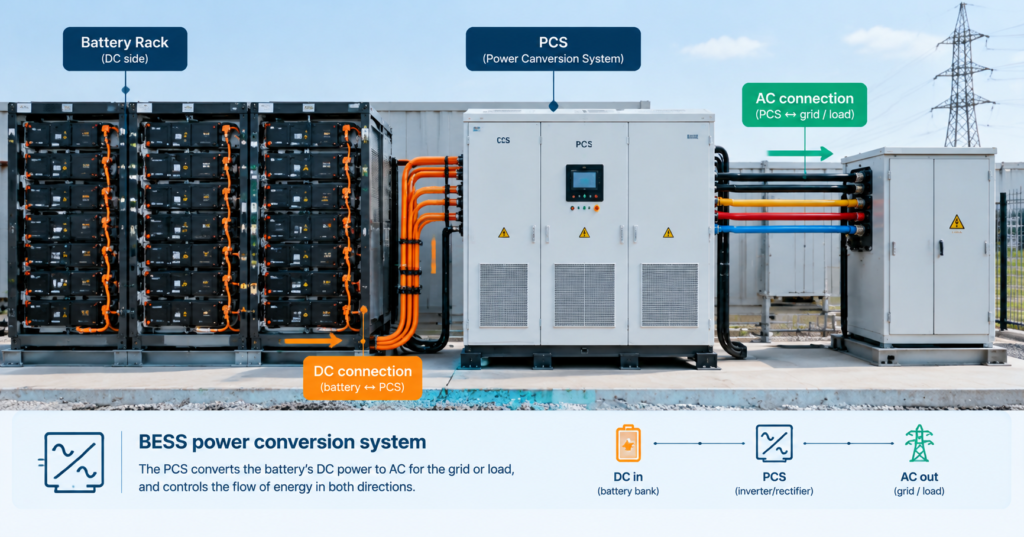
Chemistry changes the shape of that answer. Lead-acid deep-cycle labels have traditionally been quoted at a slow multi-hour rate, so the printed figure shrinks once the pack is drained faster, while LiFePO4 holds closer to its rated figure across a wider band of rates. That gap is the background to how many amp hours in a deep cycle battery you actually receive, covered in the 12V LiFePO4 deep cycle battery hub, with the cell-level voltages behind those rates in the li-ion cell voltage guide.
Ah versus kWh: charge is not energy
An amp-hour counts charge. A kilowatt-hour counts energy, and energy is what a load consumes and what a utility bills. The bridge between the two is voltage: the same charge delivered at a higher voltage carries more energy. Two packs with identical Ah ratings hold different energy whenever their nominal voltages differ, which is why an Ah figure alone cannot rank two batteries.
So the honest reply to what does ah mean on a battery is two-part: the rating gives the charge, and you need the system voltage to turn it into the energy your loads care about. Nominal voltage is itself a convention rather than a fixed point — a lithium pack sits higher when full and lower when empty — and the 48V vs 51.2V solar battery discussion shows why the printed label matters.
The conversion formula
Two lines do all the work. To go from energy to charge: Ah = kWh ÷ V × 1000. To go back: kWh = Ah × V ÷ 1000. V is the nominal system voltage. The 1,000 appears because a kilowatt-hour is a thousand watt-hours, and it moves from one side of the line to the other depending on which way you are converting.
An ah to kwh calculator is no more than those two lines with a voltage box in the middle, and the common error is leaving that box empty or filling it with the wrong voltage. Always state the voltage beside a converted figure: 5 kWh is a complete number, while 400 Ah means nothing until you know whether the pack is 12 V, 24 V or 48 V. That discipline carries into later decisions, including how to choose a solar battery bank.

Worked examples at 12 V, 24 V and 48 V
The cleanest way to answer how many amp hours is 1 kwh is to run the same energy at each nominal voltage: about 83 Ah at 12 V, about 42 Ah at 24 V and about 21 Ah at 48 V. The energy is identical in all three columns; only the charge count moves. The table scales that calculation across the sizes found in residential and light commercial specifications.
| Energy | Ah at 12 V | Ah at 24 V | Ah at 48 V |
|---|---|---|---|
| 1 kWh | 83 Ah | 42 Ah | 21 Ah |
| 2.5 kWh | 208 Ah | 104 Ah | 52 Ah |
| 5 kWh | 417 Ah | 208 Ah | 104 Ah |
| 10 kWh | 833 Ah | 417 Ah | 208 Ah |
Read the table across, not down. Each row is the same energy written three ways: an Ah column is comparable only inside its own voltage. The 24 V column is the one most often skipped, and the 24V solar battery bank page shows where that class still appears.
Reading a load against an Ah figure
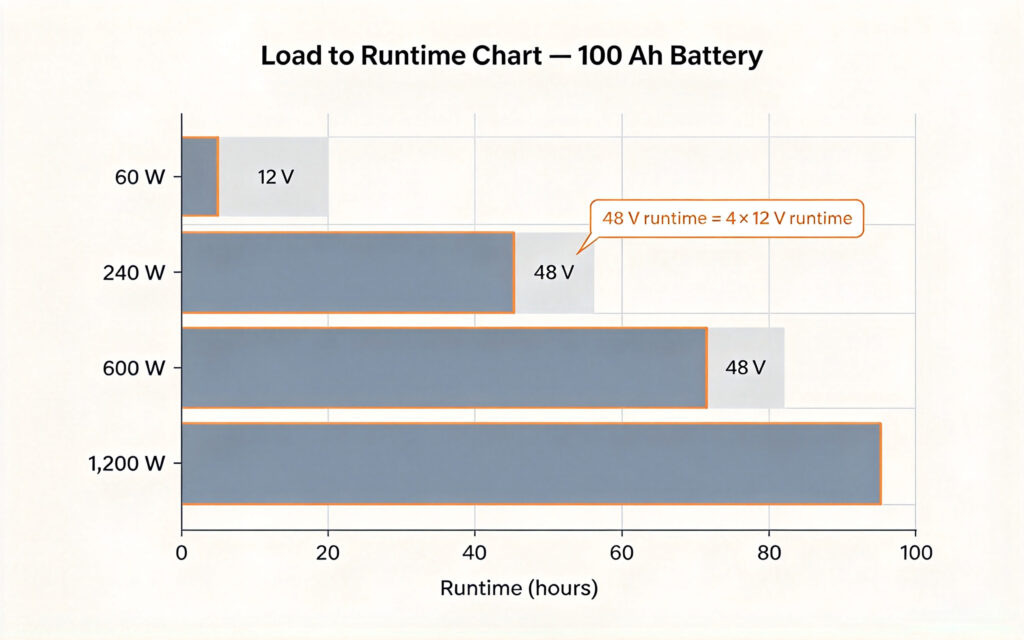
Runtime comes from two more divisions: amps = watts ÷ volts, then hours = Ah ÷ amps. A 240 W load on a 12 V system draws roughly 20 A, so a 100 Ah pack feeds it for about five hours before the rating is used up. On a 48 V system the same load draws roughly 5 A, and the pack runs it for about twenty hours. Put another way, what does ah mean on a battery only becomes useful once a load is attached to it.
| Load | Amps at 12 V | Hours from 100 Ah at 12 V | Amps at 48 V | Hours from 100 Ah at 48 V |
|---|---|---|---|---|
| 60 W | 5 A | about 20 h | 1.3 A | about 80 h |
| 240 W | 20 A | about 5 h | 5 A | about 20 h |
| 600 W | 50 A | about 2 h | 12.5 A | about 8 h |
| 1,200 W | 100 A | about 1 h | 25 A | about 4 h |
Those are rating hours, not a promise. Usable capacity is a fraction of the label, inverter losses sit on top, and the hours shrink as the pack cools or the rate rises. Read the table as a first pass on whether an Ah figure is in the right order of magnitude. For a nominal 12 V pack, the 12V LiFePO4 battery notes give the conditions assumed.
What an Ah rating does not tell you
Usable depth of discharge is the largest gap. A pack rated at 100 Ah only gives you the share its chemistry and BMS allow you to take; the rest protects cycle life. LiFePO4 typically permits a far deeper usable fraction than lead-acid, which is why two packs with the same printed Ah can run the same load for very different times.
Rate, temperature and age move the number too: cold reduces deliverable capacity, high rates reduce it further, and cycling wears it down, which is why cycle-life figures are a range to a defined end-of-capacity point rather than a promise. Test and safety baselines such as IEC 62619 and UL 1973 set the frame those claims are measured inside, though the applicable edition must be confirmed for each market.
Wiring changes the arithmetic too. Series strings add voltage and hold the Ah figure; parallel strings add Ah and hold the voltage. Four 12 V 100 Ah blocks therefore give 48 V at 100 Ah in series, or 12 V at 400 Ah in parallel — same cells, same energy, very different current. How those capacity classes are printed on a label is catalogued in the 12V lithium battery capacity reference.
Read any battery page in a fixed order: nominal voltage, then the Ah figure, then the test condition behind it, then the usable fraction the BMS allows. Those four numbers produce a comparable kWh figure. Once what does ah mean on a battery is settled, the remaining question is which arrangement the equipment expects. For chisidal enquiries, send the nominal voltage, the Ah figure and the discharge condition it was measured under, and the conversion can be confirmed against the pack.
Q. What does ah mean on a battery?
Ah means amp-hour, a unit of electric charge. A 100 Ah battery can deliver 100 amps for one hour, or 10 amps for ten hours, before it is empty. It is not a power rating, and it says nothing about energy until the system voltage is known.
Q. How many amp hours is 1 kWh?
It depends on the voltage: about 83 Ah at 12 V, about 42 Ah at 24 V and about 21 Ah at 48 V. The energy is the same in each case; only the charge count changes.
Q. How do I convert Ah to kWh?
Multiply the amp-hour figure by the nominal voltage and divide by 1,000: kWh = Ah × V ÷ 1000. To reverse it, divide the energy by the voltage and multiply by 1,000: Ah = kWh ÷ V × 1000. Always write the voltage beside the result.
Q. Is a higher Ah rating always better?
Not on its own. A higher Ah figure at a lower voltage can hold less energy than a lower Ah figure at a higher voltage, and the usable share depends on chemistry, BMS limits, discharge rate and temperature. Asked as what does ah mean on a battery, the answer is that Ah alone cannot rank two packs — compare in kWh at a stated voltage and test condition.
Q. Does Ah change when batteries are wired in series or parallel?
Yes. In series the voltage adds and the Ah figure stays the same; in parallel the Ah adds and the voltage stays the same. Four 12 V 100 Ah blocks give 48 V at 100 Ah in series, or 12 V at 400 Ah in parallel.
Q. What does Ah mean on a LiFePO4 battery versus a deep cycle battery?
The unit is identical, but the conditions differ. Lead-acid deep-cycle ratings are traditionally quoted at a slow multi-hour rate and fall away at higher rates, while LiFePO4 holds closer to its rated figure across a wider band.
Next step: confirm the units before you compare packs
Two datasheets can print the same Ah and hold very different energy. Fix the voltage and test condition first, and the rest reads correctly.
- Work the numbers with the how to size a home battery guide before you request a quote
- For chisidal, send your usage and site details, and we will come back with product prices, lead time and warranty information.