For most homes, the best generator for home backup power is not a generator at all. A battery-based system covers the outages that actually happen — measured in hours — silently, with no fuel, no exhaust and no start delay, and it is already carrying the load before you notice the lights went out. A fuel generator still wins when an outage runs for days. This guide compares the two routes on load, runtime, noise, maintenance and total cost of ownership, then shows where combining both is the honest answer.
That answer will frustrate anyone shopping for an engine, but the outage profile supports it. The useful question is not which machine wins in the abstract; it is which failure mode your household can live with.
The two routes, stated plainly
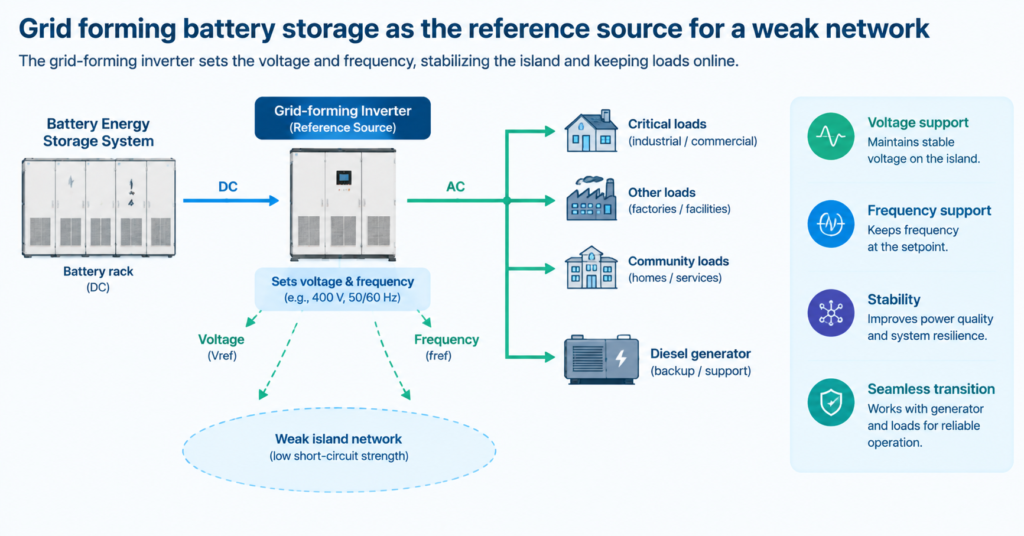
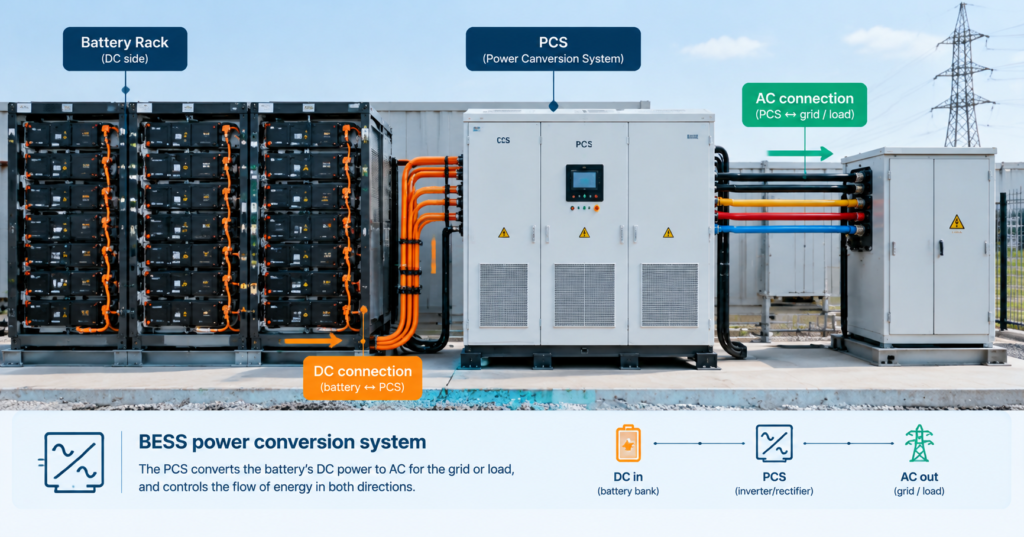
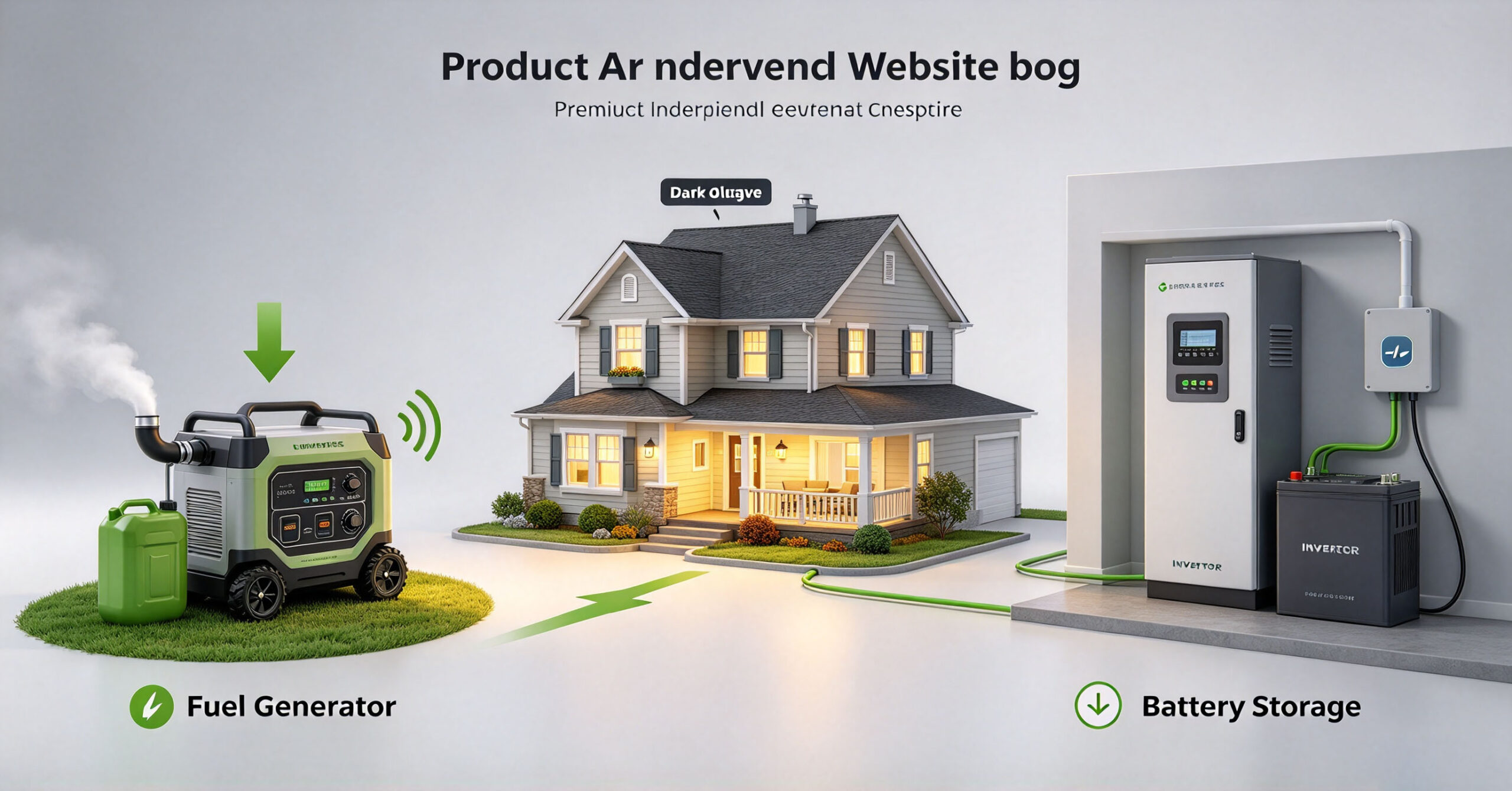
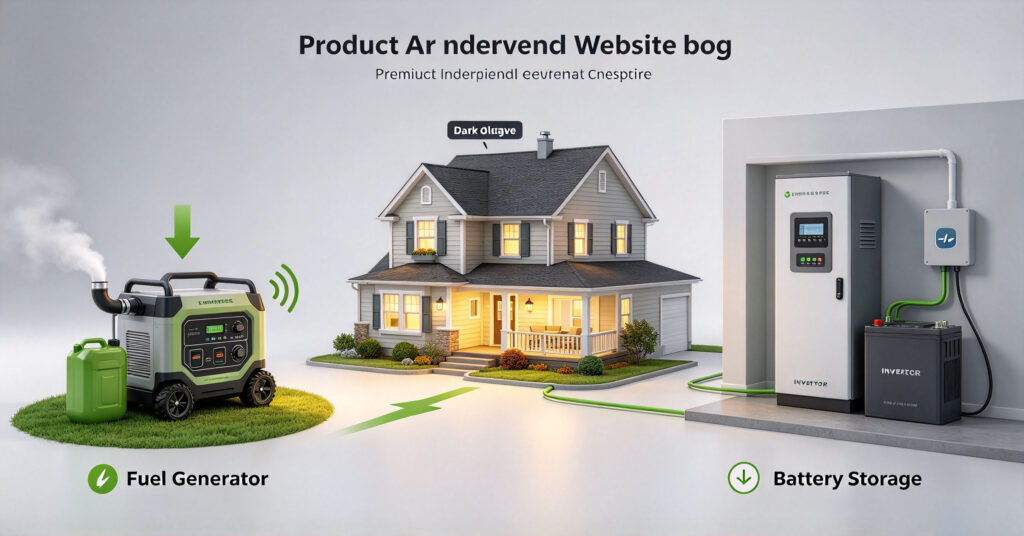
Both routes do the same job: they hold up some or all of the panel when the utility drops. A fuel generator converts chemical energy on demand — an engine turns an alternator, and the output stops when the fuel does. A battery-based system stores electrical energy ahead of time and releases it through an inverter, with a transfer device that disconnects from the utility and takes over the loads. One is a conversion machine, the other is a reservoir.
That difference drives everything downstream. A generator’s capability is set by its engine rating and by how much fuel you can keep on hand; a battery’s capability is set by how much usable energy is stored and by the inverter’s continuous and surge ratings. Type best generator for home backup power into a search box and most of what comes back is engine sizing advice, which assumes the fuel question is already solved. It usually is not.
Route comparison at a glance
The table compares the routes on the dimensions that decide a home installation. Read it as trade-offs rather than a scoreboard: no row is universally good or bad, and the right column depends on how your household experiences an outage.
| Dimension | Fuel generator | Battery-based backup |
|---|---|---|
| Where the energy comes from | Fuel burned on demand | Charge stored in the pack ahead of time |
| Response to an outage | A start delay of seconds, then stable output | Transfer within a cycle, effectively seamless |
| What limits runtime | Fuel on hand and refuelling access | Usable stored energy, plus any daytime solar input |
| Noise | Audible for as long as it runs, day or night | Silent; only the inverter fan is audible |
| Exhaust and siting | Outdoor only, with exhaust and clearance rules | Can sit indoors or in a garage within clearance rules |
| Routine upkeep | Oil, filters, plugs, exercise runs, fuel stabilising | Firmware, visual checks, periodic capacity verification |
| Motor starting surge | Engine and alternator must be sized for inrush | Inverter surge rating covers the inrush window |
| Cost shape over time | Lower upfront, recurring fuel and service | Higher upfront, low running cost |
The full dimension-by-dimension argument is set out in the home battery vs generator comparison, and the same route choice reappears at facility scale in the industrial plant backup power service guide.
Choose by load: what has to keep running
Start from the load list, not the machine. Write down what must stay on — refrigeration, lighting, network, medical equipment, a well pump — and separate the continuous draw from the starting surge. Compressors and pumps draw several times their running current for a second or two, and that inrush, not the running wattage, sizes the inverter or the engine. A route that cannot absorb the surge trips on the very equipment you bought it for.
The second load question is scope: critical circuits or the whole house. A critical-loads sub-panel keeps the essentials alive on a fraction of the capacity, while a whole house generator vs battery decision at full-panel scope pushes both routes up in size and cost. The arithmetic behind that list sits in the how to size a home battery guide, and small DC loads such as gate operators and network gear are often run directly from solar powered 12V circuits rather than through the inverter at all.
Choose by runtime: hours versus days
Runtime is where the two routes separate most sharply. Most distribution-level outages are short — a storm passes, a fault is cleared, a crew restores the feed — and a reservoir sized in hours covers them completely, with no one going outside in the rain. Framed that way, the best generator for home backup power question is a runtime question in disguise: how long do your outages last, and how long will you wait?
On a two-to-six-hour profile, the best generator for home backup power is usually the one that never has to start. Once the tail stretches to days, the calculation flips, because a battery is a fixed reservoir while a generator’s runtime is limited only by the fuel you can source. Storm-prone regions, properties on long rural feeders and homes that store fuel safely all shift the answer back toward combustion. That long-tail case is treated in the off-grid battery backup for cabins and farms guide.
Noise, siting and maintenance
Three practical constraints decide more installations than the specification sheet does. Noise: a generator is audible for as long as it runs, which matters at night and in dense neighbourhoods. Siting: combustion needs outdoor placement with exhaust clearance and protected cabling, while a battery cabinet can sit in a garage or utility room within clearance and ventilation rules. Neither route is free of constraints, but they are different constraints.
Maintenance is the third. An engine needs oil, filters, exercise runs and fuel management, because fuel that sits goes stale and an engine that never runs fails to start when needed. A battery system needs firmware updates, visual inspection and occasional capacity verification, with no fuel to rotate. Sealed LiFePO4 packs are commonly quoted with cycle life in the low thousands of cycles to a defined end-of-capacity point, so read the test condition rather than the headline number.
Total cost of ownership, not sticker price
A battery backup vs generator cost comparison made on purchase price alone points the wrong way. The battery route carries the higher upfront figure per unit of usable energy; the generator route carries a lower entry price and then recurring fuel, service visits and eventual engine replacement. Over a long ownership period those items accumulate, which is why the routes converge in total cost even though one starts cheaper.
There is a second cost that rarely appears on a quote: the cost of a backup that does not start. Exercise schedules slip, fuel goes stale, and the failure is discovered during the outage. A battery’s failure mode is more visible in normal operation, because it either cycles or it does not, and monitoring reports state of charge continuously. That is a qualitative point, and it belongs alongside fuel and service rather than instead of them.
Where the hybrid answer wins
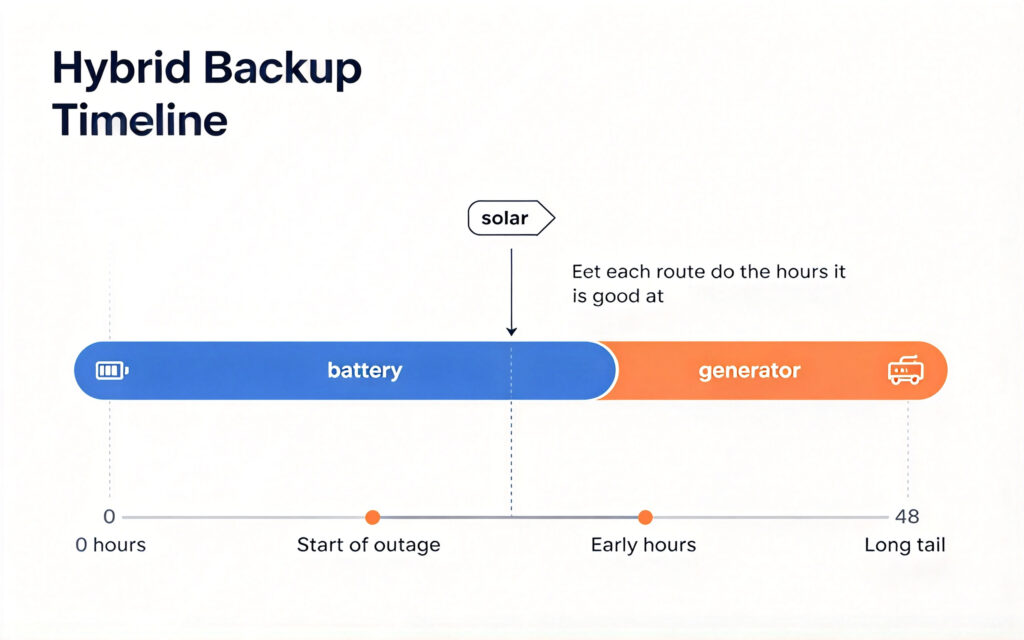
The combination is often the strongest answer rather than a compromise. Let the battery carry short, frequent outages silently and instantly; keep a generator for the rare long tail, sized to the average load rather than the peak, since the battery covers the surge. The generator then runs fewer hours, burns less fuel per event, and is exercised by real use instead of a calendar reminder. In that arrangement the best generator for home backup power is a smaller one than a generator-only design would need.
Adding solar changes the picture again. With panels, a reservoir that runs down can be refilled without fuel, which removes the main argument for a combustion machine on all but the longest outages. A solar battery vs generator comparison on a site with decent array capacity usually favours storage; on a shaded roof or a winter-heavy outage profile, the generator’s fuel independence still holds value. Solar is not required — the home battery backup without solar route is common and charges from the grid.
Four questions that settle it
Work through these in order. How long are your outages, honestly — hours or days? Which circuits must not drop, and what is their combined surge? Where can the equipment sit, and how much noise is acceptable at night? Who will maintain it, and will they actually do it? The pattern of those four answers, not the search term you started from, decides the route.
Q. What is the best generator for home backup power?
For most homes it is a battery-based backup system rather than a generator. Outages usually last hours, and a battery covers them silently, instantly and without fuel. A generator remains the better answer where outages run for days and fuel can be stored safely.
Q. Is a battery better than a generator for home backup?
It depends on the outage profile. A battery wins on response time, noise, indoor siting, upkeep and short outages. A generator wins on multi-day runtime, since its duration is limited by fuel supply rather than stored energy.
Q. Whole house generator vs battery: which costs less over time?
A generator usually costs less upfront and more over time, because fuel, servicing and eventual engine replacement recur. A battery costs more upfront and little to run. Compare on total cost over the ownership period, not on the purchase price alone.
Q. How long will a home battery keep the house running?
Long enough for the outages that actually happen, if the system is sized to the load list rather than to the whole panel. Critical circuits on a modest pack cover many hours; whole-house scope at the same capacity covers far fewer. Sizing starts from the surge, not the average.
Q. Do I need solar panels to use a battery backup system?
No. A battery backup can charge from the grid and wait for an outage. Solar adds the ability to refill the pack during a long outage without fuel, which strengthens the battery route but is not a precondition.
Q. Can a battery and a generator work together?
Yes, and the combination is often the strongest design. The battery handles short, frequent outages and covers motor starting surge, while a generator sized to the average load covers the rare long tail and runs fewer hours as a result.
Next step: settle the route, then confirm the specification
Bring the four answers — outage length, critical circuits with their surge, siting and noise limits, and who maintains the system — and the route usually decides itself.
- Test your load list against the how to size a home battery guide before you compare equipment
- For chisidal, send your usage and site details, and we will come back with product prices, lead time and warranty information.