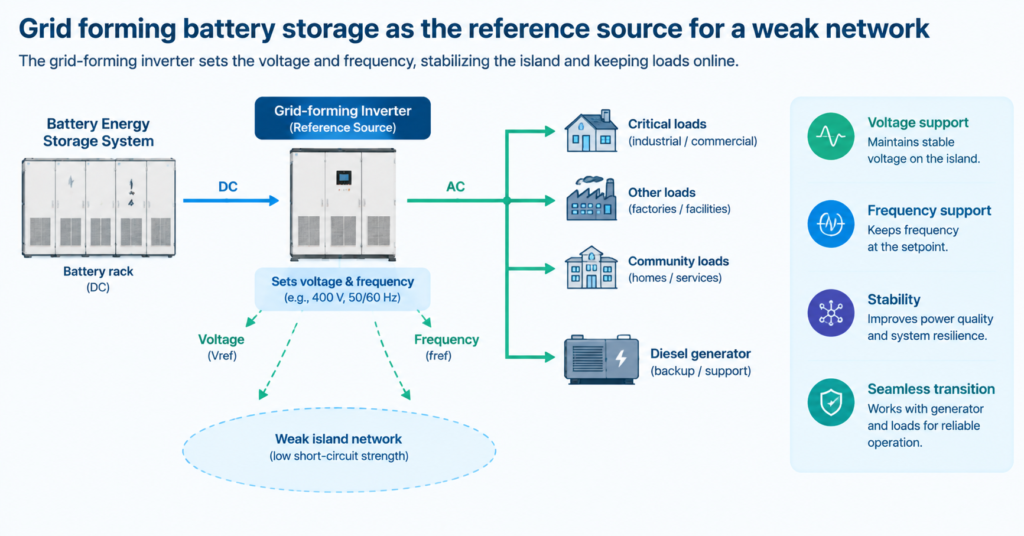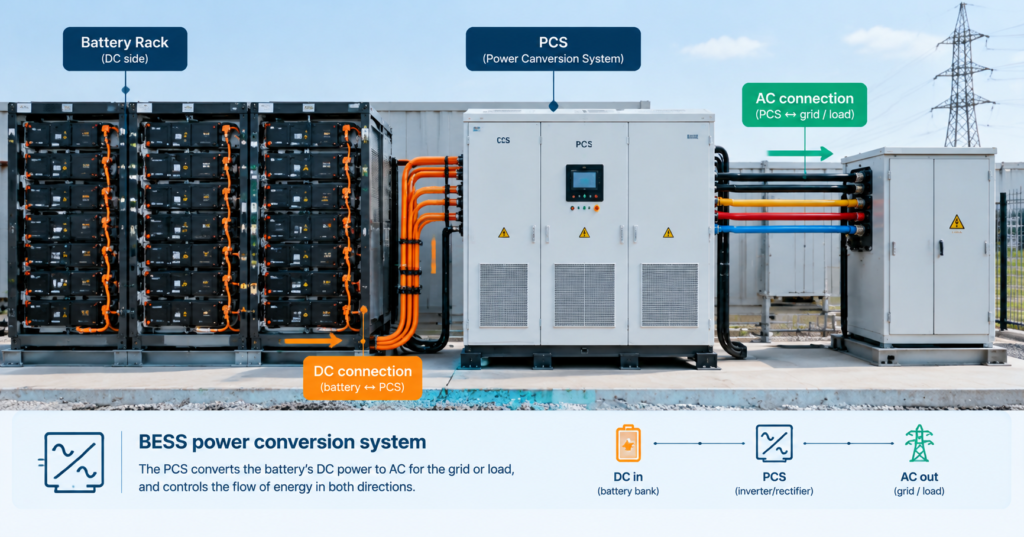
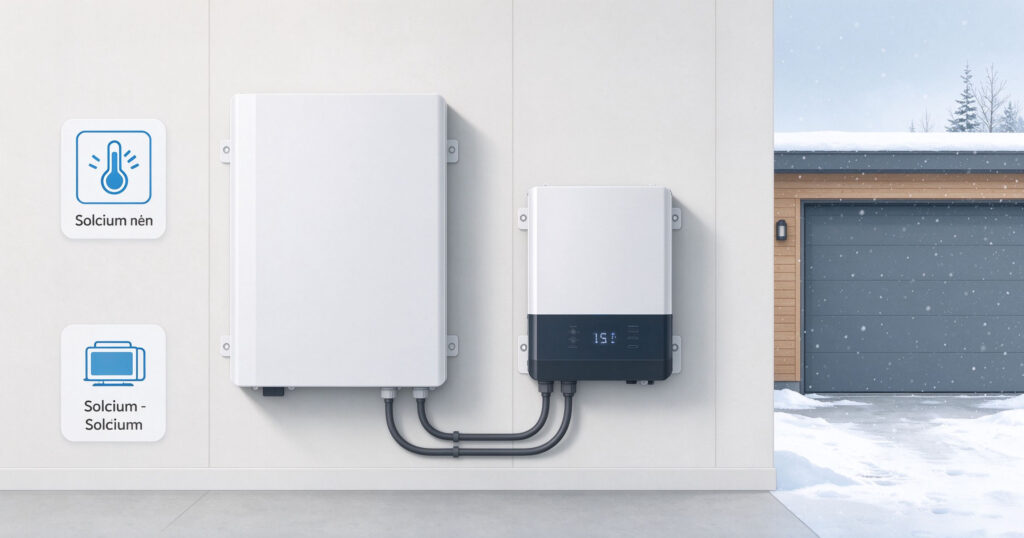
Sodium-ion home energy storage systems swap the lithium in the cathode for sodium — a material so abundant that the supply-chain argument changes completely. The trade is deliberate: you accept lower energy density, meaning a physically larger unit, in exchange for better cold-weather capacity and a chemistry that is intrinsically harder to drive into thermal runaway. The technology reached shipping products between 2025 and 2026. This guide covers what it does well, where LFP still wins, the commercial timeline, and how to evaluate a product today.
Sodium-ion is not a better lithium battery; it is a different trade. Understanding which trade a specific site needs is the whole evaluation.
What sodium-ion actually is
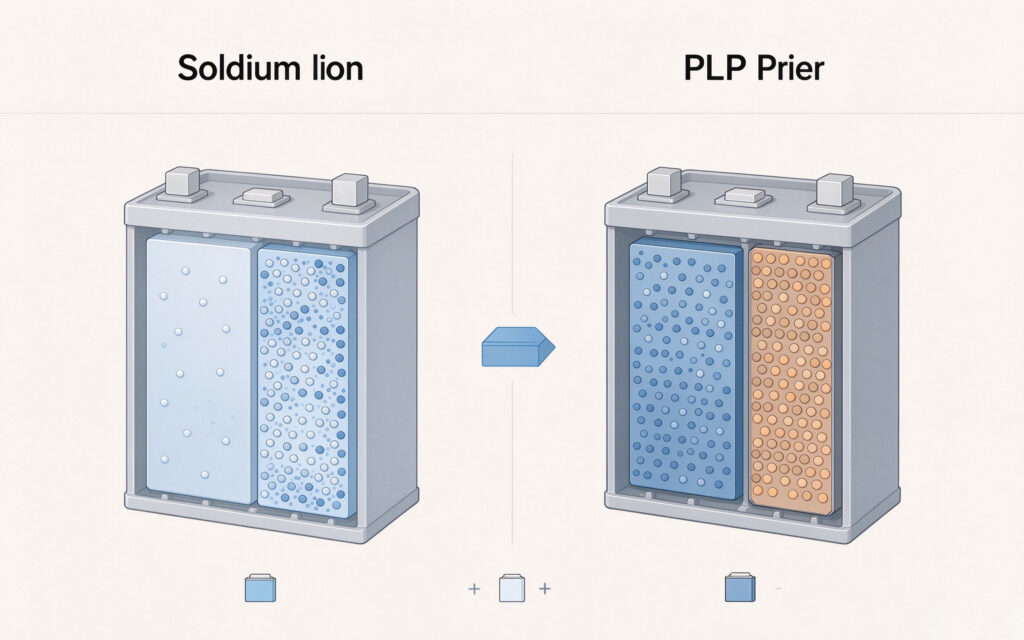
A sodium-ion cell works on the same rocking-chair principle as a lithium-ion cell: ions shuttle between two electrodes during charge and discharge, through an electrolyte, across a separator. What changes is the carrier. Sodium is the sixth most abundant element in the earth’s crust, and the cathode chemistries under development do not require lithium, cobalt or nickel. That removes the raw-material price exposure that has driven lithium costs through two boom-and-bust cycles, and it removes the ethical and supply questions attached to cobalt in particular.
Everything else about the cell is recognisable to anyone who has worked with lithium storage. The nominal voltage per cell is a little lower, the energy density is lower, and the battery management requirements are similar in kind: cell balancing, voltage windows, temperature limits, current limits. An installer who can commission an LFP bank can commission a sodium one, with the usual attention to the manufacturer’s profile. The li-ion rechargeable cell guide covers the shared cell architecture in more detail.
Where sodium-ion wins
Three advantages are consistent across the public data. The first is cold performance. Sodium-ion cells retain a substantially larger fraction of their rated capacity at low temperatures than LFP — public testing puts retention in the mid-to-high eighties as a percentage at around minus twenty degrees Celsius, against roughly sixty to seventy percent for LFP at the same temperature. In northern climates that difference is the difference between a battery that carries a household through a cold night and one that collapses at three in the morning.
The second is thermal behaviour. Sodium-ion chemistries do not have the same thermal-runaway pathway as oxide lithium cathodes, and the onset temperature where runaway becomes a concern sits considerably higher. For indoor installations, garages and attached structures, that is a meaningful risk reduction — though it is a reason for preference, not a licence to abandon ventilation and clearance rules.
The third is the materials position. Sodium carbonate is orders of magnitude cheaper than lithium carbonate, and at gigawatt-hour scale that arithmetic is expected to pass through to cell prices. Current cell pricing still sits in a range broadly comparable to LFP because manufacturing has not yet reached scale; the projected trajectory puts sodium-ion materially below LFP towards the end of the decade.
| Property | Sodium-ion | LiFePO4 (LFP) |
|---|---|---|
| Energy density | Lower, roughly 100–160 Wh/kg publicly quoted | Higher, roughly 150–200 Wh/kg |
| Capacity at about −20°C | High retention, mid-to-high 80s percent in public testing | Moderate, roughly 60–70 percent |
| Cycle life | Commonly quoted in the low-to-mid thousands of cycles; lab cells higher | Commonly quoted in the several-thousand range |
| Thermal runaway risk | Lower onset temperature margin, intrinsically harder to drive | Low among lithium chemistries, but present |
| Raw material exposure | No lithium, cobalt or nickel in the cathode | No cobalt or nickel, but lithium-dependent |
| Installed size for equal kWh | Larger and heavier | Smaller and lighter |
The comparison is not a scoreboard. A warm-climate installation with tight wall space and a daily cycling duty still points at LFP; a cold-climate installation in an unconditioned space points the other way. The LiFePO4 battery temperature range guide covers the LFP side of that trade in detail.
Where LFP still wins
Density is the honest cost of the sodium trade. For the same kilowatt-hours, a sodium unit is physically larger and heavier — publicly discussed figures put the penalty in the range of twenty to thirty percent on volume for comparable capacity. In a garage or utility room that is a layout question; in an apartment or a wall-mount application it can be decisive. Cycle life is the second gap: LFP products with multi-thousand-cycle ratings and a decade of field data are a known quantity, while sodium products are young enough that long-term field data is still accumulating.
Warranty and support maturity follow the same pattern. LFP home storage is a mature category with established service networks, spare-part channels and a large installed base to learn from. Sodium-ion home storage in 2026 is a young category: real, shipping, and improving quickly — but a buyer who needs a boring, well-documented product today is still better served by LFP. The LiFePO4 versus lithium ion NMC comparison covers the established lithium options in depth.
The commercial timeline
The category moved in observable steps. Large-scale sodium-ion production lines began shipping cells for energy storage and commercial vehicles around 2025, led by manufacturers including CATL with its sodium product line, alongside BYD, HiNa Battery, Hithium and Envision Energy; in other markets, companies such as Natron Energy have targeted commercial and data-centre backup first. Grid-scale deployments — including airport and utility pilot systems — have been announced and commissioned since 2025.
Home-scale products followed the same curve: the first residential sodium-ion home energy storage systems reached select markets in 2025 and 2026, with broader availability expected as capacity ramps through 2027 and the cost advantage passing through to system pricing towards 2028. For a buyer in 2026 that means sodium is a legitimate option to evaluate, not the default choice — and a reason to ask any supplier quoting “sodium” for the production scale, the cycle-life test conditions and the warranty terms behind the claim. The sodium ion battery companies in the USA guide maps the manufacturer landscape.
CC
System integration: what actually changes
Mechanically and electrically, sodium-ion home energy storage systems integrate the way lithium does. The bank connects to a hybrid or storage inverter over a DC link, communicates with the inverter or a separate controller, and is charged from solar surplus or the grid. The nominal voltage windows differ from LFP, so the inverter or charge profile must be configured for the chemistry — increasingly a firmware selection rather than a hardware change, as inverter manufacturers add sodium profiles.
Two integration details deserve attention. First, the larger physical envelope changes placement: a sodium bank needs the same clearances and ventilation discipline as any lithium bank, plus the floor or wall capacity for the extra mass. Second, because cold performance is the chemistry’s selling point, installations in unconditioned spaces are where it earns its keep — which is also the environment where an LFP bank would need a heated enclosure that consumes energy to run. The how to size a home battery method applies unchanged; only the usable-capacity assumptions move.
How to evaluate a sodium product today
Ask for the cycle-life figure with its test conditions attached — depth of discharge, temperature and rate — because the category’s public numbers span a wide range and the conditions decide which end of it applies. Ask for the rated and usable capacity at a cold temperature, not just at room conditions. Ask which inverter profiles the bank is qualified against, and whether the BMS exposes state of charge and cell-balance data for monitoring. And ask what happens at end of life, because the recycling path for sodium-ion is still being built out.
None of this makes sodium-ion a risky choice; it makes it a young one. For cold climates, unconditioned installations and buyers who value the materials position, sodium-ion home energy storage systems are already worth serious evaluation. For warm climates, tight spaces and buyers who want a decade of field data behind the warranty, LFP remains the rational default. The what battery storage BESS means overview places both options in the wider storage market.
Q. sodium-ion home energy storage systems?
Sodium-ion home energy storage systems are residential battery banks that use sodium-ion chemistry instead of lithium. They trade lower energy density for better cold-weather performance, a wider temperature window and a chemistry that avoids lithium, cobalt and nickel.
Q. Are sodium-ion home batteries available now?
The first home-scale units reached select markets in 2025 and 2026, led by large cell manufacturers scaling sodium production. Broad availability is expected through 2027 as manufacturing capacity ramps.
Q. How long do sodium-ion batteries last?
Publicly quoted cycle-life figures for stationary sodium-ion cells commonly sit in the low-to-mid thousands of cycles, with laboratory cells higher. At one cycle a day that implies roughly eight to fifteen years depending on the product and duty.
Q. Do sodium-ion batteries work in cold weather?
Cold performance is the chemistry’s strongest advantage. Public testing shows retention in the mid-to-high eighties as a percentage at around minus twenty degrees Celsius, against roughly sixty to seventy percent for LFP.
Q. Is sodium-ion safer than lithium iron phosphate?
Sodium-ion chemistries are intrinsically harder to drive into thermal runaway, with a higher onset margin than oxide lithium cathodes. Standard ventilation and clearance rules still apply to any installation.
Q. Will sodium-ion be cheaper than LFP?
Eventually the materials economics favour it strongly, and projections put sodium cell costs below LFP towards the end of the decade. Today, cell prices are broadly comparable because manufacturing scale is still building.
Q. Can a sodium-ion battery work with my existing inverter?
Often yes, with a chemistry profile configured in the inverter or controller — increasingly a firmware selection. Confirm the bank is qualified against your inverter model before purchase.
Next step: match the chemistry to the site
Cold climate, unconditioned space or a materials-driven specification all point different directions. Send the site conditions and the duty.
- Start from the what battery storage BESS means overview if the category is new to you
- Compare the established option in the whole house battery backup guide
- For chisidal, send your usage and site details, and we will come back with product prices, lead time and warranty information.