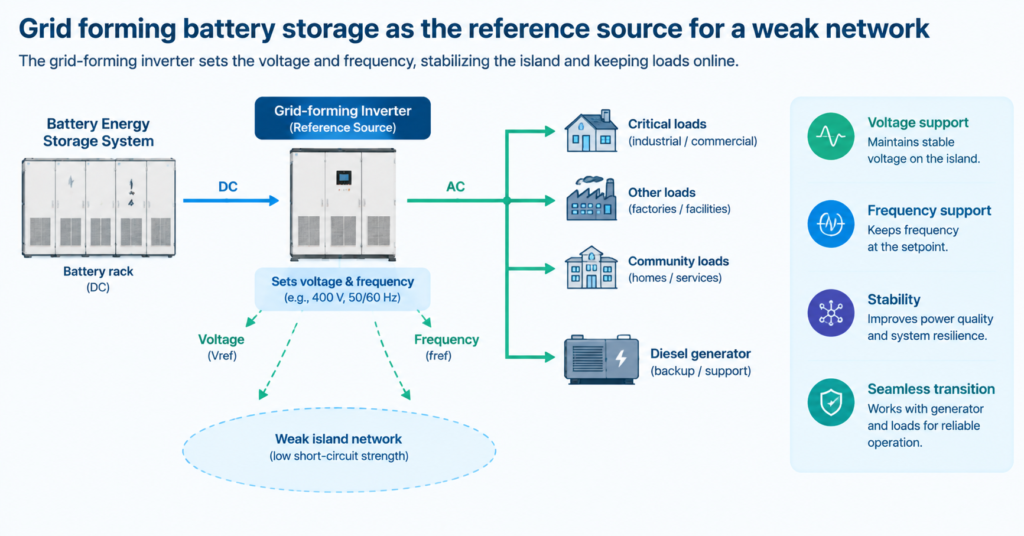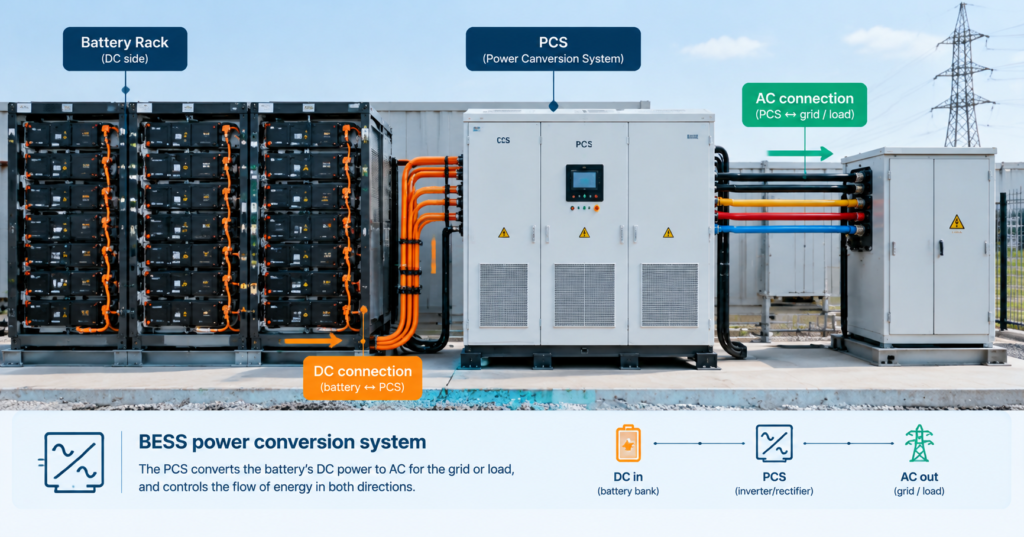
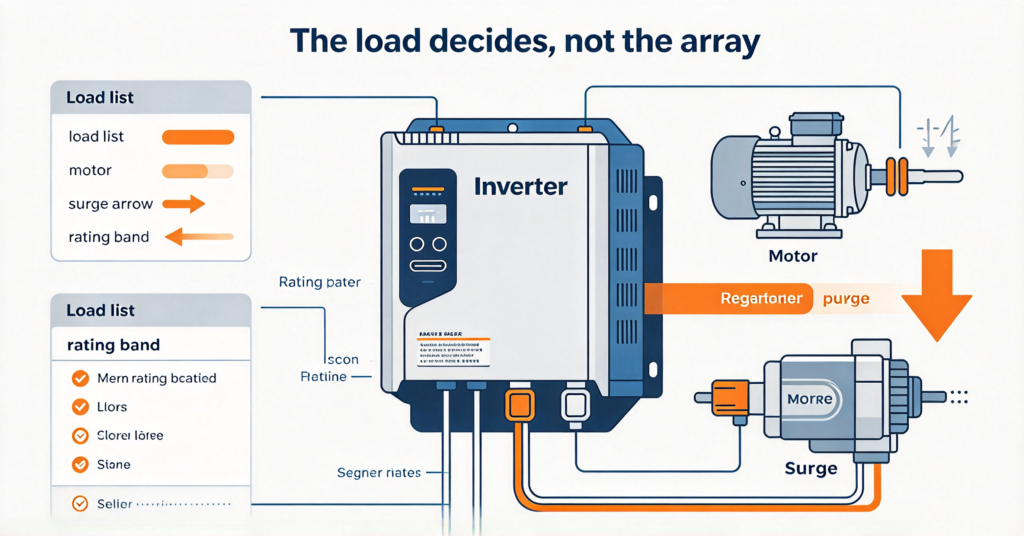
what size solar inverter you need is decided by the largest load it must run at once and the surge that load draws when it starts — not by the rating of your solar array. This guide sets out the sizing sequence, how much surge margin to allow for motors and compressors, when to accept clipping on the PV side, and the battery-side limits that can cap an otherwise correctly sized inverter.
Inverter sizing is where good designs quietly go wrong. Matching the inverter to the array produces a unit that is too large for most loads and inefficient at light load — or too small for the one motor that matters.
Start from the load, not the array
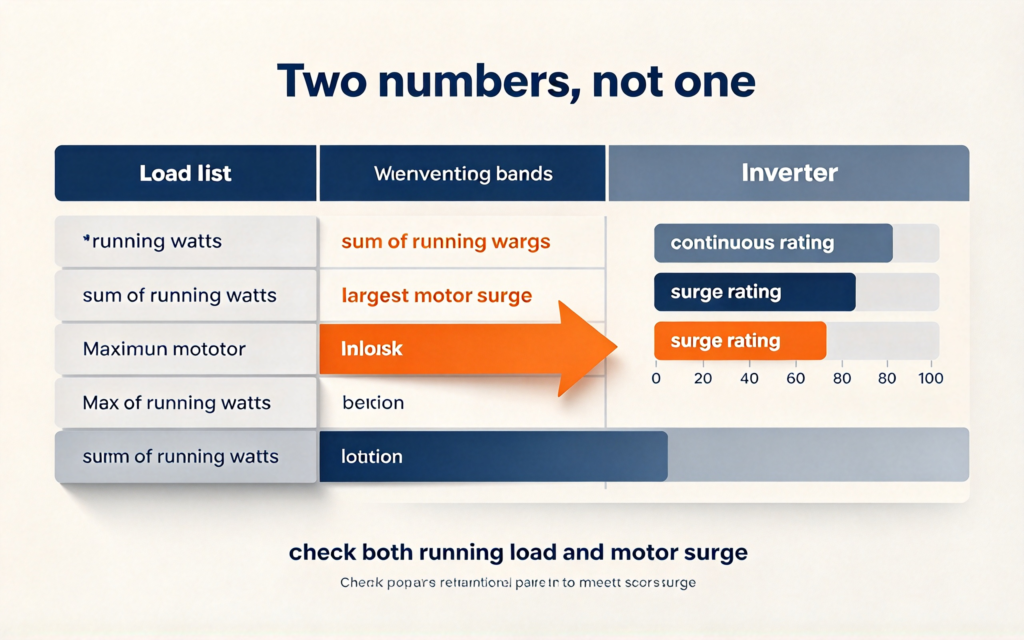
List what the inverter must run simultaneously, not everything you own. Add the running watts of each, then identify the single largest motor or compressor and its starting surge. The continuous rating must cover the simultaneous running load with margin; the surge rating must cover that starting event. Those are two different numbers on the spec sheet and conflating them is the most common sizing error.
Diversity matters. A whole-house load list sums to a figure you will never actually draw, because nobody runs the oven, the dryer and the workshop at once. A realistic simultaneous figure is what the inverter must carry. The how many solar panels you need guide works the same logic from the generation side, and the two answers have to be reconciled at the end.
Surge margin: the number that decides whether it starts
Motors and compressors draw several times their running current for a moment when they start. An inverter that covers the running watts but not the inrush will either trip or fail to start the load, and it will do so intermittently — which is why this failure is often misdiagnosed as a faulty appliance. Size the surge rating to the hardest start you will actually ask for.
The margin you need depends on the load. Resistive loads — heaters, elements, most electronics — draw no meaningful surge. Induction motors, well pumps, compressors and anything with a start capacitor do. Where a large motor dominates, it is often cheaper to address the start — a soft starter or a variable-speed drive — than to buy an inverter large enough to absorb a brutal inrush.
| Load type | Surge behaviour | Sizing implication |
|---|---|---|
| Resistive | None | Size to running watts |
| Electronics | Minimal | Size to running watts |
| Induction motor | Several times running | Check surge rating |
| Compressor | High, repeated | Large margin or soft start |
When to accept clipping
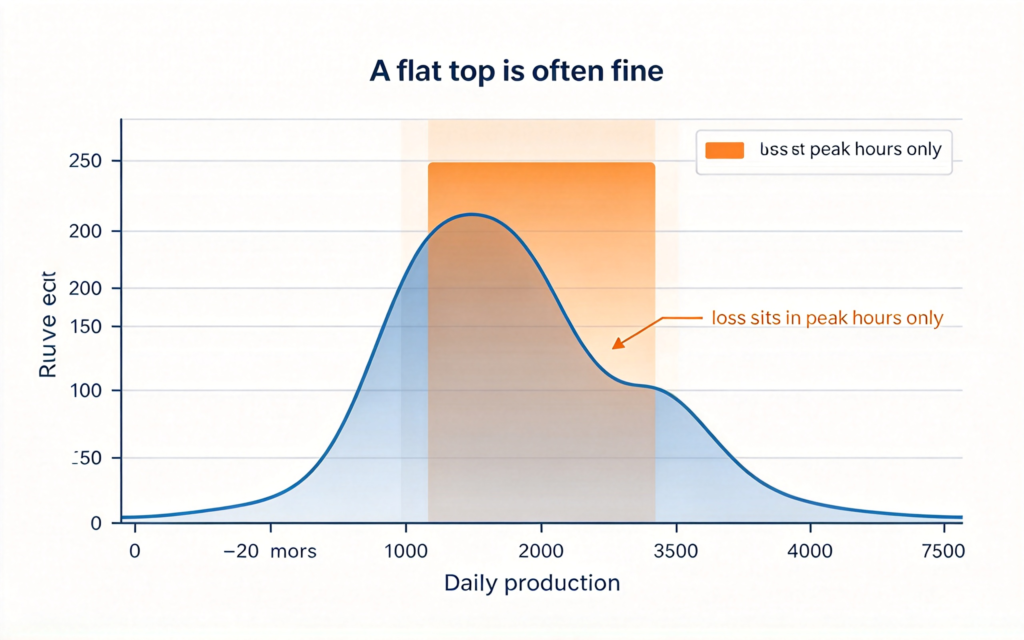
Because the inverter is sized to the load rather than the array, the array is often larger than the inverter’s PV rating. When the array produces more DC power than the inverter can convert, the excess is simply not used — that is clipping. It shows up as a flat top on a production curve on the best days of the year.
Clipping is usually a good trade. The energy lost is concentrated in a few hundred hours of ideal conditions, while an oversized inverter costs more and runs less efficiently across the thousands of hours of normal operation. Mild clipping is a design choice, not a defect; heavy, all-year clipping means the ratio is wrong. The high efficiency inverter guide guide explains how the efficiency curve interacts with this.
The battery side can cap everything
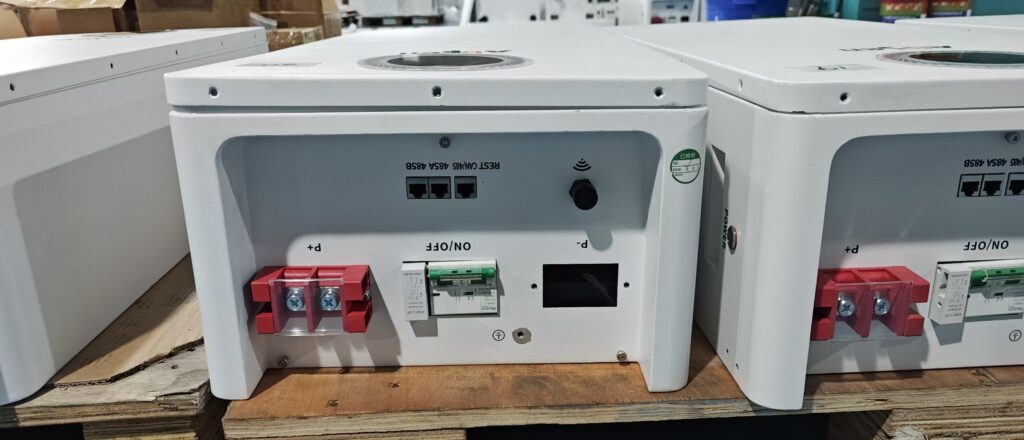
On a battery-based system, the inverter can only deliver what the battery and its BMS will allow. A battery with a continuous current limit lower than the inverter’s rating means the inverter’s headline power is not actually available, and the system will trip on the battery’s limit rather than the inverter’s. Size both together, and check the battery’s continuous and surge discharge limits against the same load list.
Voltage class matters for the same reason. A low-voltage battery feeding a large inverter runs very high current, which drives cable size, losses and heat. Moving to a higher-voltage bank reduces the current for the same power and is usually the cleaner answer once the load passes a certain size. The hybrid inverter sizing versus battery capacity guide covers that pairing in detail.
What size solar inverter for common situations
Rather than a table of magic numbers, work the sequence: sum the simultaneous running load, add the surge requirement, check the battery can supply both, then confirm the array-to-inverter ratio produces only mild clipping. If you want a sanity check, compare your answer with the what size solar inverter guidance your installer produced and ask which load they sized to — if they cannot name it, they sized to the array.
For a small off-grid cabin with only lights, a pump and electronics, the answer is driven by the pump’s surge. For a whole-house backup system, it is driven by the simultaneous figure plus the largest motor. For a commercial installation, it is driven by the measured demand profile rather than by any nameplate sum — and that profile is worth logging for a few weeks before anyone specifies hardware, because nameplate sums overstate commercial loads badly.
Logging is the cheapest accuracy you can buy. A clamp meter or a temporary monitor on the incoming supply captures the real simultaneous peak and the real surge events, and it settles arguments that would otherwise be resolved by guessing. Where a system is replacing an existing supply, that logged profile is the single best input to the sizing decision.
Efficiency at the load you actually run
An oversized inverter spends its life at a small fraction of its rating, which is where the efficiency curve is usually worst and where standby draw matters proportionally more. That is the argument against sizing generously “just in case”. Pick the smallest unit that covers the load with proper surge margin, and the system will run more efficiently for its whole life.
Where future loads are planned, buy the headroom deliberately and knowingly — accept the small efficiency cost in exchange for not replacing the unit later. The mistake is accidental oversizing, not deliberate margin. The all in one solar inverter guide guide covers units where inverter, charger and controller ratings interact, and the hybrid versus off grid inverters comparison covers how topology changes which rating matters.
Finally, check the inverter’s own limits rather than only its headline rating. Continuous and peak figures are quoted at a stated ambient temperature, and a unit mounted in a hot enclosure may not sustain its continuous number. Confirm the derating curve and the operating ambient range, because that is where a nominally correct size becomes inadequate in practice.
Sizing from the load, not the array
Size to the simultaneous load plus the hardest surge, check the battery can supply it, then let the array be as large as the roof allows and accept mild clipping. The array does not set the inverter size — the load does.
Q. what size solar inverter do i need?
What size solar inverter you need is decided by the largest load it must run at once plus the surge that load draws when starting — not by your solar array rating. Sum the simultaneous running watts, add the largest motor’s surge, and check the battery can supply both.
Q. Should I size the inverter to my solar panels?
No. Size it to the load. An array larger than the inverter rating causes clipping, which is usually an acceptable trade; an inverter larger than the load runs inefficiently for its whole life.
Q. How much surge capacity do I need?
Enough for the hardest start you will actually ask for. Resistive loads and electronics draw almost no surge; induction motors, pumps and compressors draw several times their running current.
Q. What is inverter clipping?
Clipping is when the array produces more DC power than the inverter can convert, so the excess goes unused. It appears as a flat top on the production curve and is usually a deliberate, acceptable trade.
Q. Can the battery limit my inverter?
Yes. If the battery’s continuous discharge current is lower than the inverter’s rating, the system will trip on the battery limit. Check the battery’s continuous and surge limits against the same load list.
Q. Is a bigger inverter better?
Not automatically. An oversized unit spends its life at low load where efficiency is worst and standby draw matters more. Buy deliberate headroom for known future loads, but avoid accidental oversizing.
Q. How does off-grid sizing differ?
Off-grid sizing is driven by the surge of the largest motor and by worst-case autonomy rather than by annual energy. The simultaneous load plus the hardest start governs, and the array is then sized to recharge within the available sun hours.
Next step: send the load list, not just the array size
A defensible inverter size comes from the simultaneous load and the hardest surge. Send both, plus the battery you plan to pair.
- Pairing matters — check hybrid inverter sizing versus battery capacity before specifying
- Review how to choose a storage hybrid inverter if storage is part of the design
- For chisidal, send your usage and site details, and we will come back with product prices, lead time and warranty information.