Shopping bess units for sale means pricing a complete storage system as one deliverable, not comparing a loose list of parts. A quote normally bundles cell banks, the power conversion stage, thermal control, the battery management system, the enclosure, transport and grid-interface hardware, then adds lead time, minimum order quantity, warranty scope and acceptance testing on top. This guide breaks that price into its parts, maps the common kWh tiers to real applications, and sets out the eight technical items to confirm before you request a number.
Two packaging notes save argument later. A unit is normally quoted as a factory-assembled cabinet, so the bill of materials matters more than the headline kWh figure. And the price only makes sense once you know which line items sit inside the quote and which get billed separately.
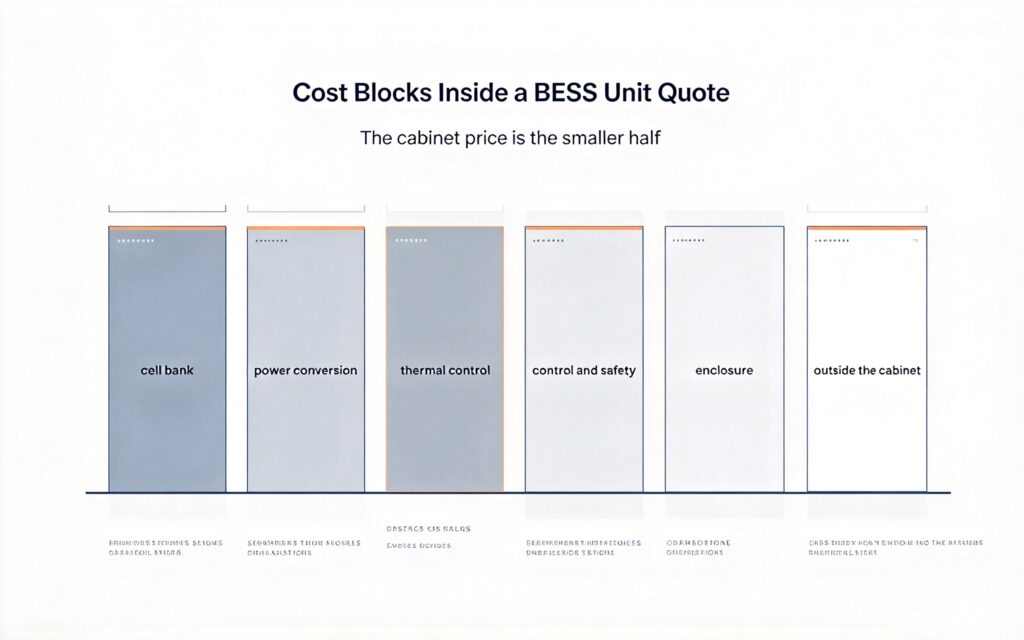
What goes into the price of a BESS unit
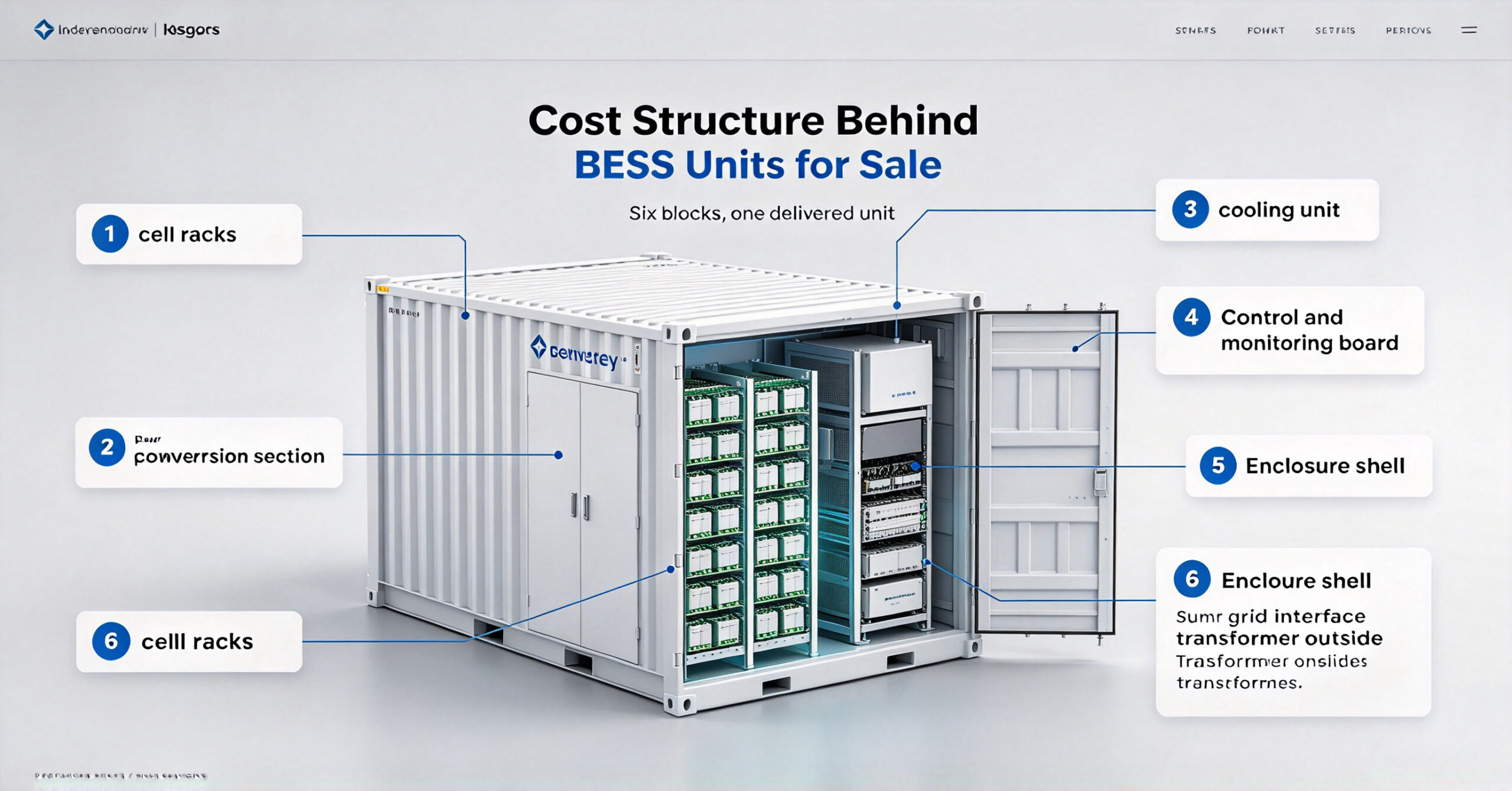
The cell bank sets the floor. Energy blocks are priced against nameplate kWh, but a quote built on that number alone hides how much you can actually draw — usable capacity depends on the discharge depth the warranty permits. Ask suppliers to state usable kWh as prominently as installed kWh, and compare on that basis. Cell lot records belong in the same line item; they cost little to request and a great deal to discover later, when a replacement module has to match an ageing string.
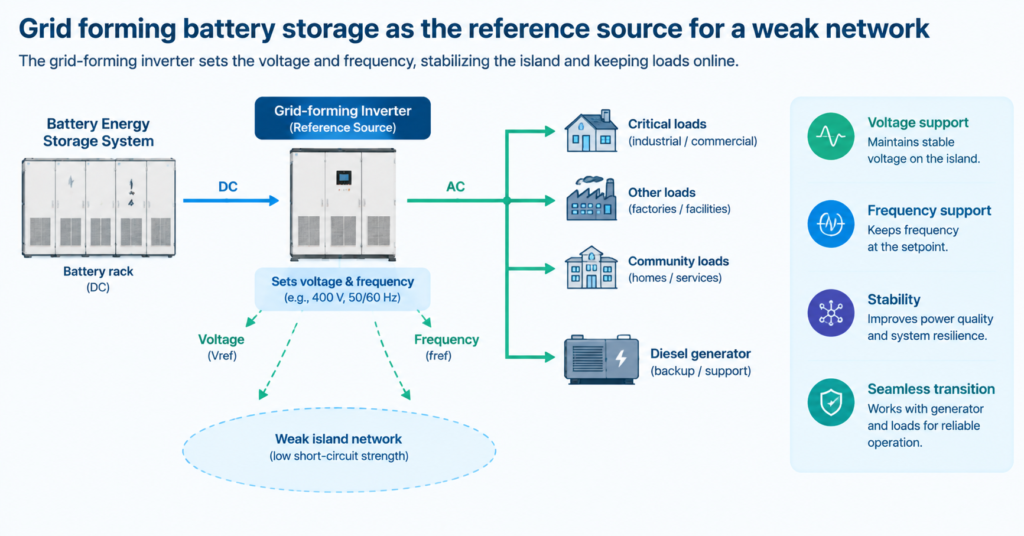
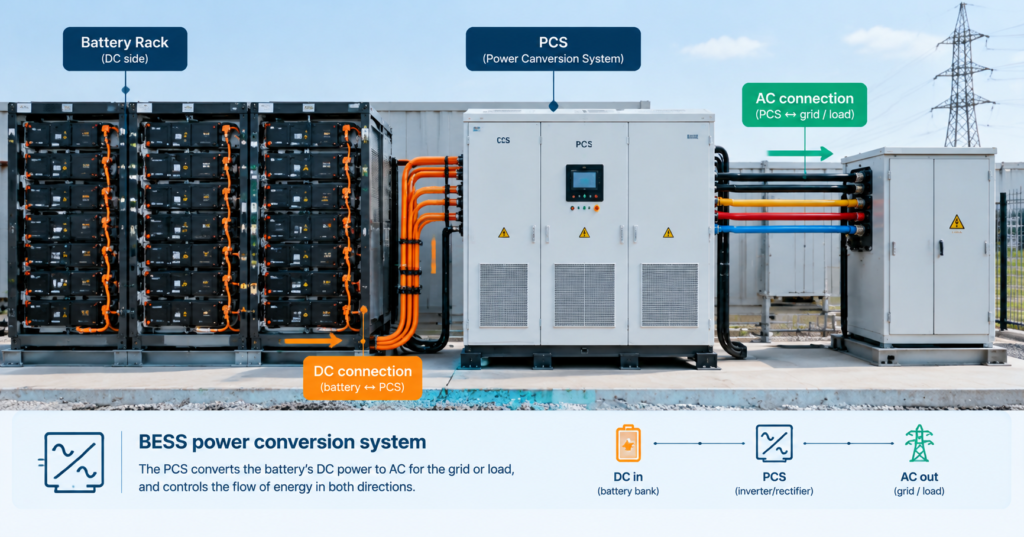
The power conversion stage is priced against kW rather than kWh, and that is the line most first-time buyers misread. A cabinet built for two hours of discharge carries roughly half the converter cost of a one-hour design holding identical energy. That is why a single per-kWh figure comparing two bess units for sale tells you almost nothing: duration is folded into it. State the required C-rate and confirm whether the converter is bidirectional and capable of grid-forming behaviour, because those are options rather than assumptions.
Thermal control is where two seemingly similar bess units for sale diverge most. Forced-air designs cost less up front and suit moderate duty cycles; liquid-cooled designs add pumps, plumbing and coolant service, and are chosen when duty cycles run harder or ambient temperatures sit high. The engineering trade is set out in the liquid cooled BESS thermal design guide. Decide the duty cycle first, then price both options against it.
The control system, enclosure and safety package close the hardware list. A management tier that reports per-module voltage, temperature and contactor state gives your operators something to act on; a basic protection board does not. On the enclosure side, ingress rating, corrosion class, fire detection and suppression, and the cooling duty each add both capital and running cost. Ask which are fitted as standard and which are options — in practice, optional usually means excluded from the headline figure.
Outside the cabinet, quotes quietly diverge. Transformers, medium-voltage switchgear, cabling and civil works are frequently excluded, as are freight, insurance and port charges. Confirm whether commissioning, spares and training are bundled or billed afterwards. Reading bess units for sale as one complete deliverable rather than a cabinet price prevents most budget surprises.
| Line item | Scales with | Confirm before ordering |
|---|---|---|
| Cell bank | Nameplate kWh and cell lot grade | Usable kWh at the permitted discharge depth |
| Power conversion | kW rating and C-rate | Discharge duration, bidirectional capability |
| Thermal control | Cooling medium and duty cycle | Ambient range and derating above it |
| Control and safety | Reporting depth and safety package | Standard fitment versus priced options |
| Enclosure | Ingress and corrosion class | Shipping configuration and site access |
| Freight and interface | Incoterm and scope split | Transformer, switchgear and cabling owner |
Spec tiers: how kWh bands map to applications
Capacity tier is the fastest way to sort the market, and it decides what dominates cost. The larger the unit, the more the balance of plant rather than the cells sets the schedule. Treat the bands below as a working frame, not a catalogue, and confirm every figure against the supplier’s own quotation sheet.
| Tier | Capacity band | Typical deployment | What dominates cost | Notes |
|---|---|---|---|---|
| Compact cabinet | Roughly 100–300 kWh | Facility backup, small commercial peak shaving | Enclosure, converter, safety package | Ships assembled, one footprint |
| Cabinet bank | Roughly 300 kWh–1 MWh | Industrial peak shaving, campus loads, solar self-consumption | Cell bank and thermal control | Parallel cabinets, one controller |
| Utility container | Roughly 1–5 MWh | Grid services, renewable firming, large industrial sites | Cells, MV interface, fire systems | Containerised; freight and civils lead |
| Staged addition | Sized per block | Expansion of an operating site | Matching new cells to the installed bank | Confirm old and new lots may mix |
Use these bands to shortlist, not to specify. Two suppliers quoting the same band can still deliver very different usable energy, power rating and warranty terms, so the tier is only a sorting device before the checks below. Reference project configurations such as those collected in the BESS deployment examples article help you sanity-check the shortlist, and supplier screening runs alongside it in the battery manufacturer evaluation criteria guide.
Eight technical items to confirm before you request a quote
Requesting a price without these answers produces numbers you cannot compare. Send the list with the RFQ and ask each supplier to respond item by item; how they answer now previews how they answer later.
- Usable kWh rather than nameplate, with the discharge depth assumed.
- Rated kW power and C-rate, restated as discharge duration.
- Cycle life with the end-of-life definition: retained capacity, cycle count and the temperature window behind them.
- Round-trip efficiency and where it is measured: AC or DC side, at which rate.
- Cell chemistry, format and lot traceability, plus the matching policy for later additions.
- Thermal architecture and ambient range, with derating above a stated temperature or altitude.
- Certification scope in your market, issued in a named legal entity, not a generic report.
- Interface responsibilities: protocol, transformer and switchgear supply.
Items one to three decide whether quotes are comparable at all. Items six to eight decide whether the unit may run on your grid, and they are usually discovered late.

MOQ, lead time, certification and warranty terms
Minimum order quantity is rarely about discounts; it is about production scheduling. A single demonstration unit is normally priced above standard configuration because one cabinet interrupts a build slot, while repeat volumes are where suppliers quote container-level rates. Ask what the unit rate does at each step, and whether later additions keep the original cell lot.
Lead time for bess units for sale runs in months rather than weeks, and the binding constraint is usually cell allocation rather than assembly. Tie the quoted date to a production slot plus freight rather than a promise, and tie payment — commonly a deposit with the balance against documents — to those milestones. Interface timing is set out in the role of the BESS EPC contractor notes, with freight and site handling in the BESS delivery and logistics planning piece.
Certificates matter more than logos. Ask for the documents your market needs: IEC 62619 for stationary installations, UL 1973 for North American contexts, UN 38.3 for shipping cells and packs, plus any grid-code evidence your utility requires. Confirm the certificate names the legal entity signing your contract, that the model listed matches yours, and that the edition is current.
Warranty terms deserve line-by-line reading. Most are stated as years or cycles, whichever comes first, with a residual capacity guarantee at end of warranty. Check whether throughput is capped, whether ambient range and discharge depth are conditions rather than recommendations, and whether labour and travel are included. Then check what voids it: unapproved converters, unlogged firmware changes and out-of-window temperatures commonly do.
Acceptance and documentation before release of payment
Agree the acceptance tests while you still have commercial leverage. Factory tests usually cover insulation, protection trip points and a capacity check against the agreed method; site tests repeat them after installation. Hold a retention amount against completion of the document pack — drawings, protection settings, test reports, cell lot records and manuals — because your insurer and utility will ask for it years later. The sequence is set out in the commissioning and grid connection test steps, and who performs it depends on the choice of installation partner.
Q. What do bess units for sale typically include in the quoted price?
Normally the cell bank, the power conversion stage, thermal control, the control system, the enclosure and the safety package. Transport, transformer, switchgear, cabling, civil works, commissioning and training are frequently excluded, so the Incoterm and scope split matter as much as the hardware.
Q. Why do two quotes for the same kWh size differ so widely?
Because kWh alone does not describe the product. Usable capacity, permitted discharge depth, power rating and duration, cooling type and reporting depth all move the number. Once suppliers answer the same eight questions, the spread narrows considerably.
Q. How long is the lead time for a containerised BESS unit?
Plan in months rather than weeks. Cell allocation and production slots usually bind before assembly, and sea freight is added on top. Ask which part of the quoted date is factory and which is transit.
Q. Which certifications should be verified before signing?
IEC 62619 for stationary installations, UL 1973 where North American practice applies, and UN 38.3 for shipping cells and packs, plus any grid-code evidence your utility requires. Verify that the certificate names the contracting entity, lists your model and cites a current edition.
Q. What does a BESS warranty cover, and what ends it?
Most cover years or cycles whichever comes first, with a residual capacity guarantee at end of warranty. Exclusions commonly include operation outside the stated ambient range, deeper discharge than specified, and unapproved conversion equipment. Confirm whether labour, travel and spares are included.
Q. Can a single unit be ordered before committing to volume?
Yes, most suppliers accept a demonstration unit, though it is generally priced above standard configuration because it occupies a production slot. Treat it as evaluation rather than a price reference, and agree whether later additions share the same cell lot.
Next step: normalise the quotes before you compare them
Send the eight technical items with your RFQ, require an item-by-item answer, and compare on usable kWh rather than nameplate. That single habit removes most of the apparent price gap.
- Score the supplier, not just the cabinet, using the battery manufacturer evaluation criteria checklist
- For chisidal, send your usage and site details, and we will come back with product prices, lead time and warranty information.